
53rd & 3rd

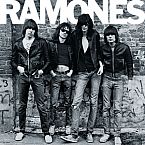
Album: Ramones (1976)
Play Video

Songfacts®:

  • The corner of 53rd Street and 3rd Avenue in Manhattan, New York, is a real place that was once frequented by young male prostitutes trying to turn a trick. The area was a section of what was known as "the Loop," which also boasted gay bars such as Rounds and Red. In 1994, a crackdown by police with heavy support from the neighborhood saw an end to the area's nighttime activities, and despite protests by gay advocate groups, many arrests were made and the bars were shuttered.
  • Written by bass player Dee Dee Ramone, this song tells about young male prostitutes, known as chicken hawks, selling sexual favors to older men for cash. There was a rumor that Dee Dee engaged in that same activity to earn drug money in the days before he joined the band, but if there's any truth to it, he took it to his grave.
  • A track from the first Ramones album, this was one of the songs the band played in their early days (1975), performing in New York clubs like CBGB. They intrigued patrons with their unorthodox performances, Dee Dee counting in every song ("1-2-3-4") right after the last one ended. Since most of their songs lasted about two minutes, they could blow through an entire set in under 30 minutes.
  • For the Ramones, a song like this didn't seem so strange. "We were so weird," Johnny Ramone said. "Singing about some guy coming back from Vietnam and becoming a male prostitute and killing people? This is what we thought was normal."

Comments: 10

  • Fairportfan from MaconActually, "chickenhawks" are men who cruise to pick up young males.

    OR

    Men who dodged the Draft {DJT, Ted Nugent} but are all gung-ho to send young men to die
  • Ghottistyx from New YorkNowadays, 53rd & 3rd is the Lipstick building (my father once said it was deliberately designed to look like a fallus), the Citicorp tower, a huge post office, and a train station that connects the E and M trains to the 6 train. Not at all what Dee Dee sung about nowadays.
  • Lottie from NyDee Dee bravely admitted it's true he worked as a male prostitute on 53rd & 3rd in an interview he did during the late 1980s for a book called "Addict: Out of the Dark and Into the Light." He said he started turning tricks as a homeless teenager in California after he'd run away from home around the age of 16 when heroin was already a problem in his life.

    On his way hitchhiking out west he was arrested and spent time in an Indiana jail for being an accomplice to armed robbery. In his autobiography he described the jail as a rough place and was deeply upset that nobody in his family would (or could) bail him out, so he was there for 3 weeks (some sources say it was 3 months). Sounds like a traumatizing experience.

    After he got out he continued on to California, still not wanting to go home. In Cali he moved around a bit, sometimes living rough on city streets or in the woods (Pfeiffer Park Big Sur), spent some time in a welfare hotel and eventually stayed for a couple of months in the home of a man named Jim.

    Being exposed to new drugs at almost every turn was part of his experience. Eventually he left the state. To quote from his autobiography "I can't remember leaving LA again and hitchhiking east, but somehow I ended up at my grandma's house in Missouri. She was very religious.... After she made me flush my pot down the toilet I decided it was time to head back home to Forest Hills." From the book interview, he says "finally I moved back to New York, in total confusion, with a blossoming drug habit."

    There's an audio recording of the book interview so you can hear him admit to his hustling days in his own voice. It's on the website intervention . org but I suggest you do a google search since it's not easy to find from the website's home page.
  • Arthur ItisI wonder if the person in this song is the perpetrator in Rod Stewart’s Killing of Georgie; both songs were released in 1976. Too much of a connection there.
  • Rod Stewart Song from Australia"Killing of Georgie' by Rod Stewart says Georgie was killed on the corner of 53rd and 3rd.
  • Zero from The Abyss, NjThat last chorus after Dee Dee's bridge actually goes up a whole step with the chords to the chorus. I never noticed that until I tried to learn the song on my guitar!
  • Willie from Scottsdale, AzSeveral of the roadies in DeeDee's solo band were known bisexuals, so it's not entirely out of the question.
  • Joe from Chicago, Arone of the greatest punk rock songs ever made.... i went to 53rd & 3rd in New York though.. and it sucks... there is nothing there.
  • Steve from Birmingham, AlYes, the protagonist of the song killed a trick. However, it's safe to assume Dee Dee Ramone never killed anyone.
  • Johnny from Los Angeles, CaSo the guy in the song killed someone right? I bet this relates to Dee Dee wanting to kill the a**holes who came around there, or maybe Dee Dee ACTUALLY KILLED SOMEONE *conspiracy alert conspiracy alert*
see more comments

Editor's Picks

Stephen Christian of Anberlin

Stephen Christian of AnberlinSongwriter Interviews

The lead singer/lyricist for Anberlin breaks down "Impossible" and covers some tracks from their 2012 album Vital.

Emilio Castillo from Tower of Power

Emilio Castillo from Tower of PowerSongwriter Interviews

Emilio talks about what it's like to write and perform with the Tower of Power horns, and why every struggling band should have a friend like Huey Lewis.

Art Alexakis of Everclear

Art Alexakis of EverclearSongwriter Interviews

The lead singer of Everclear, Art is also their primary songwriter.

Graham Bonnet (Alcatrazz, Rainbow)

Graham Bonnet (Alcatrazz, Rainbow)Songwriter Interviews

Yngwie Malmsteen and Steve Vai were two of Graham's co-writers for some '80s rock classics.

They Might Be Giants

They Might Be GiantsSongwriter Interviews

Who writes a song about a name they found in a phone book? That's just one of the everyday things these guys find to sing about. Anything in their field of vision or general scope of knowledge is fair game. If you cross paths with them, so are you.

Who's Johnny, And Why Does He Show Up In So Many Songs

Who's Johnny, And Why Does He Show Up In So Many SongsSong Writing

For songwriters, Johnny represents the American man. He has been angry, cool, magic, a rebel and, of course, marching home.