Sail Away

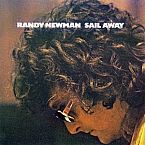
Album: Sail Away (1972)
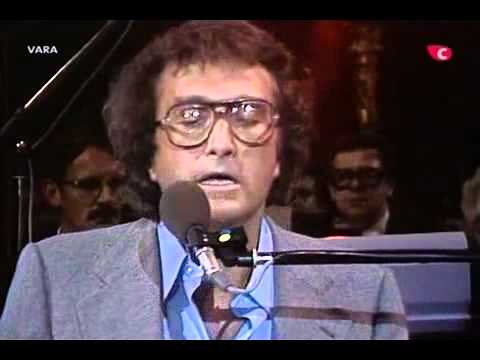
Play Video

Songfacts®:

  • This thoughtful, austere piano ballad about the slave trade finds Newman's slaver protagonist attempting to convince his African listeners to climb aboard his ship and "sail away" with him to the promised land of America. Newman explained to NPR in a May 8, 2013 interview: "I wrote about slave trade from the view of the recruiter from the slave trade. He is talking, you know, come to America and then talks about using that and I didn't another way to do it. I mean, you could say the slave trade is bad, horrendous or a great crime of the nation, but I chose to do differently."
  • Among the artists that have covered the tune are Bobby Darin, who recorded it on his last album before he died in 1972 (Motown label's Bobby Darin) and Linda Ronstadt for her 1973 set Don't Cry Now. Etta James also released it in 1973 on her self-titled album.
  • It's not glaringly obvious what this song is about, as there's no direct mention of slavery. Newman never went for the obvious though, preserving nuance at the risk of misinterpretation. The biggest hint to the song's meaning is the line "We will cross the mighty ocean into Charleston Bay" - Charleston Bay, South Carolina is where much of the slave trade took place.

    One person who didn't get it, according to Newman, was Bobby Darin, who sang it in a more jovial manner.
  • The song is listed at #264 on Rolling Stone's 500 Greatest Songs. They said: "As usual for Newman, it combines lush melody with painfully funny satire."
  • Newman talked about this song in a 2017 interview with Rolling Stone: "There was a producer, the husband of Leslie Caron. He wanted to make a movie where he would give ten minutes to these artists - people like Van Morrison, Jimi Hendrix, me – to do anything we wanted. It never got made. But I had this idea of a slave ship and a sea shanty - this guy standing in a clearing, singing to a crowd of natives. These people in my songs don't know they're bad. They think they're fine. I didn't just want to say, 'Slavery is awful.' It's too easy. I wasn't doing Roots."
  • The Rolling Stones released a much more popular song dealing with the slave trade in 1971: "Brown Sugar." That one was never seen as a commentary on the subject.

Comments: 1

  • Bobo2432 from UsaBobby Darin got it. I've listened to it carefully. BD embodies the guile of the slaver. Nuance. I can't believe that Randy Newman and his intellect doesn't get that. I think Newman does get that. I would say the reporter's take on Darin and Newman's feeling is wrong....
see more comments

Editor's Picks

Jon Foreman of Switchfoot

Jon Foreman of SwitchfootSongwriter Interviews

Switchfoot's frontman and main songwriter on what inspires the songs and how he got the freedom to say exactly what he means.

Adele

AdeleFact or Fiction

Despite her reticent personality, Adele's life and music are filled with intrigue. See if you can spot the true tales.

Lori McKenna

Lori McKennaSongwriter Interviews

Lori's songs have been recorded by Faith Hill and Sara Evans. She's performed on the CMAs and on Oprah. She also has five kids.

Donnie Iris (Ah! Leah!, The Rapper)

Donnie Iris (Ah! Leah!, The Rapper)Songwriter Interviews

Before "Rap" was a form of music, it was something guys did to pick up girls in nightclubs. Donnie talks about "The Rapper" and reveals the identity of Leah.

Dave Edmunds

Dave EdmundsSongwriter Interviews

A renowned guitarist and rock revivalist, Dave took "I Hear You Knocking" to the top of the UK charts and was the first to record Elvis Costello's "Girls Talk."

Andy McClusky of OMD

Andy McClusky of OMDSongwriter Interviews

Known in America for the hit "If You Leave," OMD is a huge influence on modern electronic music.