

Living Well is the Best Revenge

Album: Accelerate (2008)
Play Video

Songfacts®:

  • The song's title is a quote from the 17th century poet George Herbert. In an interview on the Morning Edition, the band admitted to only recently discussing what the term really means. Stipe revealed that he had been reading much about the media around that time, and this song, in which he imagines himself turning a table onto a television personality, singing, 'Don't turn your talking points on me, history will set me free,' was his response. In the liner notes for Part Lies, Part Truth, Part Truth, Part Garbage, Stipe admitted it was about "that puff adder Bill O'Reilly, although his shrill offspring are even more venal and pathetic than he was."
  • George Herbert (1593-1633) was an English clergyman and metaphysical poet. Born into an artistic and wealthy family, Herbert attended Cambridge University. After various employments at the university, and a stint as a Member of Parliament, he took holy orders in 1630 and became vicar of Bernerton, Wiltshire. Herbert died of consumption three years later. His volume of religious poems, The Temple, appeared in 1633. A collection of pithy proverbs, Jacula Prudentium was published in 1651. In addition to the quote that inspired this song, Jacula Prudentium included many sayings still repeated today, such as "His bark is worse than his bite" and "Whose house is of glass, must not throw stones at another."
  • Guitarist Peter Buck recalled to The Boston Globe March 30, 2008 the recording of this track: "It was 9:20 and we had a 9:45 dinner reservation and I said, 'Let's run through 'Living Well' once to get mike levels,' and we did it, boom. When we came back the next day ready to record the song, (producer Jacknife Lee) Garret said, 'I don't think you need to. Listen to it. It's pretty realistic.'"
  • Buck said he came up with the riffs from the verse back in 1985, during Fables, but couldn't come up with a good chorus at the time.
  • Stipe noted in Part Lies, Part Heart, Part Truth, Part Garbage: "I tore into this vocal because someone who I really, really admired forever kind of bad-mouthed R.E.M., and I was like, 'f--- you! Sing like this, you talented f---.' It felt so good and sounded so great, we just left it as is."

Comments: 1

  • Brad from Lexington, KyThis song is obviously anti-Bush. This is especially clear in lines such as "history will set me free", as Bush has often said that history will prove him right. The song also has biblical refrences. Lines like "the Gospel according to who?" and referring to Bush's supporters as "sad and lost apostles" could possibly be accusing Bush of comparing himself to Jesus.
see more comments

Editor's Picks

Adam Duritz of Counting Crows

Adam Duritz of Counting CrowsSongwriter Interviews

"Mr. Jones" took on new meaning when the song about a misguided view of fame made Adam famous.

Gene Simmons of Kiss

Gene Simmons of KissSongwriter Interviews

The Kiss rocker covers a lot of ground in this interview, including why there are no Kiss collaborations, and why the Rock Hall has "become a sham."
Waiting For The Break of Day: Three Classic Songs About All-Nighters

Waiting For The Break of Day: Three Classic Songs About All-NightersSong Writing

These Three famous songs actually describe how they were written - late into the evening.
Famous Singers' First Films

Famous Singers' First FilmsSong Writing

A look at the good (Diana Ross, Eminem), the bad (Madonna, Bob Dylan) and the peculiar (David Bowie, Michael Jackson) film debuts of superstar singers.

Gavin Rossdale of Bush

Gavin Rossdale of BushSongwriter Interviews

On the "schizoid element" of his lyrics, and a famous line from "Everything Zen."
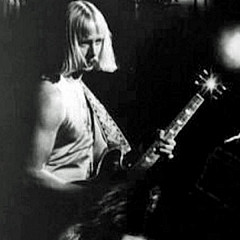
Kerry Livgren of Kansas

Kerry Livgren of KansasSongwriter Interviews

In this talk from the '80s, the Kansas frontman talks turning to God and writing "Dust In The Wind."