Mother Russia

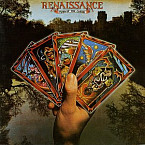
Album: Turn of the Cards (1974)
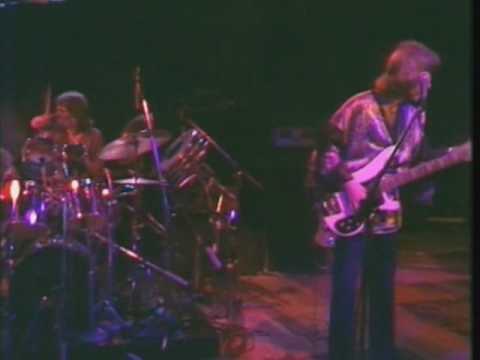
Play Video

Songfacts®:

  • "Mother Russia" is a tribute to dissident Russian writer Aleksandr Solzhenitsyn. His well-known novel about Soviet oppression, One Day in the Life of Ivan Denisovich, inspired the lyrics.
  • Clocking in at nine-and-a-half minutes, "Mother Russia" opens with a string-led introduction featuring intermittent piano accents. Annie Haslam's vocals enter about two minutes into the song, and the next three minutes contain four verses that detail Solzhenitsyn's struggles, interspersed with short string and acoustic guitar interludes.

    The song concludes with a five-minute section comprising a three-minute instrumental interlude with wordless vocals by Haslam, followed by a repetition of the final two verses.
  • Like many Renaissance songs, Cornish poet Betty Thatcher wrote the lyrics and the band's guitarist, Michael Dunford, composed the music.
  • "Mother Russia" is the closing song on Turn of the Cards, which Renaissance released in July 1974. Five months earlier, the authorities had arrested and deported Solzhenitsyn from the Soviet Union after the publication of his book, The Gulag Archipelago.

    "Mother Russia" can also be found on Live at Carnegie Hall, the compilation Tales of 1001 Nights, Vol. 1, and other Renaissance concert albums.
  • Aleksandr Solzhenitsyn was a Russian novelist, historian, and critic of Soviet totalitarianism. In 1962, with the approval of Soviet leader Nikita Khrushchev, he published his first novel, One Day in the Life of Ivan Denisovich, which depicted Stalinist repressions. Solzhenitsyn was awarded the Nobel Prize in Literature eight years later "for the ethical force with which he has pursued the indispensable traditions of Russian literature."

    Solzhenitsyn's three-volume history of the Soviet Union's forced labor camp system, The Gulag Archipelago, outraged the Soviet authorities. After his exile from the Soviet Union, Solzhenitsyn returned to Russia in 1994, where he remained until his death in 2008. Here are two other musical links to the Russian writer.

    1. Scottish folk-rock singer Al Stewart's 1973 song "Roads To Moscow" tells the story of the German invasion of Russia during World War II from the perspective of a Russian soldier. Solzhenitsyn is one of Stewart's heroes and he's suggested at concerts that the song is about the dissident writer, who served in the Red Army artillery during the war.

    2. Bernie Taupin has a long-standing affinity for the phrase "candle in the wind." In an interview with Mojo magazine, he explained that Russian author Alexander Solzhenitsyn had written a play with that title in 1960 and that record industry executive Clive Davis had used the expression to describe Janis Joplin. Taupin "just kept hearing" the phrase in his head and he thought it was a fitting way to describe someone's life, so he used it as the title for Elton John's tribute to Marilyn Monroe (and later Diana, Princess of Wales), "Candle In The Wind."

Comments

Be the first to comment...

Editor's Picks

Mike Campbell

Mike CampbellSongwriter Interviews

Mike is lead guitarist with Tom Petty & the Heartbreakers, and co-writer of classic songs like "Boys Of Summer," "Refugee" and "The Heart Of The Matter."

Donny Osmond

Donny OsmondSongwriter Interviews

Donny Osmond talks about his biggest hits, his Vegas show, and the fan who taught him to take "Puppy Love" seriously.

Carl Sturken

Carl SturkenSongwriter Interviews

Hitmaker Carl Sturken on writing and producing for Rihanna, 'N Sync, Christina Aguilera, Kelly Clarkson, Donny Osmond, Shakira and Karyn White.

American Hits With Foreign Titles

American Hits With Foreign TitlesSong Writing

What are the biggest US hits with French, Spanish (not "Rico Suave"), Italian, Scottish, Greek, and Japanese titles?

Mick Jones of Foreigner

Mick Jones of ForeignerSongwriter Interviews

Foreigner's songwriter/guitarist tells the stories behind the songs "Juke Box Hero," "I Want To Know What Love Is," and many more.

The Police

The PoliceFact or Fiction

Do their first three albums have French titles? Is "De Do Do Do, De Da Da Da" really meaningless? See if you can tell in this Fact or Fiction.