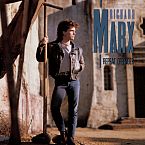


Satisfied

Album: Repeat Offender (1989)
Charted: 52 1
Play Video

Songfacts®:

  • Richard Marx was 25 years old and coming off his wildly successful debut album when he wrote this song. In our 2012 interview, he explained: "What I was trying to say was I was aware of the working man, because I'd been on this long tour and I would find myself in a diner or stopping at a gas station, and I was really aware that I was doing something for a living successfully that was so filled with joy. It certainly had it's prices and compromises, but it's a great gig. And I was aware of the working man around me doing s--t that I know they would so rather not be doing.

    And so it was sort of my homage to them, sort of a sense of if you hang in there, then maybe you get to the point where you're satisfied with the work that you've done and you can also just enjoy your life - it's not all about punching a clock. When I look back on that lyric, it's a little vague, but it sure sang well. And I think that sometimes that's what propels a song up the charts is that people are just singing along and they don't even know what they're singing. Most of the people I know, they don't even know what the lyrics they're singing along to in the car. They don't care. It's just the melody that they care about."
  • Mike Landau played the memorable guitar part in this song. Marx plays guitar and doesn't think he's very good, but he's always coming up with riffs and writing guitar parts. He uses a variety of top guitarists when he records, including Steve Lukather, Michael Thompson and Bruce Geitch, having them do a few takes exactly as he wrote it, then letting them play however they'd like. Says Marx, "What's really cool is because I'm not very good, there are things that I wrote that are challenging that they wouldn't come up with just as players. So there's a really great give and take, and usually what ends up on those records is some form of combination of those things, of me being a megalomaniac and then hearing them play the end of a phrase totally different than I imagine."
  • "Satisfied" had a thrilling climb up the charts, debuting at #39 on the Billboard Hot 100 in May of '89 and then climbing all the way up to #1 by June of the same year. It also led the way for five Top 20 singles from the Repeat Offender album. At the end of the '80s, Marx was hot as a pistol - don't forget "Right Here Waiting," which is going to be replayed on the radio forever. "Satisfied" was also midway through Marx's record-breaking run of having his first seven singles hit the Billboard Top-10, starting with "Don't Mean Nothing."
  • Incidentally, Marx is the child of two musicians; his mother Ruth was a singer and his father Dick Marx was a jazz musician who also founded a commercial jingle company. That kind of explains how Richard might have gotten so good at coming up with catchy opening hooks. In fact, Marx senior arranged for Richard in the studio.

Comments

Be the first to comment...

Editor's Picks

Gary Lewis

Gary LewisSongwriter Interviews

Gary Lewis and the Playboys had seven Top 10 hits despite competition from The Beatles. Gary talks about the hits, his famous father, and getting drafted.

Jack Tempchin - "Peaceful Easy Feeling"

Jack Tempchin - "Peaceful Easy Feeling"They're Playing My Song

When a waitress wouldn't take him home, Jack wrote what would become one of the Eagles most enduring hits.

Keith Reid of Procol Harum

Keith Reid of Procol HarumSongwriter Interviews

As Procol Harum's lyricist, Keith wrote the words to "A Whiter Shade Of Pale." We delve into that song and find out how you can form a band when you don't sing or play an instrument.

Richie Wise (Kiss producer, Dust)

Richie Wise (Kiss producer, Dust)Songwriter Interviews

Richie talks about producing the first two Kiss albums, recording "Brother Louie," and the newfound appreciation of his rock band, Dust.

Donald Fagen

Donald FagenSongwriter Interviews

Fagen talks about how the Steely Dan songwriting strategy has changed over the years, and explains why you don't hear many covers of their songs.

Don Dokken

Don DokkenSongwriter Interviews

Dokken frontman Don Dokken explains what broke up the band at the height of their success in the late '80s, and talks about the botched surgery that paralyzed his right arm.