Richie Havens

Richie Havens Artistfacts

  • January 21, 1941 - April 22, 2013
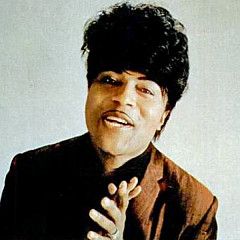
  • The Brooklyn-born singer came up alongside the likes of Bob Dylan and Jimi Hendrix in the folk scene of New York City's Greenwich Village. His popularity exploded after he accidentally became the opening act of the 1969 Woodstock Festival. Originally billed as the fifth performer, he was asked to go on when everyone else was stuck in traffic. After his improvised encore of "Freedom," based on the spiritual "Motherless Child," was featured in the Woodstock movie, Richie Havens became a household name.
  • Before he dropped out of high school to pursue music, he planned to become a surgeon.
  • He paid rent in Greenwich Village by painting portraits of tourists and other passersby. Making around $300 a day, he took a big risk trading his paint brushes for a guitar.
  • He encouraged Jimi Hendrix to head to the Village and start his own band after seeing the guitarist performing a gig through the musician's union in New York City. Three years later, both Havens and Hendrix played their legendary gigs at Woodstock, with Havens as the opener and Hendrix as the closer.
  • In the early '60s, he was signed to MGM's Verve imprint with Albert Grossman, Bob Dylan's former manager, as his manager. The label didn't know how to market Havens' range of musical styles, from jazz to gospel to folk to funk. He was a mixed bag, which inspired the name of his 1966 debut.
  • After his Woodstock breakthrough, MGM allowed him to release albums through his own label, Stormy Forest. The imprint was home to a few other acts, including Canadian singer Bruce Murdoch.
  • He covered several tunes from the Beatles and Bob Dylan and even released a 1987 album called Sings Beatles and Dylan. His live rendition of the Fab Four's "Here Comes The Sun" was his biggest commercial hit, peaking at #16 on the Hot 100 in 1971.
  • He played The Hawker in the original stage production of The Who's rock opera Tommy. Eric Clapton took over the role, renamed The Preacher, for the 1975 movie.
  • He played a modern-day Othello in the 1974 movie Catch My Soul. Singer-songwriter Tony Joe White and rock duo Delaney and Bonnie rounded out the cast in the hippie version of Shakespeare's play.
  • His unique method of guitar playing, mostly in open tunings, is due to his large hands. "My hands are so damn big that I couldn't place my fingers properly on the fret board, so I never learned to play the right way," he explained. "Every time I tried to touch a neck my finger would touch two strings... but I found enough chords and made enough mistakes to find some beautiful sounds in this open tuning to be able to create the accompaniment."
  • He died of a heart attack at his home in New Jersey at age 72. Per his request, his ashes were scattered over the original Woodstock site in Bethel, New York.

Comments

Be the first to comment...

Editor's Picks

Stephen Christian of Anberlin

Stephen Christian of AnberlinSongwriter Interviews

The lead singer/lyricist for Anberlin breaks down "Impossible" and covers some tracks from their 2012 album Vital.

Emilio Castillo from Tower of Power

Emilio Castillo from Tower of PowerSongwriter Interviews

Emilio talks about what it's like to write and perform with the Tower of Power horns, and why every struggling band should have a friend like Huey Lewis.

Art Alexakis of Everclear

Art Alexakis of EverclearSongwriter Interviews

The lead singer of Everclear, Art is also their primary songwriter.

Graham Bonnet (Alcatrazz, Rainbow)

Graham Bonnet (Alcatrazz, Rainbow)Songwriter Interviews

Yngwie Malmsteen and Steve Vai were two of Graham's co-writers for some '80s rock classics.

They Might Be Giants

They Might Be GiantsSongwriter Interviews

Who writes a song about a name they found in a phone book? That's just one of the everyday things these guys find to sing about. Anything in their field of vision or general scope of knowledge is fair game. If you cross paths with them, so are you.

Who's Johnny, And Why Does He Show Up In So Many Songs

Who's Johnny, And Why Does He Show Up In So Many SongsSong Writing

For songwriters, Johnny represents the American man. He has been angry, cool, magic, a rebel and, of course, marching home.