Tripping

Album: Intensive Care (2005)
Charted: 2
Play Video

Songfacts®:

  • Robbie Williams described this song as a "mini gangster opera," citing the Guy Ritchie-directed mob movies Lock, Stock and Two Smoking Barrels and snatch as the two main inspirations behind the lyrics. It appears to be written from the perspective of a novice gang member who feels out of his depth in such a brutal underworld, with Williams singing in the chorus: "I know it's coming, there's gonna be violence. I've taken as much as I'm willing to take."
  • This song opens with the line: "First they ignore you, then laugh at you and hate you, then they fight you, then you win." This quote is frequently misattributed to Mahatma Gandhi. According to The Associated Press, it can actually be traced back to Nicholas Klein, a trade union activist, who said something similar during a speech in 1918: "First they ignore you. Then they ridicule you. And then they attack you and want to burn you. And then they build monuments to you."
  • "Tripping" was one of the first songs Williams wrote with Stephen Duffy after parting ways with his original collaborator, Guy Chambers. Chambers had helped pen some of Williams' most successful singles, including "Angels," "Rock DJ," and "Feel," but the pair fell out during the making of Williams' fifth album, Escapology. Consequently, Williams formed a new songwriting partnership with Duffy, who was previously a member of the British synth-pop band Duran Duran but left before Simon Le Bon and company made their breakthrough in the early '80s.
  • The press frequently referred to "Tripping" as a "reggae song," although Williams disagreed with this categorization. The rolling rhythm, for example, owes a lot to the work of The Clash's Topper Headon. Williams also reaches for an extremely high falsetto in the chorus, as is often heard in disco music.
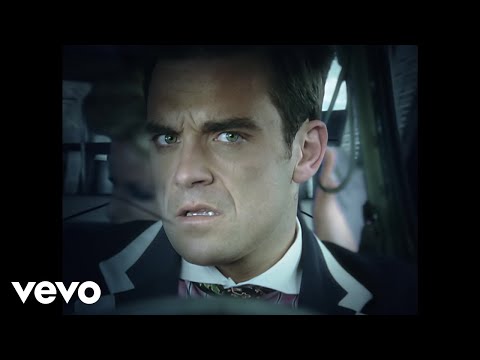
  • Directed by Johan Renck, the music video for "Tripping" is based on the nightmares Williams was having at the time. Filmed over two days in Los Angeles, the video places Williams in a number of surreal scenarios. At one point, for example, he is seen running on the spot in what looks like an old hotel corridor. Later, a baby starts singing to him in the passenger seat of a Saab 95. For the recurring scene of Williams in bed, Renck shifted the room 90 degrees so the British singer was standing up as opposed to lying down. This makes it appear as though Williams is floating above the mattress.
  • This was the first single released from Williams' sixth album, Intensive Care. It was issued as a double A-side along with "Make Me Pure," also from Intensive Care. "Tripping" peaked at #2 in the UK, where it was also the 19th best-selling single of 2005.

Comments: 9

  • Ignacio from BarcelonaRobbie Williams' songs often repeat the same theme: he longs to achieve great things, yet his accomplishments are meager. Another recurring theme is his seeking refuge in dominant women, as seen in "Rock DJ."
  • Debra Barratt from Queensland AustraliaLove all Robbies work. The man's an emotional genius
  • Peter from Palmerston Nth, New ZealandThis is whats its all about:

    The music rhythm is very Islamic.

    "First they ignor you, then laugh at you and hate you, then they fight you then you win"
    This is refering to the abuse handed out to Muslim people, for example the term Pakis (Derogatory slang for Pakistan popuplation) living in England. Also Palestinian peoples in Israel. "Then you win" suicide bombers go to paradise with a thousand virgins.

    "When the truth dies, very bad things happen" Your being heartless again.
    The truth about why Muslims are being targeted (invaded) is of course OIL and not because they are all reckless fanatics wanting to be suicide bombers. Got to have a good reason to invade another country that will sit well with the general public.

    Then listen to the rest and it all makes sense.

    "You should see me in the after life" Being a suicide bomber is worth it!!!

    Its all about the paranoia. Fear. Miss trust. What happens when there is no truth. On both sides
  • Phillip from Cairns, AustraliaThe line attributed to Mahatma Gandhi probably derives from an earlier quote about Truth by German Philosopher Arthur Schopenhauer (1788 - 1860) - "All truth passes through three stages. First, it is ridiculed. Second, it is violently opposed. Third, it is accepted as being self-evident." -
  • Frederiek from Beltrum, NetherlandsI think "oh lord, make me pure, but not yet", from make me pure of course, is a quote of Augustine
  • Imogen from Doncaster, EnglandI am sure that the very first song Robbie co-wrote with Stephen Duffy was the new single "Sin Sin Sin". Radio was the first song Robbie released that he had co-wrote wrote with Stephen.
  • Nikkita from Panama, Othergreat song!I luv the disco style.
  • Ivica from Prague, Czech RepublicActually, Robbie's first song co-written with Stephen Duffy was Radio - year before Tripping
  • Katie from Melbourne, AustraliaIf you've seen the film clip then you obviously have seen its a bit strange. This film clip is based on all the dreams Robbie has had in the past all pieced together
see more comments

Editor's Picks

Philip Cody

Philip CodySongwriter Interviews

A talented lyricist, Philip helped revive Neil Sedaka's career with the words to "Laughter In The Rain" and "Bad Blood."

Rob Thomas of Matchbox Twenty

Rob Thomas of Matchbox TwentySongwriter Interviews

Rob Thomas on his Social Distance Sessions, co-starring with a camel, and his friendship with Carlos Santana.

Mike Scott of The Waterboys

Mike Scott of The WaterboysSongwriter Interviews

The stories behind "Whole Of The Moon" and "Red Army Blues," and why rock music has "outlived its era of innovation."

Metallica

MetallicaFact or Fiction

Beef with Bon Jovi? An unfortunate Spandex period? See if you can spot the true stories in this Metallica version of Fact or Fiction.

Dwight Twilley

Dwight TwilleySongwriter Interviews

Since his debut single "I'm On Fire" in 1975, Dwight has been providing Spinal-Tap moments and misadventure.

Leslie West of Mountain

Leslie West of MountainSongwriter Interviews

From the cowbell on "Mississippi Queen" to recording with The Who when they got the wrong Felix, stories from one of rock's master craftsmen.