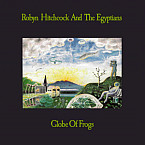

Album: Globe of Frogs (1988)
Play Video

Songfacts®:

  • Robyn Hitchcock & the Egyptians were a British rock band led by Robyn Hitchcock. The band was formed in 1984 and split in 1994. With a lineup that featured Hitchcock on vocals, guitar, and harmonica, Andy Metcalfe on bass guitar, Morris Windsor on drums, and Roger Jackson on keyboards, the band quickly made a name for themselves with their innovative and eclectic sound.

    Drawing on a wide range of influences, including psychedelia, folk, and pop, the Egyptians crafted a distinctive sound that was both quirky and entertaining. Their lyrics were full of clever wordplay and allusion, reflecting Hitchcock's unique perspective on the world around him.

    Their popularity grew with the 1986 album Element of Light, and A&M Records subsequently signed them in the US. "Balloon Man" is a track from Globe of Frogs, their first album after signing to the label.
  • Robyn Hitchcock had a loose connection to a couple members of The Bangles, and he initially penned "Balloon Man" intending to offer it to the girl group. A&M Records took an interest in the demo and demanded that Hitchcock record and release the track himself.
  • Despite Hitchcock's reservations, "Balloon Man" went on to become one of his most successful songs, receiving significant airplay on college radio and even earning rotation on MTV. While the track remains a fan favorite to this day, Hitchcock himself has expressed mixed feelings about it, hinting that it's not among his favorites of his own compositions.

    "My partner at the time disliked it intensely, but out it came and it was a radio hit," he told Uncut magazine. "It still brings me in some royalties, so I'm very grateful for it. I do sometimes play it, but I'm not tethered to any one song: once you've had a proper hit, you;'ve got to play the bloody thing every night."
  • The meaning of this surreal New York street scene is open to interpretation, but most take it as a contemplation on life's fragility and seizing the moment. The Balloon Man is at the heart of it all, a symbol of childlike joy and innocence. He's a humble guy who loves making others happy with his balloons, but he's also a reminder that life is fleeting. When the Balloon Man suddenly explodes, leaving behind only his balloons, it's a sharp reminder to cherish every moment.

    An alternative take is The Balloon Man represents the American Dream, promising happiness and prosperity. But the song suggests that the American Dream doesn't always deliver. The Balloon Man's sudden end can be seen as a commentary on the American Dream's failures, and how it can lead to disillusionment and disappointment.
  • Pat Collier's shiny production for this song was unusual for Hitchcock, and no doubt a result of his leap to a major label, A&M.

Comments: 2

  • "heroin Chic" Le Freak from U.s.a.This is definitely not what the song's about but the first thing that came to mind when I heard this was drug mules swallowing heroin balloons for transport. Or, less darkly, inhaling nitrous oxide from party balloons.
  • Garagepsychfan from UsaI always interpreted it as that the balloon man (and the "plague of" other balloon men) were not regular humans that have balloons, but rather balloon-like beings. So, it's not a guy that has balloons and then he (inexplicably) explodes leaving the balloons behind -- it's that, as a balloon-like being, he himself "pops"! And he doesn't leave behind "only his balloons" -- he leaves behind hummus, chickpeas and some strips of skin. Yeah, weird, but that's Robyn.
see more comments

Editor's Picks

Gary Brooker of Procol Harum

Gary Brooker of Procol HarumSongwriter Interviews

The lead singer and pianist for Procol Harum, Gary talks about finding the musical ideas to match the words.

Andy McClusky of OMD

Andy McClusky of OMDSongwriter Interviews

Known in America for the hit "If You Leave," OMD is a huge influence on modern electronic music.

Waiting For The Break of Day: Three Classic Songs About All-Nighters

Waiting For The Break of Day: Three Classic Songs About All-NightersSong Writing

These Three famous songs actually describe how they were written - late into the evening.

Donald Fagen

Donald FagenSongwriter Interviews

Fagen talks about how the Steely Dan songwriting strategy has changed over the years, and explains why you don't hear many covers of their songs.

Graham Nash

Graham NashSongwriter Interviews

Graham Nash tells the stories behind some of his famous songs and photos, and is asked about "yacht rock" for the first time.

Michael Sweet of Stryper

Michael Sweet of StryperSongwriter Interviews

Find out how God and glam metal go together from the Stryper frontman.