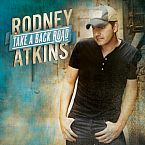
Take A Back Road

Album: Take A Back Road (2011)
Charted: 23
Play Video

Songfacts®:

  • The lead-off single from American Country music singer Rodney Atkins' fourth album finds the singer looking to leave the stress of the city. It was released on April 26, 2011.
  • The song was written by Rhett Akins, who also co-penned Atkins' previous single, "Farmer's Daughter and Luke Laird, who credits include "Hillbilly Bone" and "So Small amongst others.
  • Atkins explained the song's meaning in an interview with Country Music Rocks: "It's really about leaving the city and busy life to enjoy the country life and do the things and with the people that matter most. Road trips and having a good time."
  • Speaking to The Boot, Atkins recalled that when Akins and Laird demoed the tune to him in their office, his initial reaction was, "This is really cool, it's a great summertime song. Crank the windows down, turn it up!"

    As he listened, Atkins started seeing the picture of what he wanted the cut to sound like. "I kept listening," he added, "and it kept growing and occurring to me that this is a deeper song than what I realized. As you go and listen to it more and more, you realize it actually is a life song. It's an important song."
  • Rhett Akins told Taste of Country that he came up with the song's title after hearing a friend say that listening to a Hank Williams, Jr. album made him, "want to ride a dirt road right now." Laird had come up with a drum loop and melody to which he could not think of any lyrics, and "he loved the idea" as he, "grew up in rural Pennsylvania on a dirt road." The two songwriters changed the line to "take a back road" and decided to give it a rap-style phrasing.
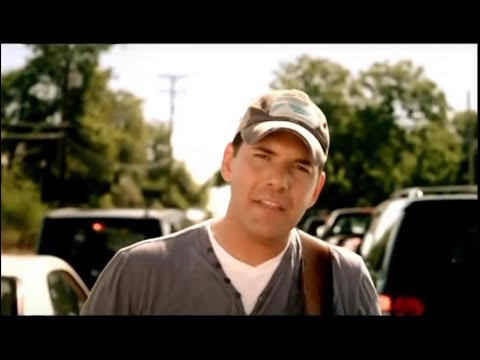
  • The music video was directed by Andy Tennant ("Sweet Home Alabama") and filmed on Interstate 40 near Chattanooga, Tennessee and in Carthage, Tennessee. Atkins spent most of his time on top of a water tower, which he told The Boot, "was a little surreal, because I spent hours at a time up there in the quiet, and it was very secluded." The singer added that he suffers from vertigo, "I lose my equilibrium easily. I can lean out to look at something and just keep leaning and not realize I'm about to fall. So that made it kind of interesting."
  • Atkins told The Boot that he feels grateful to have had the opportunity to record this tune. "I got the work tape from Rhett Akins, and it was the wackiest little demo," he recalled. "Luke Laird was playing that lick on the acoustic guitars. All I know is when I played the song and it was over, I wanted to hit play again.
    I realized the song is about when you're in the gravel, traveling on, moving forward. It lifted me up wherever I was, whether we were in Afghanistan, Detroit, Los Angeles or Nashville. It's a state of mind, it can carry you through tough times, help you forget and realize it's not that bad. It's an anthem just like 'If You're Going Through Hell.' I feel very fortunate and thankful to Rhett and Luke for sending me that song."

Comments

Be the first to comment...

Editor's Picks

Tommy James

Tommy JamesSongwriter Interviews

"Mony Mony," "Crimson and Clover," "Draggin' The Line"... the hits kept coming for Tommy James, and in a plot line fit for a movie, his record company was controlled by the mafia.

Steely Dan

Steely DanFact or Fiction

Did they really trade their guitarist to The Doobie Brothers? Are they named after something naughty? And what's up with the band name?

David Gray

David GraySongwriter Interviews

David Gray explains the significance of the word "Babylon," and talks about how songs are a form of active imagination, with lyrics that reveal what's inside us.

JJ Burnel of The Stranglers

JJ Burnel of The StranglersSongwriter Interviews

JJ talks about The Stranglers' signature sound - keyboard and bass - which isn't your typical strain of punk rock.

Tim McIlrath of Rise Against

Tim McIlrath of Rise AgainstSongwriter Interviews

Rise Against frontman Tim McIlrath explains the meanings behind some of their biggest songs and names the sci-fi books that have influenced him.

George Clinton

George ClintonSongwriter Interviews

When you free your mind, your ass may follow, but you have to make sure someone else doesn't program it while it's wide open.