Little Mary Phagan

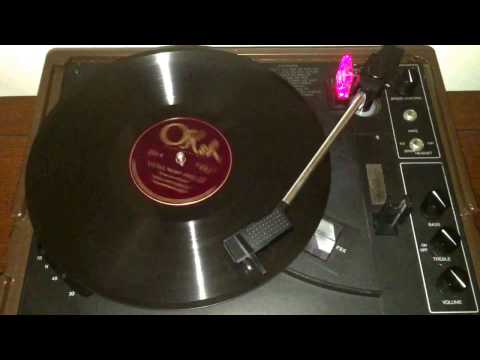
Album: Complete Recorded Works (1925)
Play Video

Songfacts®:

  • "Little Mary Phagan" was written by Fiddlin' John Carson (1868-1949), who in 1922 became the first old-time country musician to broadcast genuine old-time country music over a radio station. He wrote this song in 1915 and actually performed it on the steps of the Georgia State Capitol. Ten years later it was recorded by his singer-guitarist daughter Rosa Lee Carson (1911-92).

    It was also recorded twice in 1925 by Al Craver: on May 27, and again (under the name Vernon Dalhart) on October 1. The song is also known as "The Ballad Of Mary Phagan," and there are variations on the words.
  • Aside from some speculation about the dialogue between the victim and the man convicted of killing her, this is a fairly straightforward ballad about a murder case that has generated much manufactured controversy.

    In April 1913, 13-year-old Mary Phagan was found brutally murdered in the basement of the pencil factory where she worked, by the African-American security man Newt Lee, and although the investigation was far from exemplary, and included two exhumations of the body, the police eventually focused their attention on two suspects: the quite wealthy manager and part owner of the factory, Leo Frank, and Jim Conley, a semi-literate African American.

    While Frank pleaded total ignorance of the crime, he was the last person (bar one?) to see the victim alive, but Conley implicated him, claiming he'd bribed him to dispose of the body. Because of the bizarre nature of some of the evidence - two crudely forged letters found at the crime scene which Conley admitted writing - there was really no question about his involvement.

    Frank, who was Jewish, was indicted and convicted primarily on the evidence of Conley, and sentenced to death, though this sentence was commuted to life imprisonment. That might have been the end of the matter, but in August 1915 a lynch mob, the self-styled "Knights of Mary Phagan," broke into the prison where Frank was being held, kidnapped him and strung him up.

    In his 1966 book The Lynching Of Leo Frank, Henry Golden quotes Frank's lawyer who said of Jim Conley: "Who is Conley? Who was Conley as he used to be and as you have seen him? He was a dirty, filthy, black drunken, lying ni--er... Who was it that made this dirty ni--er come up here looking so slick? Why didn't they let you see him as he was?"

    Frank himself made similar disparaging comments suggesting that it was absurd to indict him on the word of a "black brute."

    Commenting 50 years after the case, McLellan Smith, who covered the story as a cub reporter, wrote that a man of Conley's mental capacity could have been broken if he was lying, adding that he certainly impressed on the witness stand.

    In 1986, under continued pressure including new evidence of doubtful probity, the Georgia State Board of Pardons and Paroles granted Frank a posthumous pardon, but without addressing the question of his guilt.

    Carson's song sums up the mood of the time, which was not anti-Semitism, rather a sense of outrage that a man should murder a child and attempt to avoid justice by hiring expensive lawyers and casting unwarranted aspersions on his principal accuser.

    After Governor Slaton commuted Frank's death sentence, Carson wrote another version of the song in which he accused him of taking a million dollar bribe from a New York bank. He ended up in jail for slander. >>
    Suggestion credit:
    Alexander Baron - London, England, for above 2

Comments: 1

  • 1-0-0-1-0-0-1 from Seattle WaAbout the writer of this song from The Document Records Store "No excuses can be made for his racism, anti-Semitism, or downright nastiness. Over the course of his life he was an active member of the Klu Klux Klan, called for the lynching of Leo Frank through song, railed against Evolution, and enjoyed a (self-designated) reputation of being a moonshiner."
see more comments

Editor's Picks

Jon Foreman of Switchfoot

Jon Foreman of SwitchfootSongwriter Interviews

Switchfoot's frontman and main songwriter on what inspires the songs and how he got the freedom to say exactly what he means.

Adele

AdeleFact or Fiction

Despite her reticent personality, Adele's life and music are filled with intrigue. See if you can spot the true tales.

Lori McKenna

Lori McKennaSongwriter Interviews

Lori's songs have been recorded by Faith Hill and Sara Evans. She's performed on the CMAs and on Oprah. She also has five kids.

Donnie Iris (Ah! Leah!, The Rapper)

Donnie Iris (Ah! Leah!, The Rapper)Songwriter Interviews

Before "Rap" was a form of music, it was something guys did to pick up girls in nightclubs. Donnie talks about "The Rapper" and reveals the identity of Leah.

Dave Edmunds

Dave EdmundsSongwriter Interviews

A renowned guitarist and rock revivalist, Dave took "I Hear You Knocking" to the top of the UK charts and was the first to record Elvis Costello's "Girls Talk."

Andy McClusky of OMD

Andy McClusky of OMDSongwriter Interviews

Known in America for the hit "If You Leave," OMD is a huge influence on modern electronic music.