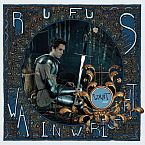


Dinner At Eight

Album: Want One (2003)
Play Video

Songfacts®:

  • Rufus wrote this song about his father, the singer Loudon Wainwright III, after a row they had over dinner.

    In 1976, when Rufus was just 3 years old, his parents split. His mother, the singer Kate McGarrigle, took Rufus and his younger sister Martha and moved them Bedford, New York to Montreal in a U-Haul van, which Rufus sings about in the line, "In the drifting white snow you left me."
  • Rufus' father says he wasn't offended by this song - he was actually proud of his son as he considered it some of his best work. The two have a complicated relationship which is amplified by their profession: They write songs about each other that serve as a strange form of family therapy. In 2012, Rufus appeared on a song with Loudon called "The Days That We Die," where they seem to come to terms with each other, admitting that neither man will ever change.
  • Rufus Wainwright explained to The Guardian in 2005 why he penned this blow-by-blow report of a confrontation with his father, Loudon Wainwright III. Rufus had recently released his debut album and had turned cocky, which he used as a coping mechanism to make it in the music industry. He and Loudon had done a photo shoot and interview for Rolling Stone together in Shelter Island, New York. "I told him he must be really happy that I got him back in that magazine after all these years," Rufus recalled. "That sort of kicked things off. Later in the evening he threatened to kill me. So I went home and wrote 'Dinner At Eight' as a vindictive retort to his threat."

    Rufus and his dad didn't speak for a long time after the incident.
  • In a 2020 Songfacts interview with Wainwright, he explained how this song changed meaning for him over the years. "It was very much intended as a shot over the bow to my father," he said. "Kind of a warning, and in an aggressive mood. But the more I sing it and the older I get - and myself being a father now, too - I realize it's just a complete cry for love, and for coming together and coming to terms with the world. So, that song kind of went from an aggressive song to a very sensitive and loving song."
  • Rufus' mother, Kate McGarrigle, played the accordion on this song.

Comments: 2

  • Elle from Seattle, WaThis is a song about Loudon Wainwright III, Rufus' father. He says on his Want DVD that he wrote it after he and his father did a shoot for Vanity Fair, and Rufus said to Loudon that he (Rufus) had got them on the cover, and Loudon reacted badly ("it was great until these old magazines got us started up again"). They didn't talk for some time. Rufus wrote the song early enough that it could have been on Poses, but he wasn't ready to release it then, and so, with his father's blessing, it was included on Want One instead.
  • Andy from New York, Nyis father and mother separted when he was thee. He had a confrontation with his father about this in a resaurant and it ended with his father threatening to kill him. He went home and wrote this song. Abandonment by his father is a reoceuring theme
see more comments

Editor's Picks

Gary Lewis

Gary LewisSongwriter Interviews

Gary Lewis and the Playboys had seven Top 10 hits despite competition from The Beatles. Gary talks about the hits, his famous father, and getting drafted.

Jack Tempchin - "Peaceful Easy Feeling"

Jack Tempchin - "Peaceful Easy Feeling"They're Playing My Song

When a waitress wouldn't take him home, Jack wrote what would become one of the Eagles most enduring hits.

Keith Reid of Procol Harum

Keith Reid of Procol HarumSongwriter Interviews

As Procol Harum's lyricist, Keith wrote the words to "A Whiter Shade Of Pale." We delve into that song and find out how you can form a band when you don't sing or play an instrument.

Richie Wise (Kiss producer, Dust)

Richie Wise (Kiss producer, Dust)Songwriter Interviews

Richie talks about producing the first two Kiss albums, recording "Brother Louie," and the newfound appreciation of his rock band, Dust.

Donald Fagen

Donald FagenSongwriter Interviews

Fagen talks about how the Steely Dan songwriting strategy has changed over the years, and explains why you don't hear many covers of their songs.

Don Dokken

Don DokkenSongwriter Interviews

Dokken frontman Don Dokken explains what broke up the band at the height of their success in the late '80s, and talks about the botched surgery that paralyzed his right arm.