Babylon's Burning
by Ruts

Album: The Crack (1979)
Charted: 7
Play Video

Songfacts®:

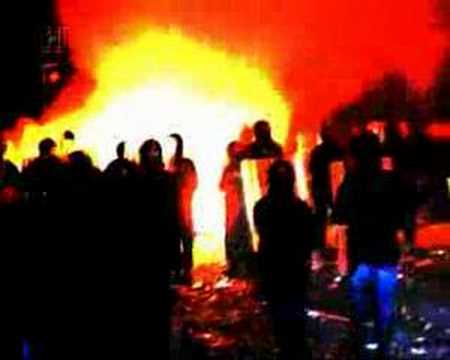
  • This single captured the mood of the time, as riots swept Britain in the summer of 1979. "Babylon's Burning" is about the fiery collapse of western civilization.
  • The Ruts were heavily involved in anti-racism causes and Southall born lead singer Malcolm Owen was particularly affected by the race riots in his hometown in April 1979. Another song on the album, "Jah War," is about those riots.
  • This was featured in the 1980 film Times Square.
  • This was The Ruts biggest hit and they never recovered from the death of Malcolm Owen from a heroin overdose the following year.
  • Babylon's burning
    You're burning the street
    You're burning your houses
    With anxiety


    Malcolm Owen's warning about social unrest employs Rastafarian slang. "Babylon was a much-used word in Rasta culture, referring to Western decadence and it did seem, as far as youth were concerned, that it was all burning," drummer David Ruffy told Uncut magazine. "It was almost like the folk tradition, singing about what was going on."
  • The song originated with the bass riff. "I wasn't a great bass player - I didn't do scales because I couldn't. But I did this run as an annoying warm up," bassist John "Segs" Jennings told Uncut. "We went to do some demos, I think in High Wycombe, and [guitarist Paul] Foxy seized on that 'da-da-da-da-da-da' run and took it somewhere. Malcolm started singing '...With anxiety' and there you go."
  • Producer Mick Glossop added the sound effects of clanging bells and wailing police sirens.

Comments: 1

  • Stephen Brown from Newcastle-under-lymeI knew Malcolm Owen, before the band took shape. We met in Northwich Cheshire. He was visiting friends in Barnton from London. Mell and Jan their daughter Zoe who had moved away from London to bring up their daughter. He invited me round, visitors would turn up from all over Britain. One place that was a favourite place for us all was a Farm on Anglesey in North Wales near Llandeussant. Another two properties near Tregaian where rented at this time. I was 14 at the time and Malcolm was just getting together with Rocky. A few from the area Carron Lawrence and I and Norman Bull, David Lightfoot would all hand out, I was taught to play the guitar and the saxophone, there were musical instruments of all kinds around. Sometimes we had jamming sessions depending on who was about at the time. At the age of 18 I would travel all over from London to Anglesey to Manchester, Bristol. It was in London that the band came together, the money was got together by means that I can not put down here. India was involved, and money was lost in getting a friend back from India, as a bribe. There is more I could tell concerning the lives of those associated with the startup of the band, how they got to number one, and what happened to achieve this.
see more comments

Editor's Picks

Little Big Town

Little Big TownSongwriter Interviews

"When seeds that you sow grow by the wicked moon/Be sure your sins will find you out/Your past will hunt you down and turn to tell on you."

Millie Jackson

Millie JacksonSongwriter Interviews

Outrageously gifted and just plain outrageous, Millie is an R&B and Rap innovator.

Don Dokken

Don DokkenSongwriter Interviews

Dokken frontman Don Dokken explains what broke up the band at the height of their success in the late '80s, and talks about the botched surgery that paralyzed his right arm.

Martyn Ware of Heaven 17

Martyn Ware of Heaven 17Songwriter Interviews

Martyn talks about producing Tina Turner, some Heaven 17 hits, and his work with the British Electric Foundation.

Sending Out An SOS - Distress Signals In Songs

Sending Out An SOS - Distress Signals In SongsSong Writing

Songs where something goes horribly wrong (literally or metaphorically), and help is needed right away.

John Lee Hooker

John Lee HookerSongwriter Interviews

Into the vaults for Bruce Pollock's 1984 conversation with the esteemed bluesman. Hooker talks about transforming a Tony Bennett classic and why you don't have to be sad and lonely to write the blues.