Maple Leaf Rag

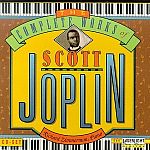
Album: The Complete Scott Joplin (1899)
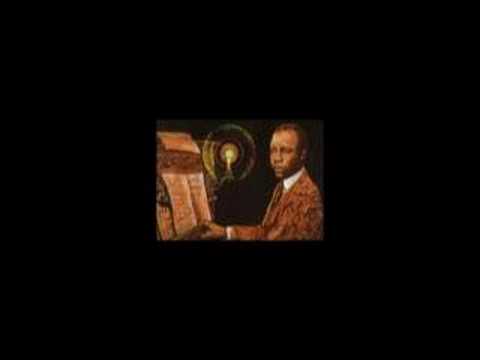
Play Video

Songfacts®:

  • Although Scott Joplin did not originate ragtime, the genre for which he became famous, his biographer Edward Berlin said, "He composed music unlike any ever before written."

    Joplin's most famous composition, "Maple Leaf Rag," was published while he was living in Sedalia, Missouri. It was named after the Maple Leaf Club; the date the club was founded is uncertain, but it was no later than November 24, 1898, when the first Maple Leaf ball was held. It is possible that the actual music predates this.
  • "Maple Leaf Rag" was published between August 10 and September 20, 1899, the latter being the date the score was received by the Copyright Office. It made Joplin's name, his future works would be prefixed as by the composer of the "Maple Leaf Rag."
  • On August 10, 1900, Joplin signed a contract which gave him a one cent per copy royalty, which would be extremely profitable for both him and his estate. Though he died in 1917, "Maple Leaf Rag" was recorded no less than six times in the 1920s. There is also at least one recording extant of Joplin playing the piece himself. >>>
    Suggestion credit:
    Alexander Baron - London, England, for above 3
  • In his biography of Joplin, Berlin debunks the myth surrounding the song's publication. One popular story claims Sedalia publisher John Stark strolled into the Maple Leaf Club on a sweltering hot summer day in search of a cold beer when he heard Joplin playing the tune on the piano and offered to buy the song. But, says Berlin, it's unlikely that Stark, a white businessman, would go out of his way to a second-floor black social club that didn't even have its liquor license.

    Berlin says a first-hand account from Stark's son, William Stark, is more likely. William explained that Joplin brought the song to Stark's office and the publisher initially rejected it because it was too difficult to play. Joplin disagreed and insisted even a child could play the composition. To prove his point, he returned with a teenage boy who performed the tune perfectly on the piano. Stark, not knowing that Joplin actually coached the boy ahead of time, was convinced by the ruse and offered Joplin a contract.
  • "Maple Leaf Rag" is arguably the most influential ragtime tune, but it wasn't as commercially successful as previously suggested. Joplin's first biographer, Rudy Blesh, claimed the rag sold 75,000 copies in its first six months and early ad copy proclaimed upwards of one million sales. In reality, it sold just 400 copies in its first year and possibly reached half a million sales by 1909, according to Berlin.
  • Musicologist Joshua Rifkin covered this on his 1970 album, Scott Joplin: Piano Rags and unintentionally sparked a ragtime revival that peaked with Marvin Hamlisch's Joplin-themed soundtrack to The Sting in 1973. Released through the classical music label Nonesuch Records, Rifkin's album was a surprise hit, selling a million copies and earning two Grammy nominations. Rifkin didn't have commercial success in mind when he did the recordings. "Quite frankly I thought it might sell a few more records than my albums of 15th-century French secular music, maybe a couple of thousand instead of a few hundred," he explained in 2006 interview. "Nobody imagined anything more."
  • This was used on several episodes of The Simpsons. In the 2016 episode "Monty Burns' Fleeing Circus," it soundtracks a short silent film in Mr. Burns' variety show.
  • This was used in the 1931 gangster movie The Public Enemy, starring James Cagney.

    It was also used in these TV shows:

    How I Met Your Mother ("The Rehearsal Dinner" - 2013)
    Boardwalk Empire ("Family Limitation" - 2010)
    Ugly Betty ("The Bahamas Triangle" - 2009, "Level (7) With Me" - 2009)
    Charmed ("Snow Ghouls" - 2005)
    M*A*S*H ("Dear Dad, Again" - 1973)
  • In 1903, Stark released a new version with lyrics accompanying Joplin's arrangement. Written by Sydney Brown, the story follows a poor man from Virginia who impresses the upper crust ballroom set with his rendition of "Maple Leaf Rag." The chorus describes the feat:

    Oh go 'way man I can hypnotize dis nation,
    I can shake de earth's foundation wid de Maple Leaf Rag
    Oh go 'way man just hold you breath a minit,
    For there's not a stunt that's in it with the Maple Leaf Rag

Comments

Be the first to comment...

Editor's Picks

Philip Cody

Philip CodySongwriter Interviews

A talented lyricist, Philip helped revive Neil Sedaka's career with the words to "Laughter In The Rain" and "Bad Blood."

Michael Franti

Michael FrantiSongwriter Interviews

Franti tells the story behind his hit "Say Hey (I Love You)" and explains why yoga is an integral part of his lifestyle and his Soulshine tour.

Graham Parker

Graham ParkerSongwriter Interviews

When Judd Apatow needed under-appreciated rockers for his Knocked Up sequel, he immediately thought of Parker, who just happened to be getting his band The Rumour back together.

Dennis DeYoung

Dennis DeYoungSongwriter Interviews

Dennis DeYoung explains why "Mr. Roboto" is the defining Styx song, and what the "gathering of angels" represents in "Come Sail Away."

Chris Frantz of Talking Heads

Chris Frantz of Talking HeadsSongwriter Interviews

Talking Heads drummer Chris Frantz on where the term "new wave" originated, the story of "Naive Melody," and why they never recorded another cover song after "Take Me To The River."

Dar Williams

Dar WilliamsSongwriter Interviews

A popular contemporary folk singer, Williams still remembers the sticky note that changed her life in college.