A Hazy Shade Of Winter

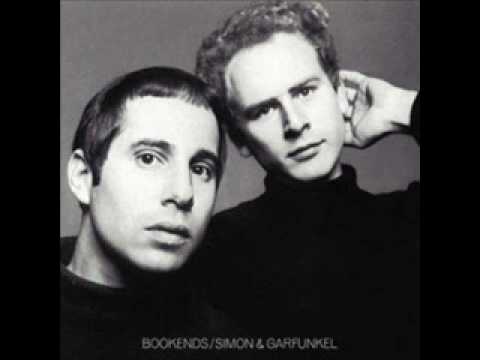
Album: Bookends (1966)
Charted: 30 13
Play Video

Songfacts®:

  • In this song, the singer seems to be lamenting how he was looking for something (or someone) perfect, but never found it, and now time is running out on his dreams. Paul Simon wrote the song, and uses seasons as a metaphor for the cycle of life.
  • In 1987, the Bangles recorded this song, and it hit #11 in the UK and #2 in the US. Their version was used in the film Less Than Zero, in which Brad Pitt appears as an extra (Partygoer/Preppie Kid At Fight). He earned $38 for his appearance.
  • On the Bangles website, Susanna Hoffs talks about meeting Paul Simon after watching Simon & Garfunkel in concert: "We had loved Simon & Garfunkel, and naturally we also loved Paul as a solo artist, and we were really happy to see them perform and then go backstage for a meet-and-greet. This was after our version of 'Hazy Shade of Winter' had come out, and although I don't think we talked about it very much, I remember he was very sweet, and I'm sure he was happy the song had done so well. I think it's always good to have your song covered, but it was a little uncomfortable talking to him about it, because when Simon & Garfunkel did the song, it had gone to #17 (sic), and the Bangles version went to #2. You're proud, of course, but you never want to come off as full of yourself or arrogant you know?"
  • In 2019, a cover by Gerard Way, featuring My Chemical Romance bandmate Ray Toro, was included on the soundtrack to the Netflix series The Umbrella Academy. It plays during the end credits of the season 1 finale, "The White Moon."
  • The Bangles version was also used on the TV shows American Crime Story ("Creator/Destroyer" - 2018), Stranger Things ("The Weirdo On Maple Street" - 2016) and Scream Queens ("Black Friday" - 2015).
  • This was referenced on NewsRadio in the 1995 episode "The Cane." Mr. James attempts to get Paul Simon to endorse his new line of snow tires, which he hoped to call "a hazy shade of whitewalls."

Comments: 20

  • P Bell from NowhereMy interpretation of lyrics (apologies to Paul Simon):

    Time, time, time: This immediately sets the mood of the song. A young man is feeling pressure to become something, to establish identity, either as a poet or a songwriter (in Paul's case). But a struggle that most young people feel, because society seems to demand that we become successful, despite the reality that society's current definition of success (fame and wealth) is rarely attained. We are all running out of time, and we never feel that we accomplished much. We have bills to pay, running out of both time and money. We have limited time to find relationships, accomplish goals, become something. Time itself becomes the pressure.

    But look around, the leaves are brown: Here it moves from a grand scale (society) to a personal one (depression). Don't be tempted to fall into a state of despair, as symbolized by lack of sunlight (hazy), death of vegetation (brown, winter), and the general malaise of seasonal affective disorder, which dovetails into our overall mood of depression. Make every effort to avoid the pall of winter (I believe he was in London when he wrote this, so not so much snow, but rather pale and rotting landscape), and keep your mood up. And definitely shift our mental awareness from internal dialog to external senses to combat the depression.

    Down by the riverside's, bound to be a better ride: Here, Paul is speaking of renunciation, giving up the expectations of society. It may be a better choice to live by the river and beg (carry a cup in your hand), than to try to fulfill society's expectations of working, raising family, and becoming famous. The popularity of Hinduism and Buddhism at the time of writing may have contributed to his thinking. Stories of Buddhas and Rishis that achieved enlightenment by renouncing the external world and staying focused within.

    Hang on to your hopes is an easy thing to say: An internal monologue that is repeating the conditioning of what so many others have told us. Ultimately, no one can address our internal despair, we must do that ourselves. The best others can do is say "cheer up", which is an easy thing to say, but much harder to do. Eventually, we hear the voices of others telling us what to do in our own heads, and it echoes as empty words. How exactly does one hang on to hopes? Much easier said than done.

    The springtime of my life: Paul is still a young man (in his springtime), and trying to convince himself that he has every reason to be hopeful. But as we know today, depression is much more about chemistry (a disease), than about conditioning. The struggle is real. Still, we try to convince ourselves (the grass is high, the fields are ripe) that things are great, when they are not.

    Won't you stop and remember me: Here, ego is seeking fame. Paul doesn't want to live and die with no one to remember him. He wants to feel that he has done something significant with his life. Of course, we are all significant, but society tells us we must affect others to be significant, and ego says we must try to live forever (via fame). Paul wants to write poetry and music that makes him famous long after he dies. Of course, he already has (long after this song was written), so he probably looks back on these lyrics with mirth. But when he is writing this song, he worries that his 'unpublished rhyme' will never be remembered, that HE will never be remembered.

    Look around, leaves are brown: the repetition of being in the present moment is a common pathway taught to seekers of enlightenment. Today, we use words like 'mindfulness', but the teachings are the same. Focus on your senses, eliminate your thoughts. Side note: this 'mindfulness' is merely one path, one branch of yoga out of thousands, one of eightfold path of the Buddha, one aspect of the Dervish practice, it is not the ONLY path, but it is a common one in most religious/philosophical practices. Mindfulness can be used as one tool in our arsenal to combat the depression and anxiety that Paul is feeling. It resonates with us, because we are feeling the same sadness, the same depression.

    Overall the lyrics speak to wanting to become famous, the pressures of becoming famous, struggling with depression, utilizing tools like mindfulness (and Vodka) to address depression and deciding how we want to live our lives (as a productive member of society, or as a renunciate).
  • Jennifur SunLove the lead guitar on this song but can't find out who played it. Does anyone know? Also loved the drummer.
  • Denny Davis from Glenpool OkLove the song. Reminds me of my childhood. I play Simon and Garfunkel's version. 1966...I was 8 years old, born and raised in Cincinnati.
  • Ken from Philadelphia, PaI grew up on the east coast, and I always thought this song... and many other songs, notably California Dreaming and I Am A Rock... that revolve around imagery of a cold and snowy urban landscape were the result of the actual weather. The 1960s saw a string of long, cold and snowy winters in the Middle Atlantic States and I always felt like this was a huge influence on East Coast-based songwriters (Yeah, the Mamas and the Papas made it big in California, but they started on the East Coast and "California Dreaming" was most definitely written in New York in the late fall).
  • Kawa from Tokyo, JapanHi Music lovers,

    I think the idea of this lyrics of the song came from a song 'California Dreamin' sung by The Mamas & The Papas in earlier 1966. If you doubt it, would you please check out the lyrics of the 'California Dreamin', one more rime ! You would find that there are so many similar words or key words in that song. Look at the the title again ! 'A Hazy Shade Of Winter' ! I think this title reminds me of two things. First thing is the lirics of 'California Dreamin'. The other one is the title of another song 'The Whiter Shade Of Pale' sung by Procol Harum, a 60s British rock band. Very funny, huh ! I think Paul, the songwriter of this song, liked two songs above very much. So he tried to write a song like 'California Dreamin'. And more, the idea of the music came from 'California Dreamin',too, I think. Because if you are guitarist and have a guitar next to you now, just pick it up trying to play the intro of both 'Calofornia Dreami' and 'Hazy Shade Of Winter', you would find that both intro are very similar, too ! What does that mean? Just ask Paul!
  • Marty from Cleveland, OhI don't see this as a lament at all. To me, the singer is excited by the possibilities that are before him as a young man ("It's the springtime of my life"). I think of the lyrics as just as upbeat as the music.

    But regardless of one's own interpretation, it's a really good song.
  • Dusk Blackman from Albany, Georgia (u.s.a.)So this song only hit #30 in the UK. Too close to Napoleon's France.
  • Barry from Sauquoit, NyOn October 30th 1966, "Hazy Shade of Winter" by Simon & Garfunkel enter Billboard's Hot Top 100 chart at position #81; and five weeks later on December 4th, 1966 it peaked at #13 {for 1 week} and spent 9 weeks on the Top 100...
    Between 1957 and 1982 the NYC duo had eighteen* Top 100 records; eight made the Top 10 with three reaching #1, "The Sounds of Silence" for 2 weeks in 1965, "Mrs. Robinson" for 3 weeks in 1968, and "Bridge Over Trouble Water" for 6 weeks in 1970...
    They just missed having nine Top 10 records when “Scarborough Fair/Canticle" peaked at #11 in 1968...
    * Their first charted record was under the name Tom and Jerry; "Hey! Schoolgirl" peaked at #49 on Billboard's Best Sellers in Store chart on December 22nd, 1957.
  • Ernie from Guadalajara, MexicoThis song is just great. The fact that are a lot of covers out there means it is a great tune.
    Now, if I were going to cover the song I definitely would base my version on Simon & Garfunkel. You see that at the time I write this is almost 2014 and the original recording can sound a little aged but the rhythm is great, the melody catchy and lyrics magnificent.
    Bangles version is good. They had a couple of good ideas on the adaptation. Still, I prefer the original.
    'She wants revenge' and 'BodyJar' versions are terrible to me. They have mutilated and destroyed all the essence.
  • Alex from Washington, DcOy, from S&G to BodyJar, each version cuts out more and more of the original. BodyJar is the worst. Acchh, I don't know how anyone could consider their version the best - the "seasons change with the scenery, etc." refrain is essential to the song, and they just cut it out completely - like they were scared of it, because it was too complex a sublime juxtaposition, and they didn't know how to deal with it, so they just ignored it, hoping it would go away. At least the Bangles kept part of it in. I love S&G's version, but I think the Bangles use of contrasting musical styles at the very beginning and during the 'seasons change with the scenery" refrain is bit of magic,.
  • Jir from London, United KingdomFirst version I heard was a BodyJar version of this song, and to me it's still my favorite. Yeah yeah.... I should feel ashamed, but I don't - some covers just seem better than originals
  • Beck from Boca Raton, FlI don't know how any true Simon & Garfunkel fan could say that the Bangles could even do this song justice. They don't. Covers usually suck and I'm sorry Bangels fans but their cover stinks. Ya know what? Come to think of it I'm not sorry.
  • Brian from Boston, MaI don't there is any question about it.The Bangles version is the best. I dont know anyone that does not agree.
  • Rod from Gainesville, FlI think the bangels did it better. First, they deserve praise for using it. Susie still does this well in her new gig with Altered Beast boy. but the arpeggio sounds hesitant in the S&G version and not so in the Bangles (Bagels).
    PLUS the Bangles Rocks and S&G DO NOT
  • David from Youngstown, OhThis is my favorite Simon & Garfunkel song. Typical brilliant lyrics by Paul Simon. Unlike most S&G songs, this one has a great uptempo beat to it. No offense to the Bangles, but they suck and don't do justice to this song. Of course with their limited skills, they could never do justice to any good song, much less one as great as this.
  • Josh from Westborough, Mathe first songfact should be for "april she will come"
  • Karen from Manchester, NhSimon & Garfunkel is one of my all-time favorite groups. I have NEVER been a fan of the Bangles (I REALLY don't like Hoffs). However, I have to admit that the Bangles version is actually better.
  • Ted from Phoenix, AzIt should be noted that the Bangles' version of "A Hazy Shade of Winter," does not include the last verse from the Simon and Garfunkel version.
  • Max from Amherst, Ma"Hazy Shade" is one of my favorite S&G songs. I thought the Bangles did a marvelous rendition of it.
  • Richard from Anniston, AlBob Dylan opened some of his concerts in the 90's performing this song.
see more comments

Editor's Picks

Muhammad Ali: His Musical Legacy and the Songs he Inspired

Muhammad Ali: His Musical Legacy and the Songs he InspiredSong Writing

Before he was the champ, Ali released an album called I Am The Greatest!, but his musical influence is best heard in the songs he inspired.

Michael Sweet of Stryper

Michael Sweet of StryperSongwriter Interviews

Find out how God and glam metal go together from the Stryper frontman.

Devo

DevoSongwriter Interviews

Devo founders Mark Mothersbaugh and Jerry Casale take us into their world of subversive performance art. They may be right about the De-Evoloution thing.

Dennis DeYoung

Dennis DeYoungSongwriter Interviews

Dennis DeYoung explains why "Mr. Roboto" is the defining Styx song, and what the "gathering of angels" represents in "Come Sail Away."

Tom Bailey of Thompson Twins

Tom Bailey of Thompson TwinsSongwriter Interviews

Tom stopped performing Thompson Twins songs in 1987, in part because of their personal nature: "Hold Me Now" came after an argument with his bandmate/girlfriend Alannah Currie.

Evolution Of The Prince Symbol

Evolution Of The Prince SymbolSong Writing

The evolution of the symbol that was Prince's name from 1993-2000.