
Don't You Wait

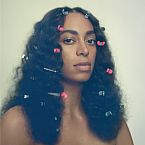
Album: A Seat at the Table (2016)
Play Video

Songfacts®:

  • A Seat At The Table was inspired by a backlash over comments made by Solange to music journalists in 2013 for not "understand the culture of R&B" before writing about the genre."

    When she was later invited on the New York Times podcast to discuss the subject of "cultural tourism" with Jon Caramanica, the Texan songstress declined. Speaking on the podcast, Caramanica responded to Solange's comments by suggesting that her "success quote unquote" was down to "the same people that she's lambasting." He added that she was "biting the hand that feeds you."

    Speaking with New York radio station WQXR, Solange said that Caramanica's remarks were "the turning point in the transition" for the writing of A Seat at the Table:

    "I began to think a lot about that conversation and replaying it, and it haunted me," she told host Helga Davis. "And it haunted my mother to hear someone telling her daughter 'don't bite the hand that feeds you.' And also the racial subtleties - are not so subtle - of what that encompasses when you say that to a black woman. Then you connect it by saying 'Do you know who's buying your records?'"

    "I was essentially being told to shut up," she added.
  • Solange references the incident on this song when she sings:

    Now, I don't want to bite the hand that'll show me the other side, no
    But I didn't want to build the land that has fed you your whole life, no
    Don't you find it funny?


    Solange explained during a conversation with mother Tina Lawson and journalist Judnick Mayard for her website:

    "Essentially, when I was writing 'Don't You Wait,' I feel like the overall essence of that song, outside of that singular incident, was also to friends of all colors that I had that I may have had to exit from my life in order to evolve and heal. These were people or friends, in general, that I felt like were maybe holding me back from being my greatest self. A lot of those people love me and are great people, but sometimes people are meant to be in your life only for an era of time.

    Originally, I started writing the song about that specifically and then I transitioned to writing it about whoever felt like I was biting the hand that fed me or whoever felt like they were the people who were buying my records and weren't going to allow me that freedom to express myself.

    One of the things that I've explained to the journalist, who has since apologized, was that by him stating that Grizzly Bear made me, who are friends of mine and awesome people and an awesome band, he was being extremely reductive to a lot people who supported me before True, who were young Black people. What he was basically trying to say is that even though Sol-Angel and the Hadley St. Dreams actually reached more people from a numerical point of view than True, I am only relevant to him because the people who he aligns himself with are saying that I'm relevant."

Comments

Be the first to comment...

Editor's Picks

Andrew Farriss of INXS

Andrew Farriss of INXSSongwriter Interviews

Andrew Farriss on writing with Michael Hutchence, the stories behind "Mystify" and other INXS hits, and his country-flavored debut solo album.

Tony Iommi of Black Sabbath, Heaven And Hell

Tony Iommi of Black Sabbath, Heaven And HellSongwriter Interviews

Guitarist Tony Iommi on the "Iron Man" riff, the definitive Black Sabbath song, and how Ozzy and Dio compared as songwriters.

Pete Anderson

Pete AndersonSongwriter Interviews

Pete produced Dwight Yoakam, Michelle Shocked, Meat Puppets, and a very memorable track for Roy Orbison.

Bob Daisley

Bob DaisleySongwriter Interviews

Bob was the bass player and lyricist for the first two Ozzy Osbourne albums. Here's how he wrote songs like "Crazy Train" and "Mr. Crowley" with Ozzy and Randy Rhoads.

Curt Kirkwood of Meat Puppets

Curt Kirkwood of Meat PuppetsSongwriter Interviews

The (Meat)puppetmaster takes us through songs like "Lake Of Fire" and "Backwater," and talks about performing with Kurt Cobain on MTV Unplugged.

Sending Out An SOS - Distress Signals In Songs

Sending Out An SOS - Distress Signals In SongsSong Writing

Songs where something goes horribly wrong (literally or metaphorically), and help is needed right away.