Let Me Be Your Angel

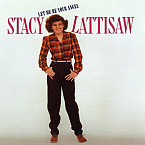
Album: Let Me Be Your Angel (1980)
Charted: 21
Play Video

Songfacts®:

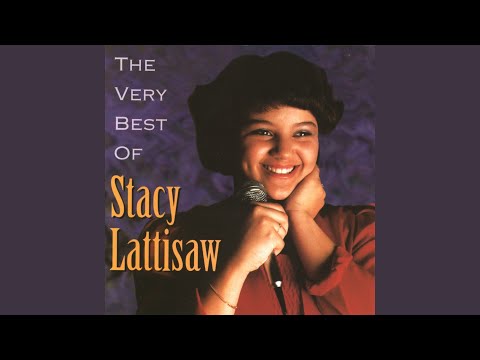
  • In this heartache ballad, 13-year-old Stacy Lattisaw tries to convince the object of her affection that she's not too young to understand the ways of love. "Let me be your angel," she pleads. "Let me be the one for you."

    Let Me Be Your Angel landed in 1980, a year after the young R&B singer debuted with Young And In Love. For her sophomore release, Cotillion Records paired her with Narada Michael Walden, the former drummer for the Mahavishnu Orchestra who was carving out a career as a songwriter and producer. In addition to producing the album, he also wrote all of its tracks, many with the help of lyricist Bunny Hull ("New Attitude"). It was the beginning of a fruitful working relationship between Lattisaw and Walden, who helmed most of her releases throughout the '80s.

    "Most of my favorites were written by Narada Michael Walden. Narada is one of the nicest, easiest people to work with. He didn't have an ego. He was just authentic," she said in a 2010 Blogcritics interview. "He came to our house in DC with an eight-track. My mom had bought a piano. He started to play the chords to 'Let Me Be Your Angel.' It was written in our home."
  • Peaking at #21, this was Lattisaw's first single to make the Billboard Hot 100. It also went to #8 on the R&B chart.
  • The single's success opened doors for Walden, whose phone was ringing off the hook for offers to produce big-name artists like Aretha Franklin (he produced her 1985 comeback album, Who's Zoomin' Who? and co-wrote the hit single "Freeway Of Love").

    Walden told The Songfacts Podcast in 2024: "Even [Arista Records president] Clive Davis called and said, 'Who are you? How did you know how to make those kinds of records?' And then he said, 'Well, do you want to work with Aretha? You want to work with Dionne Warwick?' Because of 'Let Me Be Your Angel.' So, I've got to thank Stacy Lattisaw."
  • Lattisaw also notched hits with the album's disco tunes "Dynamite!" and "Jump To The Beat," which both went to #1 on the Dance chart - making her the youngest artist at the time to ever top the tally. But she preferred singing ballads like "Angel." She explained: "My voice was still very soft and being developed then. The more I sang, the stronger my voice became. I grew into the songstress. That's how I considered myself. I never cared as much for the uptempo, techno-style music. I prefer singing ballads and midtempos."
  • Before being picked up by Cotillion, a subsidiary of Atlantic Records, Lattisaw was offered a contract with TK Records. Frederick Knight, a producer at TK, heard a tape of Lattisaw singing at a local event in her native Washington, DC, and wrote a song tailored for her voice and youthful appeal: "Ring My Bell." When she signed with Cotillion instead, Knight revamped the song with more mature lyrics and gave it to Anita Ward, who swept the charts with it in 1979.

Comments

Be the first to comment...

Editor's Picks

Brandi Carlile

Brandi CarlileSongwriter Interviews

As a 5-year-old, Brandi was writing lyrics to instrumental versions lullabies. She still puts her heart into her songs, including the one Elton John sings on.

Victoria Williams

Victoria WilliamsSongwriter Interviews

Despite appearances on Carson, Leno and a Pennebaker film, Williams remains a hidden treasure.

Director Mark Pellington ("Jeremy," "Best Of You")

Director Mark Pellington ("Jeremy," "Best Of You")Song Writing

Director Mark Pellington on Pearl Jam's "Jeremy," and music videos he made for U2, Jon Bon Jovi and Imagine Dragons.

Timothy B. Schmit of the Eagles

Timothy B. Schmit of the EaglesSongwriter Interviews

Did this Eagle come up with the term "Parrothead"? And what is it like playing "Hotel California" for the gazillionth time?

Dave Edmunds

Dave EdmundsSongwriter Interviews

A renowned guitarist and rock revivalist, Dave took "I Hear You Knocking" to the top of the UK charts and was the first to record Elvis Costello's "Girls Talk."

Women Who Rock

Women Who RockSong Writing

Evelyn McDonnell, editor of the book Women Who Rock, on why the Supremes are just as important as Bob Dylan.