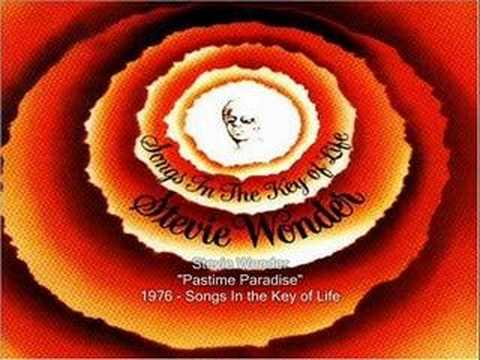
Pastime Paradise

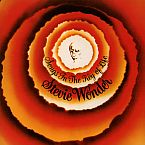
Album: Songs In The Key Of Life (1976)
Play Video

Songfacts®:

  • "Pastime Paradise" was first released on Songs in the Key of Life, which has become Wonder's most highly praised album. Michael Jackson considered it Wonder's best, whilst Elton John told interviewers it was "the best album ever made," a sentiment shared by many in the listening public.

    "Pastime Paradise" certainly stands apart from the rest of Stevie Wonder's oeuvre in terms of mood and message. When one thinks of Wonder, "joy" is the operative word, but in "Pastime Paradise" the synthesizer strings – one of the first novel attempts at using this sort of string-synthesis in a song – create an edgy atmosphere of anxiety, substantiated by the lyrics which are insistently negative in tone until the final stanza. A combination of issues, from race and religion to the economy are vaguely alluded to by using catchwords like "Race Relations" and "Exploitation" without any further explanation. Anyone that would have been hearing these words in 1976 at the tail-end of the Black Power movement (1965-1975) would know exactly what they were referring to. However, Wonder's final statement defines the actual message of the song: "Let's start living our lives, living for the future paradise," as opposed to living in the unhappy past, or the illusory future in order to escape present social issues.
  • This song was not released as a single and was not particularly popular in 1976, but it found a new audience when Coolio revived it, ingeniously swapping the title word "Pastime" for "Gangsta's."

    "Gangsta's Paradise" (released on Coolio's album with the same name in 1995) sampled Wonder's music in its entirety but changed the lyrics to be about a hopeless feeling in the inner city. Coolio's take was written for the movie Dangerous Minds, which is about kids struggling to find their way at a school riddled with crime and neglect - his lyrics are written from the perspective of the students.

    The first version of "Gangsta's Paradise" didn't meet with Stevie Wonder's approval, as it contained curse words. After Coolio cleaned it up a bit, Wonder jumped on board, and even joined the rapper to perform the song at the 1995 Billboard Music Awards.
  • Apart from Coolio's rendition, this song has been sampled so many times and in such a range of musical contexts that it has shown itself to be an almost unending source of inspiration for musicians since its conception. Notable samples include Mary J. Blige's song "Time" in which the melody has been entirely reworked, "Drama" by Erykah Badu in which some of the lyrics are briefly quoted, and "Crack" by the rapper Scarface, who attempted to rap over the sample in the same way as Coolio, but with less success.
  • Wonder used an advanced analogue synthesizer developed by Yamaha called the GX-1 on this track. The instrument was unwieldy and very expensive ($60,000), but it let Wonder manipulate sounds in ways that could never be done before. Only a few of these synths were ever made; one of them went to Keith Emerson of Emerson, Lake & Palmer.
  • The riff that forms the musical basis for this song is based on the Bach composition, "Prelude No. 2 in C Minor."
  • At the end of this song, some chanting comes in, along with a version of "We Shall Overcome" sung by the West Angeles Church of God Choir. The chanting was done by a large group of Hare Krishna's who could be found extolling their faith on the streets of Los Angeles. Engineer Gary Olazabal brought them in from Hollywood Boulevard and recorded them at Crystal Sound in Hollywood.

Comments: 2

  • G. Ben Paxton Ii from Central OhioAmish Paradise. Gangsta's Paradise. Pastime paradise.... But it all goes back to BACH. Music is such a river. Stevie, Coolio, Wierd Al, I salute you all! I enjoyed them all. JSB, You truly ROCK.
  • Dgjfg from St Catharines, OnStevie Wonder's version takes on the same issues being lived (under a different context) 20 years later. Far from glorifying the gangster lifestyle it further explains how slowly progress is made in a country where segregation of all races is still very much in existence in low income neighborhoods in the Detroit, Houston, Miami, LA, etc, etc, etc. areas. Stevie Wonder even performed at the 1995 Billboard awards with Coolio and was a major producer (not just a 'sample approver') of the remix.

    In the rendition at the 1995 Billboard awards, note how Stevie is singing the 'living In a gangsters paradise' version while L.V. is singing the 'living in a pastime paradise' lyrics and in the end they both sing 'aint no gangstas living in paradise..... aint no racists living in paradise'
see more comments

Editor's Picks

Elton John

Elton JohnFact or Fiction

Does he have beef with Gaga? Is he Sean Lennon's godfather? See if you can tell fact from fiction in the Elton John edition.

Why Does Everybody Hate Nu-Metal? Your Metal Questions Answered

Why Does Everybody Hate Nu-Metal? Your Metal Questions AnsweredSong Writing

10 Questions for the author of Precious Metal: Decibel Presents the Stories Behind 25 Extreme Metal Masterpieces

Rick Astley

Rick AstleySongwriter Interviews

Rick Astley on "Never Gonna Give You Up," "Cry For Help," and his remarkable resurgence that gave him another #1 UK album.

Band Names

Band NamesFact or Fiction

Was "Pearl" Eddie Vedder's grandmother, and did she really make a hallucinogenic jam? Did Journey have a contest to name the group? And what does KISS stand for anyway?

90s Music Quiz 1

90s Music Quiz 1Music Quiz

First question: Michael Jordan and Magic Johnson appeared in videos for what artist?

Mick Jones of Foreigner

Mick Jones of ForeignerSongwriter Interviews

Foreigner's songwriter/guitarist tells the stories behind the songs "Juke Box Hero," "I Want To Know What Love Is," and many more.