Children's Crusade

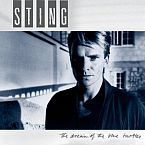
Album: The Dream of the Blue Turtles (1985)
Play Video

Songfacts®:

  • This song connects two historical events with the present day drug addicts in Soho, London, all highlighting the song's theme of lost generations. As Sting points out on the liner notes of his live Bring on the Night album, the song talks about different eras from the 11th century to World War I to 1985 (then the present).
  • The Children's Crusade was a movement in 1212 of thousands of children (some as young as six) from Germany and France, aiming to reach the Holy Land and recapture Jerusalem from the Turks by faith alone. There were two groups, one led by Stephen, a 12-year-old French shepherd boy and the other by Nicholas, a slightly older German lad. Tragically thousands died of disease or hunger crossing Europe. Some reached Genoa, Italy, but did not embark; around 30,000 reached Marseille, France, where they were offered free transport but instead were shipped in old rotted ships to Egypt and sold into slavery. Nobody arrived in Jerusalem.
  • Most of the lyrics deal with the savage stupidity of World War I between 1914-18 when the flower of British youth was slaughtered on the battlefields of Belgium and France.
  • In an interview disc from 1985, Sting said: "'Children's Crusade' is a fairly bitter song. The original children's crusade took place in the 11th century and two monks had the great idea of recruiting children from the streets of Europe and telling them that they were going to be an army to fight for Christ in Palestine, and to fight the Saracens. The intention all along was to sell them as slaves in Africa. And that's what they did; they recruited thousands of children and sold them as slaves. It seemed a very wonderful symbol of cynicism and the perversion of youthful idealism. Having thought about this for awhile, I realized this wasn't the only children's crusade in history - there have been many. So I look for examples. And the examples in the song I used are the first World War, where millions of young men, Germans, French, English, were killed for reasons that even today we don't understand. A whole generation was wiped out in a very foolish and cynical manner. And then I looked around today for an example of a children's crusade and I think the heroin industry is a good example, where businessmen are making vast fortunes by selling drugs to people who can't deal with them. In England for example, it's cheaper to buy heroin than it is to buy marijuana. They're giving heroin away to schoolchildren outside of the school gates, just to get them hooked. Or if you buy grass, sometimes in the grass there is heroin so you become an addict. This too is a children's crusade, and the same people who sold slaves in the 11th century, and the same people who sent young men to their deaths in the first World War are the same people selling these drugs. The song is really wishing them to hell." >>>
    Suggestion credit:
    Annabelle - Eugene, OR

Comments: 8

  • Jorge Rodríguez from Badajoz, SpainThanks a lot. Just one tiny datail, if you allow me: 1212 would be the 13th century, wouldn't it? (It reads 'the 11th' in the last paragraph). Or is it that Sting did say the 11th century? Thanks again
  • Angus from Ottawa, CanadaDid Sting really say this happened in the 11th century?
  • Jesse from Pennsylvania UsaThere is a long running relationship between poppies, war, and death. Look up the 1915 poem "In Flanders Fields", Remeberence Poppy, or just do a general search on the subject.
  • Martin Ferreira from PortugalI was in disbelief when found out that these WWI solders were children's whose lives were lost. This fact should be foremost in Rememberance Day commemorations. Instead it seems it serves to glorify war in general and honour those who survived in particular.
  • Markantney from Biloxi, MsJul 2014,

    The lyrics to this song fascinated me so much (and how much I listened to it too BTW) I almost had to turn in my "Ghetto Pass", "Work the Black Seam", "Fragile", and the "King of Pain" also.

    Between Sting and Prince, man them dudes can write a song.
  • Mandy from Juneau, AkAnnabelle -- The Flower of England is a metaphor for England's youth, especially young men. This contrasts with poppies, which are not native to the British Isles.
  • Annabelle from Eugene, OrWhat is the Flower Of England? Does it refer to a flower? A Queen? A Princess? And, how can a flower be slaughtered?
  • Steve from Torrance, CaThis album seems mostly forgotten today (2007), but at the time (1985) it introduced jazz musicians Branford Marsalis, Kenny Kirkland, Daryl Jones, and Omar Hakim to a wider pop audience. Their performance on this song in particular is outstanding. The ironic lyrics poignantly juxtapose the lost generation of World War I England (whose children would never be slaves, memorialized with poppies) with the 1984 Soho generation, who are enslaved to opium (made from poppies).
see more comments

Editor's Picks

Chris Tomlin

Chris TomlinSongwriter Interviews

The king of Christian worship music explains talks about writing songs for troubled times.

Trans Soul Rebels: Songs About Transgenderism

Trans Soul Rebels: Songs About TransgenderismSong Writing

A history of songs dealing with transgender issues, featuring Pink Floyd, David Bowie, Morrissey and Green Day.

Phone Booth Songs

Phone Booth SongsSong Writing

Phone booths are nearly extinct, but they provided storylines for some of the most profound songs of the pre-cell phone era.

Ramones

RamonesFact or Fiction

A band so baffling, even their names were contrived. Check your score in the Ramones version of Fact or Fiction.

Songs in Famous Movie Scenes: '80s Edition

Songs in Famous Movie Scenes: '80s EditionMusic Quiz

You know the scenes - Tom Cruise in his own pants-off dance off, Molly Ringwald celebrating her birthday - but do you remember what song is playing?

Bryan Adams

Bryan AdamsSongwriter Interviews

What's the deal with "Summer of '69"? Bryan explains what the song is really about, and shares more of his songwriting insights.