"Luka" is a song about child abuse. It tells the story of a frightened boy who is forbidden to talk about what he's going through.
On a 1987 Swedish television special, Vega talked about the real Luka: "A few years ago, I used to see this group of children playing in front of my building, and there was one of them, whose name was Luka, who seemed a little bit distinctive from the other children. I always remembered his name, and I always remembered his face, and I didn't know much about him, but he just seemed set apart from these other children that I would see playing. And his character is what I based the song 'Luka' on. In the song, the boy Luka is an abused child - in real life I don't think he was. I think he was just different."
Speaking with SongTalk magazine, Vega explained that she started with the title for this song. Describing how she wrote it, she said: "It takes months of kind of fingering it in my mind, while I'm walking around or doing something else, it's just like a problem that my mind goes back to. It wiggles. It's like you're trying to get the right angle, and once the angle comes, I can write the song in two hours. Like 'Luka' took two hours. It took months of thinking about it and lining up the shot, in a sense. Like if you're playing pool and you want to clear the table, you line it all up, and then you just hit it and everything clears. It's very satisfying, but it takes months of preparation.
I wasn't sure what the character would say. I knew what the character's problem was, but I didn't know how to get the listener involved. I wanted it to be from the point of view of a person who is abused. Now the problem that that person has is that they can't say it. So how do you get the problem out if you can't say it? How do you involve the listener? Well, you introduce yourself: 'My name is Luka.' And 'I live on the second floor, I live upstairs from you,' and so therefore you're engaging the listener. 'I think you've seen me before,' so you start to listen. You're drawing the listener into this world with very simple, basic information. And it then proceeds to state the problem without ever saying what the problem is. That was my problem as a songwriter: How do I give this information without ever giving it?
It's easy to point a finger. It's easy to say, 'Child abuse must stop' and everybody knows this."
Vega wrote this song about three years before it was released on her second album, Solitude Standing. It was written before her debut album, but Vega said it "needed some time for it to settle into the bag of songs."
There is a great deal of lyrical dissonance in this song, as the stark story of child abuse contrasts with the catchy melody. Vega explained to SongTalk: "Because I was aiming at such a complex subject, I was aiming for the simplest line to get there. Simple melodies, happy chords. I felt I had to make it accessible because it was such a dark subject. So I went all out. But I also tried to write in the language of a child. So that's probably why it worked, because it is so accessible."
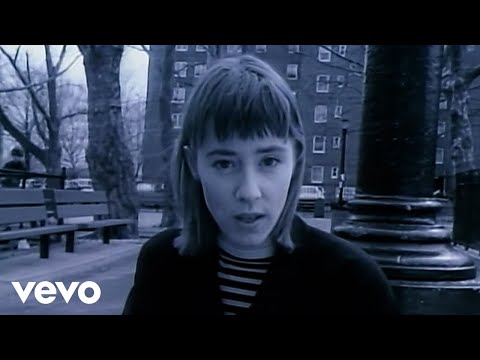
The video was directed by Michael Patterson and his wife Candace Reckinger, and it used an experimental animation technique that they popularized in the video for a-ha's "
Take On Me."
The following year, 10,000 Maniacs released "
What's The Matter Here?," which is also about an abused boy told from the perspective of a neighbor.
When she was writing "Luka," Vega was listening to a lot of Lou Reed's music. "I was impressed by the way he wrote about a violent world, and I had to think of how to write about a subject that no one talks about," she told
Top 2000 a gogo. "One day I was listening to Lou Reed's
Berlin album and the whole thing came out. Started about 2 o'clock, by 4 o'clock I had the whole song done."
Not only was it done, but there were no rough drafts or alternate lyrics; it was written just as we hear it.
Before this song landed on Solitude Standing, Vega would occasionally play it for live audiences but they never liked it. Once they figured out the song was about child abuse, it made them sad and uncomfortable. When Vega's manager suggested it could be a hit, she was shocked. She recalled: "We had a big argument and he said, 'I think it's an important song, it's a song about abuse. This is the '80s and no one's writing songs about issues anymore. Music changed the world.' And I fought with him and I said, 'I don't think that music changed the world,' and he really let go: 'We ended the Vietnam war, you know, how can you tell me that music didn't change anything?' So in the end I said, 'Fine, knock yourself out.'"
Vega lived on the ground floor of her apartment building, so Luka really did live upstairs from her. She finally met him one day in the elevator.
This was used on Scrubs in the 2007 episode "My Therapeutic Month." It was also used on The Simpsons in the 1997 episode "Reality Bites," when Homer sings it while driving.
Lenny Kaye, best known as Patti Smith's guitarist, produced this track with Steve Addabbo. "Some people were a bit thrown by the production, which we did deliberately," Suzanne Vega explained to Uncut magazine.
She chose to write the song in a major key specifically to avoid it becoming a "sad, introspective song about a child thinking about his abuse."
"I wasn't interested in drawing pathos," Vega continued. "My managers thought it could be a hit and were really focused on getting radio play. It ended up sounding a little more cheerful and triumphant than I had intended, but I didn't fight it. I said, 'OK, do what you have to do, just don't change the lyrics.' And the rest is history."