I Zimbra

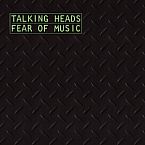
Album: Fear of Music (1979)
Play Video

Songfacts®:

  • The lyric is based on a 1916 sound poem called "Gadji Beri Bimba" by the German poet Hugo Ball, who was a big name in the Dada art movement. The Talking Heads were steeped in art history, but it was their producer, Brian Eno, who suggested they adapt the poem to chant over the track they created using African percussion rhythms augmented by synthesizers. Eno came up with similar sounds for his 1974 album Taking Tiger Mountain (By Strategy).

    Dadaism was a literary and artistic movement developed between 1915 and 1922, born of reaction and disillusion during World War 1. In 1916 Hugo Ball founded the Cabaret Voltaire night club in Zurich. Events there proved pivotal to the spread of the movement, which aimed to question established artistic rules and values by provoking outrage. Eno, Byrne and Ball are the credited writers on the song.
  • This song started as an instrumental based on a form of music popular in Nigeria called highlife, mixing in elements of disco, something many rock bands were loathe to do at the time. "We were rock musicians who were looking for a way out of what had become a very predictable formula for playing and performing rock and roll," Heads drummer Chris Frantz wrote in his memoir Remain In Love. "The African music we liked had the energy and the passion of rack and roll, but with one big difference: It was not based on Chuck Berry Licks."
  • Robert Fripp, best known for his work in King Crimson, added guitar on this track at the suggestion of producer Brian Eno, who had worked with him on an experimental album called No Pussyfooting. Fripp had developed a method called "Frippertronics" that he used to process his guitar through effects units.
  • This became a popular live song for the band when they toured in 1980, adding five additional people to their lineup: Adrian Belew (guitar), Nona Hendryx and Donette McDonald (vocals), keyboardist Bernie Worrell (keyboards) and Steven Scales (percussion). When Songfacts spoke with Hendryx in 2012, she said of this song, "That's a great one. The whole sort of the feel of that and the motion, the rhythm that, well, it's just a cool rhythm. It's African, but Western and almost South American."
  • The lead track on the Talking Heads third album, "I Zimbra" set the tone for their next album, Remain In Light, which incorporated more African influences and elements of dance music.
  • Keyboardist Jerry Harrison has named this as his favorite Talking Heads song.
  • The drumming on this track is minimal, with Chris Frantz using only his bass drum and high hat.
  • The congas on this track came from a player named Gene Wilder (not the actor), whom David Byrne discovered in Central Park. He also played on "Life During Wartime."
  • The band performed this on Late Night with David Letterman in 1983.
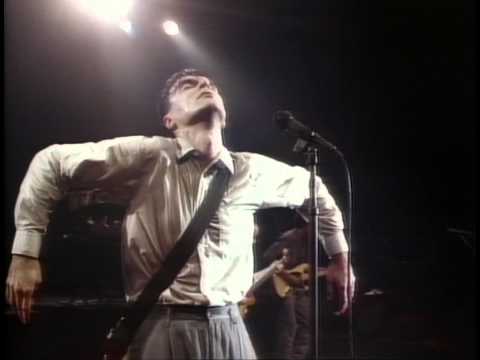
  • David Byrne performed this in his 2019 Broadway play American Utopia. When it was adapted into a movie (directed by Spike Lee) the following year, he gives this intro, which offers some insight into the song:

    "I was familiar with a different Dada artist who also wrote nonsense poetry. His name was Kurt Schwitters, and he recorded one of these in 1932, it was called the 'Ursonate,' the 'primeval sonata.' Schwitters and others in this group were using nonsense to make sense of a world that didn't make sense."

    At this point, Byrne and company perform a short section of "Ursonate," which as advertised, is nonsense.

    He continues: "The world they were trying to make sense of was pretty crazy. There had recently been an economic crash, the Nazis were coming to power - this was 1932 - and quite a few of the countries they lived in were sliding into fascism. The Dada artist Hugo Ball said that their artistic aims were to remind the world that there are people of different, independent minds beyond war and nationalism who live for different ideals. Hugo Ball wrote the words to this next song."

Comments: 2

  • Matt Love from YpsilantiMarie Osmond did a wonderful version of Ursonate. Fact.
  • Mikem from The HouseProbably the most far out and truly nonsense song.
see more comments

Editor's Picks

Director Mark Pellington ("Jeremy," "Best Of You")

Director Mark Pellington ("Jeremy," "Best Of You")Song Writing

Director Mark Pellington on Pearl Jam's "Jeremy," and music videos he made for U2, Jon Bon Jovi and Imagine Dragons.

Why Does Everybody Hate Nu-Metal? Your Metal Questions Answered

Why Does Everybody Hate Nu-Metal? Your Metal Questions AnsweredSong Writing

10 Questions for the author of Precious Metal: Decibel Presents the Stories Behind 25 Extreme Metal Masterpieces

Greg Lake of Emerson, Lake & Palmer

Greg Lake of Emerson, Lake & PalmerSongwriter Interviews

Greg talks about writing songs of "universal truth" for King Crimson and ELP, and tells us about his most memorable stage moment (it involves fireworks).

Paul Williams

Paul WilliamsSongwriter Interviews

He's a singer and an actor, but as a songwriter Paul helped make Kermit a cultured frog, turned a bank commercial into a huge hit and made love both "exciting and new" and "soft as an easy chair."

Harry Wayne Casey of KC and The Sunshine Band

Harry Wayne Casey of KC and The Sunshine BandSongwriter Interviews

Harry Wayne Casey tells the stories behind KC and The Sunshine Band hits like "Get Down Tonight," "That's The Way (I Like It)," and "Give It Up."

Tony Iommi of Black Sabbath, Heaven And Hell

Tony Iommi of Black Sabbath, Heaven And HellSongwriter Interviews

Guitarist Tony Iommi on the "Iron Man" riff, the definitive Black Sabbath song, and how Ozzy and Dio compared as songwriters.