
Life During Wartime

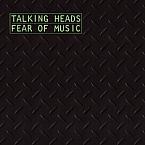
Album: Fear Of Music (1979)
Charted: 80
Play Video

Songfacts®:

  • Punk music is very much about going against the mainstream and disrupting life as we know it, and while the Sex Pistols sang vengefully about destroying the government in "Anarchy In The U.K.," "Life During Wartime" has a similar sentiment with a different tone. Here, David Byrne sings from the point of view of an insurgent who is a bit paranoid and has a problem giving up the creature comforts you lose when you enter into guerrilla warfare, not the least of which is music.

    The song is remarkably prescient in its theme of technology leading to a society where information is exploited. Corporations and governments were using computers in 1979, and hackers found the flaws. David Byrne drew inspiration from a book he read about computer crimes, which included a story about a guy who forged deposit slips with his bank account number and got patrons to inadvertently put money into his account. Another story was about someone who used a touch-tone phone to break into the General Electric computer network and steal supplies. With the big boys owning this technology but having trouble controlling it, Byrne saw a bleak future. He told NME in 1979: "There will be chronic food shortages and gas shortages and people will live in hovels. Paradoxically, they'll be surrounded by computers the size of wrist watches. Calculators will be cheap. It'll be as easy to hook up your computer with a central television bank as it is to get the week's groceries. I think we'll be cushioned by amazing technological development and sitting on Salvation Army furniture. Everything else will be crumbling. Government surveillance becomes inevitable because there's this dilemma when you have an increase in information storage. A lot of it is for your convenience - but as more information gets on file it's bound to be misused."
  • Two New York City clubs where the Talking Heads used to play are mentioned in the lyrics: CBGB and The Mudd Club. CBGB was where the group played their first shows in 1975, opening for the Ramones.
  • The song was built around a bass riff Tina Weymouth came up with when they spent an otherwise unproductive day in New Orleans recording at Allen Toussaint's Sea-Saint Studios.
  • The phrase "Life During Wartime" does not appear in the lyrics, which isn't unusual for Talking Heads, but it is their only chart hit that does this. Most of their songs that reached the masses have titles firmly embedded in the choruses.
  • This was the lead single from Fear Of Music, the group's third album. Like their previous album, More Songs About Buildings And Food, it was produced by Brian Eno, who was a biggie on the experimental music scene. The album was recorded in the New York City loft where Talking Heads bass player Tina Weymouth and drummer Chris Frantz lived, using a mobile unit owned by The Record Plant studio. They recorded the basic tracks on Sundays when there wasn't as much traffic that could bleed through.
  • About the album title: David Byrne came across a book called Music And The Brain, which discussed a phobia some people have regarding music. The book explained that music is so distressing to some people that they have to be sent to the countryside where they can't hear it. Byrne thought the contradiction between the intent of music and this reaction was interesting.
  • A live version from the Talking Heads 1984 concert film Stop Making Sense gave the song new life and charted at #80 in the US. >>>
    Suggestion credit:
    Bertrand - Paris, France
  • When the album was released, David Byrne was the only person credited on this track, which exasperated a longstanding rift in the band over songwriting credits. The credits on "Life During Wartime" were later amended to all four bandmembers.
  • A conga player named Gene Wilder (not the actor), who David Byrne discovered playing in Central Park, played on this track as well as "I Zimbra."
  • Houston, Detroit and Pittsburgh all get mentioned in the lyrics. Pittsburgh is where Talking Heads drummer Chris Frantz grew up; in the 1985 song "Perfect World," the line "I'm riding on an incline" refers to a rail car in the city that goes up a mountain.

Comments: 4

  • Jan Cornelissen from BelgiumIt is difficult to get hold of the melodies where Talking Heads got their inspiration from. As for Fear of Music, it is mostly said that a lot of the basics came from African rythms, which remains a bit abstract to me. My knowledge of African rythms is limited to Graceland of Paul Simon and of the music of Ali Farka Touré. But for the basic pattern of Life During Wartime, the Staples Singers give a hint : they start their version of this song with the riff of The Girl Can't Help It as played by Little Richard (1956). This seems logical to me and explains 10% of the song. I always considered the bass pattern of Tina the most important feature of this song and to this date I haven't found a similar example of this bass melody.
  • John from Grand Island, NyJust perfection really.
  • Alex from Mansfield, Ohdavid brynes dance to this in stop making sense is priceless. great songwriter too
  • Leah from Jacksonville Beach, Flwhat good are notebooks? they won't help you survive!
see more comments

Editor's Picks

Director Mark Pellington ("Jeremy," "Best Of You")

Director Mark Pellington ("Jeremy," "Best Of You")Song Writing

Director Mark Pellington on Pearl Jam's "Jeremy," and music videos he made for U2, Jon Bon Jovi and Imagine Dragons.

Why Does Everybody Hate Nu-Metal? Your Metal Questions Answered

Why Does Everybody Hate Nu-Metal? Your Metal Questions AnsweredSong Writing

10 Questions for the author of Precious Metal: Decibel Presents the Stories Behind 25 Extreme Metal Masterpieces

Greg Lake of Emerson, Lake & Palmer

Greg Lake of Emerson, Lake & PalmerSongwriter Interviews

Greg talks about writing songs of "universal truth" for King Crimson and ELP, and tells us about his most memorable stage moment (it involves fireworks).

Paul Williams

Paul WilliamsSongwriter Interviews

He's a singer and an actor, but as a songwriter Paul helped make Kermit a cultured frog, turned a bank commercial into a huge hit and made love both "exciting and new" and "soft as an easy chair."

Harry Wayne Casey of KC and The Sunshine Band

Harry Wayne Casey of KC and The Sunshine BandSongwriter Interviews

Harry Wayne Casey tells the stories behind KC and The Sunshine Band hits like "Get Down Tonight," "That's The Way (I Like It)," and "Give It Up."

Tony Iommi of Black Sabbath, Heaven And Hell

Tony Iommi of Black Sabbath, Heaven And HellSongwriter Interviews

Guitarist Tony Iommi on the "Iron Man" riff, the definitive Black Sabbath song, and how Ozzy and Dio compared as songwriters.