New Romantics

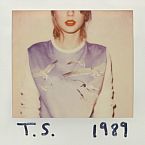
Album: 1989 (2014)
Charted: 29
Play Video

Songfacts®:

  • 1989 marks Taylor adopting a more mature mindset and approach towards love as she moves from the fairy tale romanticism of her first four albums to a more carefree outlook on matters of the heart. "We are too busy dancing to get knocked off our feet," she sings here: "Baby we're the new romantics. The best people in life are free."
  • Taylor explained her attitude towards dating and relationships during an interview with Cosmopolitan. "People will say, let me set you up with someone, and I'm just sitting there saying, 'That's not what I'm doing. I'm not lonely; I'm not looking,'" she said. "They just don't get it. I've learnt that just because someone is cute and wants to date you, that's not a reason to sacrifice your independence and allow everyone to say whatever they want about you. I'm not doing that anymore."

    "It'd take someone really special for me to undergo the circumstances I have to go through to experience a date," Taylor added. "I don't know how I would ever have another person in my world trying to have a relationship with me, or a family.
  • New Romanticism was a pop culture movement in the United Kingdom during the early '80s in which both men and women wore make-up and dressed in flamboyant clothes. Boy George, the androgynous frontman of Culture Club was typical of the genre. This song's sound resembles the new wave music that the New Romantic acts performed.

    Taylor told Rolling Stone that she set out to make "blatant Pop music" for 1989 that was heavily influenced by the '80s. "It was a very experimental time in Pop music," Taylor said of the decade. "People realized songs didn't have to be this standard drums-guitar-bass-whatever. We can make a song with synths and a drum pad. We can do group vocals the entire song. We can do so many different things. And I think what you saw happening with music was also happening in our culture, where people were just wearing whatever crazy colors they wanted to, because why not? There just seemed to be this energy about endless opportunities, endless possibilities, endless ways you could live your life. And so with this record, I thought, 'There are no rules to this. I don't need to use the same musicians I've used, or the same band, or the same producers, or the same formula. I can make whatever record I want.'"
  • The final song on the deluxe edition of 1989, this carries on Taylor's habit of ending an album on a high note. Closing tracks "Our Song," "Change," "Long Live" and "Begin Again" are all positive tunes.
  • Despite being excluded from the standard edition of 1989, Rolling Stone named this as one of the best songs of the 2010s. They said Swift making "New Romantics" just a bonus track was one "of pop's greatest crimes."

Comments

Be the first to comment...

Editor's Picks

Does Jimmy Page Worship The Devil? A Look at Satanism in Rock

Does Jimmy Page Worship The Devil? A Look at Satanism in RockSong Writing

We ring the Hell's Bells to see what songs and rockers are sincere in their Satanism, and how much of it is an act.

Bryan Adams

Bryan AdamsSongwriter Interviews

What's the deal with "Summer of '69"? Bryan explains what the song is really about, and shares more of his songwriting insights.

Rush: Album by Album - A Conversation With Martin Popoff

Rush: Album by Album - A Conversation With Martin PopoffSong Writing

A talk with Martin Popoff about his latest book on Rush and how he assessed the thousands of albums he reviewed.

Spooner Oldham

Spooner OldhamSongwriter Interviews

His keyboard work helped define the Muscle Shoals sound and make him an integral part of many Neil Young recordings. Spooner is also an accomplished songwriter, whose hits include "I'm Your Puppet" and "Cry Like A Baby."

Gary Brooker of Procol Harum

Gary Brooker of Procol HarumSongwriter Interviews

The lead singer and pianist for Procol Harum, Gary talks about finding the musical ideas to match the words.

Who's Johnny, And Why Does He Show Up In So Many Songs

Who's Johnny, And Why Does He Show Up In So Many SongsSong Writing

For songwriters, Johnny represents the American man. He has been angry, cool, magic, a rebel and, of course, marching home.