"You're Gonna Miss Me" was the debut single by psychedelic-music pioneers The 13th Floor Elevators, as well as their only hit. In the lyrics, Elevators frontman Roky Erickson threatens to leave a woman that's mistreated him. He was only 15 years old when he wrote the song, and some have suggested it was actually directed at his family, as he frequently ran away from home for long stretches. However, with lines like "you're gonna miss me baby," it seems clearly to be a song of unrequited love. From our modern vantage point, it's also a haunting foreshadowing of Erickson's future, which saw him lose his mind to LSD. But there's no way Erickson saw that coming when he penned the tune.
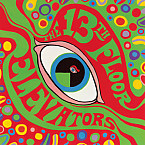
The song appeared on the 13th Floor Elevators debut album, The Psychedelic Sounds of the 13th Floor Elevators, which was the first psychedelic-music release in history. It hit #55 on the Billboard Hot 100 and #54 on the Canadian RPM Magazine charts and could have propelled the band even higher if they weren't limited by bootlegging of the song, questionable business associations, drug use that was excessive even by the '60s famously indulgent standards, and legal problems.
"You're Gonna Miss Me" is surely the highest-charting song to ever feature electric jug. The instrument, played by Elevator Tommy Hall, is behind the strange sound that drops in about five seconds into the track. It wasn't really an instrument unto itself but rather a traditional jug held up close to a microphone as Hall made weird sounds into it. A brief display of how it was played can be seen
in this demonstration. Supposedly, Hall would fill the jug with different amounts of marijuana to change the sound.
The
original version of "You're Gonna Miss Me" had Erickson delivering harmonica solos in the spots later filled with jug.
Hall and Elevators guitarist Stacy Sutherland wrote the single's B-side, "Tried To Hide." After the dissolution of the Elevators, Hall essentially dedicated his life to
enlightenment through psychedelics, while Sutherland was
shot dead by his girlfriend in 1978.
"You're Gonna Miss Me" was first released in 1965 by the group Erickson And The Spades. It didn't become a hit but did put Erickson on Hall and Sutherland's radar. He became a 13th Floor Elevator shortly after. The original was released by a label named Zero Records, which has left almost no historical footprint.
The second release came January 17, 1966, recorded by producer Gordon Bynum for his label Contact Records. This version became a regional hit and elevated the band's profile, which was a good thing in that it got them bigger shows but a bad thing because it made them a target for the law. The group was soon busted for possessing marijuana, and the restrictions of their parole limited their growth because they couldn't travel outside Texas and were barred from many top venues.
Still, despite the restrictions, the band signed with International Artists (the first incarnation of which lasted from 1965 to 1970) and released the definitive version of "You're Gonna Miss Me" in May 1966.
At their peak of popularity in October 29, 1966, the band
performed the song for American Bandstand, the most popular music show of its time. After the group performed, Bandstand host Dick Clark asked Hall who the "head" of the band was. Hall calmly replied, "We're all heads," which flew right past Clark (in the '60s, a head was someone who did psychedelics). Hall also claimed their upcoming album was to be titled
Headstone, which drew a smile from Erickson (the album would actually be titled
Easter Everywhere).Erickson wrote "You're Gonna Miss Me" during practice sessions with the Spades. These were clandestine affairs as Erickson never wanted people to know how hard he worked and preferred that everyone thought he was just naturally gifted. He drew inspiration from "Early In The Morning" by Buddy Holly, "You're Gonna Miss Me" by Muddy Waters, and "I Don't Mind" by James Brown.
The Elevators recorded the song in
Walt Andrus Studio in Houston on January 2, 1966. A recording done earlier that day was superior, but technical mishaps made it unusable. The Elevators tripped on acid throughout the session, as was their standard.
In November 1966, "You're Gonna Miss Me" was featured as the opening track to the 13th Floor Elevators' debut album, The Psychedelic Sounds of the 13th Floor Elevators. It was also included on Live (which wasn't actually live) in 1968 and on all the Elevators collections and box sets that have emerged over the years.
The song is a rare hit in both the garage rock and psychedelic genres.
In 2005, a documentary about Roky Erickson's life was titled
You're Gonna Miss Me. It follows his struggles to get his life and sanity back and led to something of a career resurgence during his final years on Earth. He died in 2019. No cause was revealed.