Sixty Eight Guns

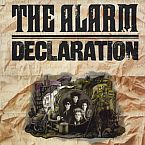
Album: Declaration (1983)
Charted: 17 106
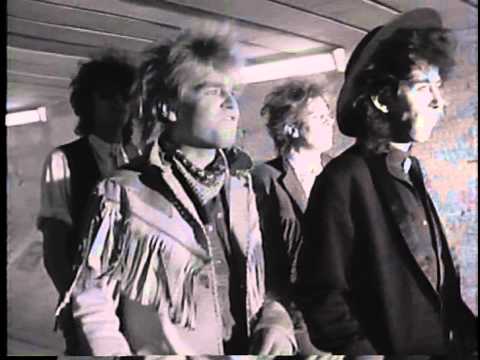
Play Video

Songfacts®:

  • This is one of many throw-your-fist-in-air Alarm songs the band was known for in their early years when they were young and hungry and rebellious. "Sixty Eight Guns" was their battle cry, a call to arms against the establishment. This attitude was fomented in their hometown of Rhyl, North Wales, where they grew up in bleak economic times and fought naysayers who saw no need for another rabble-rousing rock band. The martial imagery reflects their push against this prevailing attitude.
  • Lyrically, this song was inspired by a book Alarm frontman Mike Peters read called A Glasgow Gang Observed by the Scottish author Patrick James. It was published in 1973 but set in 1968, which is why there are 68 guns in the song title.

    "It was about young people at that difficult age where you're too cool for school, but not wise enough or eligible enough for adult life," Peters said in a Songfacts interview. "So, it's about people like that – like I was, once. We hung around on street corners, we started bands, we bought clothes, we identified with each other, and we credit these very bonded groups of individuals. And that's how the Alarm grew."
  • The song speaks to the solidarity the band felt not only to their fans, but also to their crew members and everyone who pitched in. "It was a gang that made The Alarm special," Mike Peters told Songfacts. "'Sixty Eight Guns' is really the description of the feeling that you could make change for yourself and make your life a better place to be in."

    It took on new meaning for Peters after he was diagnosed with cancer in 1996, which claimed his life in 2025 when he was 66. He said the key words to him are "will never die."
  • Formed in Rhyl, North Wales, The Alarm released the single "Unsafe Building" on their own label in 1981 and moved to London to expand their horizons. They signed with IRS Records and released a self-titled EP in 1983 with the single "The Stand," which charted in the UK at #86 in April. That summer, they left for America to join U2 as the opening act on the War tour. When they returned to the Britain, they issued "Sixty Eight Guns" as a single; it charted at #17 in the UK in October and became their first American chart entry in April 1984 when it hit #106. The song was included on their debut full-length album, Declaration, early in 1984.
  • This was a sturdy live number for The Alarm, who often used it as their encore. They would typically extend it by breaking it down in the middle while Mike Peters would say a few words to the crowd and then engage them in a call-and-response.
  • Alarm bass player Eddie Macdonald composed the music - he and Mike Peters were the songwriters in the group.
  • This opening salvo was a good start for The Alarm, whose guitar-rock sound and arena-friendly anthems drew favorable comparisons to their sometimes tourmates, U2 (some reviewers referred to The Alarm as "U3"). Commercially, they didn't live up to the promise, never cracking the US Top 40 or the UK Top 10. Strained financially, by 1991 it was too much to bear for Mike Peters, who shocked his bandmates by announcing on stage that he was leaving the group. He went solo; the band failed to find a replacement and folded. Years later, Peters began using The Alarm name with different musicians. VH1 got the original four back together in 2004 for a Bands Reunited special, but it didn't last.

Comments

Be the first to comment...

Editor's Picks

Mike Campbell

Mike CampbellSongwriter Interviews

Mike is lead guitarist with Tom Petty & the Heartbreakers, and co-writer of classic songs like "Boys Of Summer," "Refugee" and "The Heart Of The Matter."

Donny Osmond

Donny OsmondSongwriter Interviews

Donny Osmond talks about his biggest hits, his Vegas show, and the fan who taught him to take "Puppy Love" seriously.

Carl Sturken

Carl SturkenSongwriter Interviews

Hitmaker Carl Sturken on writing and producing for Rihanna, 'N Sync, Christina Aguilera, Kelly Clarkson, Donny Osmond, Shakira and Karyn White.

American Hits With Foreign Titles

American Hits With Foreign TitlesSong Writing

What are the biggest US hits with French, Spanish (not "Rico Suave"), Italian, Scottish, Greek, and Japanese titles?

Mick Jones of Foreigner

Mick Jones of ForeignerSongwriter Interviews

Foreigner's songwriter/guitarist tells the stories behind the songs "Juke Box Hero," "I Want To Know What Love Is," and many more.

The Police

The PoliceFact or Fiction

Do their first three albums have French titles? Is "De Do Do Do, De Da Da Da" really meaningless? See if you can tell in this Fact or Fiction.