The Beatles didn't speak French, but that didn't stop them from putting a few lines of it into "Michelle," a song that finds Paul McCartney trying to overcome a language barrier to express his love. "Ma belle" means "my beautiful," and the other line gets translated right in the lyric:
Sont les mots qui vont tres bien ensemble
These are words that go together well
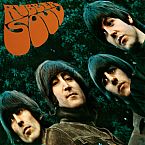
"Michelle" dates back to 1958, soon after The Beatles, known at the time as The Quarrymen, formed. John Lennon was a student at the Liverpool College of Art while Paul McCartney, 18 months younger, attended high school nearby. John would take him to art college parties, and at the time, French culture was a trend. Paul would try to fit in by sitting in a corner and pretending to be French. He would play little tunes on his guitar, but he only knew a few French words, so he would groan or make words up. At one of these parties, he played a tune John remembered years later when they were working on their 1965 Rubber Soul album. As Paul explained in Observer Music Monthly, John told him, "You remember that thing you wrote about the French? That wasn't a bad song, that. You should do that."
McCartney took the advice and completed the song with Lennon's help.
There was no Google Translate in 1965, so Paul McCartney had to find a French speaker to help him with the French lines and also come up with a French girl's name for the title. Fortunately, his good friend Ivan Vaughan, the man who introduced him to John Lennon in 1957, was married to a woman named Jan who spoke fluent French. Ivan and Jan were with Paul and his girlfriend, Jane Asher, at Jane's house when Paul worked out the lyric with Jan, who suggested "Michelle" for the name and "ma belle" to rhyme with it. Paul came up with the line "These are words that go together well," and she gave him the translation. When he played the song for Lennon, John suggested the "I love you" part in the middle.
"Michelle" was issued as a single in several European countries, but not in the UK or in America. Not surprisingly, it was issued in France and went to #1, a rare song with mostly English lyrics to top their chart.
In America, "Michelle" got loads of airplay in the '70s and '80s on soft rock radio stations; its soothing sound helped the workday move by a little faster. BMI, which handles royalty payments for airplay in the US, announced in 1990 that "Michelle" was the third most-played song on American radio, behind two of their other lite favorites, "
Yesterday" and "
Something."
>>>
Suggestion credit:
Bertrand - Paris, France
Musically, this was influenced by a 1957 Chet Atkins instrumental called "Trambone," which has a repeating treble line and a bass line with a melody. McCartney did something similar on "Michelle."
McCartney and Lennon took a trip to France around 1960, but didn't pick up much of the language. They picked up some German when The Beatles played regular gigs at Hamburg clubs in 1961 and 1962, but no French.
"Michelle" won a Grammy in 1966 for Song of the Year, one of just four Grammys The Beatles won while they were still active.
McCartney stayed in touch with Ivan Vaughn, whose wife helped out with the French lyrics (he reportedly mailed her a check for her contribution). They were classmates in high school with similar interests but very different career paths. Vaughn studied classics at London University and became a teacher. In the '70s, he was diagnosed with Parkinson's disease; he died in 1993 at 51.
The French verse is often misheard as "Sunday monkey won't play piano song."
>>>
Suggestion credit:
Patrick - Tallapoosa, GA
American music fans who don't speak French added a few more words to their French lexicons in 1975 when Labelle went to #1 with "
Lady Marmalade," which includes the line "Voulez-vous coucher avec moi ce soir?" in the chorus. It's French for "Do you want to sleep with me tonight?"
Encouraged by the successful foray into French on this song, Beatles ami
Donovan sang a verse of his 1968 hit "
Jennifer Juniper" in French.
When Paul McCartney received the Library of Congress Gershwin Prize for Popular Song award at a White House ceremony in 2010, he did something he later said he'd been itching to do for a while: sing "Michelle" to the First Lady. President Obama credited McCartney with helping "to lay the soundtrack for an entire generation." For his part, Sir Paul managed to work in a line hinting at his view of American presidential politics. "After the last eight years," he joked, "it's great to have a president who knows what a library is."
McCartney is the third recipient of the award - Paul Simon and Stevie Wonder are previous honorees - which recognizes songwriters "whose careers reflect a lifetime achievement in promoting song as a vehicle of artistic expression and cultural understanding."
>>>
Suggestion credit:
Bertrand - Paris, France