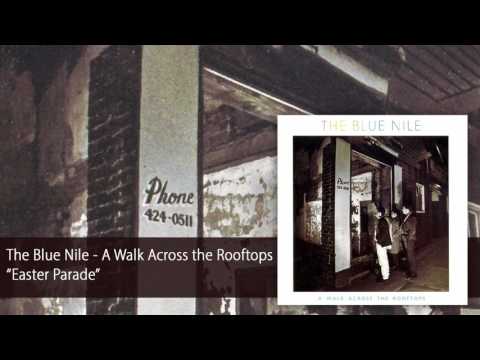
Easter Parade

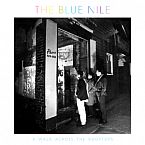
Album: A Walk Across the Rooftops (1984)
Play Video

Songfacts®:

  • Not to be confused with the Irving Berlin song of the same title, this "Easter Parade" is part of The Blue Nile's debut album A Walk Across The Rooftops and written by their lead singer Paul Buchanan and bass player Robert Bell. The song finds Buchanan setting a scene with vivid, but sparse imagery describing an Easter parade in a "city perfect in every detail."

    "It's a Sunday song, something with a stillness in it," told NME. "It would be blasphemous of me to say it's a holy song in any way, but that's something that was in our minds."
  • The Blue Nile is a Scottish band that found an audience in the UK but never caught on in America despite stalwart endorsements from many respected musicians, including Rickie Lee Jones, who in 1990 sang this with The Blue Nile on a TV show called Halfway to Paradise. They also performed Jones' "Flying Cowboys" on the show.
  • Jack Hues of Wang Chung, whose songs "Dance Hall Days" and "Everybody Have Fun Tonight" helped form the music tapestry of the '80s, considers "Easter Parade" one of the best songs of that decade. He broke it down to Songfacts: A Walk Across The Rooftops came seemingly out of nowhere in 1984. There are some classic pop tunes on the album, all stylish and all beautifully finished. I wish I'd written any one of them, but 'Easter Parade' is an art song that might have come from the mind of Claude Debussy rather than a bunch of lads from Glasgow.

    The opening gesture of rising piano arpeggio and answering fall is beautifully orchestrated with bell-sound synths. Paul Buchanan sings with the command and textural opulence of Scott Walker, but whereas Scott makes you feel you are listening to a theatrical performance (which I love!) Paul is sitting next to you on the settee at home, quietly telling you what he saw. The lyric is like looking at a Cartier-Bresson photograph. Paul Joseph Moore sculpts a sound as the first verse concludes - that never fails to move me.

    It has that unforgettable quality that you hear in some of Stockhausen's work, but here this abstract noise hits an emotional spot in the service of the song. The song is totally satisfying in its AABA structure and the elements that constitute it: the harmonic sophistication, the vocal melody, the choices of instrument and particularly the sound design, the brevity - add up to something close to perfection."

Comments

Be the first to comment...

Editor's Picks

Kristian Bush of Sugarland

Kristian Bush of SugarlandSongwriter Interviews

Kristian talks songwriting technique, like how the chorus should redefine the story, and how to write a song backwards.

Sarah Brightman

Sarah BrightmanSongwriter Interviews

One of the most popular classical vocalists in the land is lining up a trip to space, which is the inspiration for many of her songs.

Brenda Russell

Brenda RussellSongwriter Interviews

Brenda talks about the inspiration that drove her to write hit songs like "Get Here" and "Piano in the Dark," and why a lack of formal music training can be a songwriter's best asset.

Vanessa Carlton

Vanessa CarltonSongwriter Interviews

The "A Thousand Miles" singer on what she thinks of her song being used in White Chicks and how she captured a song from a dream.

Director Mark Pellington ("Jeremy," "Best Of You")

Director Mark Pellington ("Jeremy," "Best Of You")Song Writing

Director Mark Pellington on Pearl Jam's "Jeremy," and music videos he made for U2, Jon Bon Jovi and Imagine Dragons.

Mike Scott of The Waterboys

Mike Scott of The WaterboysSongwriter Interviews

The stories behind "Whole Of The Moon" and "Red Army Blues," and why rock music has "outlived its era of innovation."