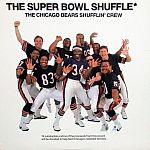
"Super Bowl Shuffle" is a rap song performed by 10 members of the 1985 Chicago Bears, a fearsome team that was undefeated at 12-0 when they agreed to record the song and star in a music video for it. Each player gets a verse boasting about their particular talents, capped off with a chorus where they proclaim:
We're so bad we know we're good
Blowin' your mind like we knew we would
Just one problem: The day before the sessions to record the song and shoot the video, Dan Marino's Miami Dolphins beat The Bears on Monday Night Football to ruin their perfect season and show how their seemingly impenetrable defense could be breached for 38 points. That was on December 2, 1985. The players went ahead and did the session the next day anyway, since they had already agreed to it and they knew proceeds would be going to charity. You'll notice that at no point in the song do they claim that they'll win the Super Bowl - they're just here to do the Super Bowl Shuffle.
The song was rush released and quickly got loads of airplay in Chicago. MTV put the video in hot rotation and radio stations all over the country started playing it. As the song gained momentum, so did The Bears. They won their first playoff game 21-0 over the Giants, and their next 24-0 over the Rams. Then in Super Bowl XX they trounced the New England Patriots 46-10 to secure their place as one of greatest teams ever to play in the NFL. And thanks to the "Super Bowl Shuffle," they're also remembered as one of the most brash and stylish.
The "Super Bowl Shuffle" was the brainchild of Chicago Bears fan Richard Meyer, who helmed the fragrance company Jovan before starting Red Label Records in 1984. Meyer pitched the idea to star receiver Willie Gault, who convinced the other nine guys to become The Chicago Bears Shufflin' Crew and do the song.
Meyer and Melvin Owens are credited as lyricists on the track, with Bobby Daniels and Lloyd Barry composing the music.
Here's a breakdown of the players who participated in the song:
Jim McMahon: "The punky QB," McMahon wasn't a top player but he didn't have to be: He could handoff to Walter Payton and let the defense to their work.
Walter Payton: The heart of the Bears' offense, Payton is one of the best running backs ever to play in the league.
Willie Gault: The team's deep threat, Gault led the Bears in receiving yards.
Mike Singletary: "Samurai Mike" was the middle linebacker who led the Bears' legendary "46 defense," earning NFL Defensive Player of the Year honors.
Otis Wilson: A dominant pass rusher and run stopper, Wilson was a vital part of the Bears' ferocious linebacker corps, helping the defense allow the fewest points in the league.
Richard Dent: As he warns, if the quarterback's slow, he's gonna get bent. The Bears' dominant defensive end, Dent led the team with 17 sacks and was the Super Bowl XX MVP.
William "Refrigerator" Perry: A huge defensive tackle, Perry was a fan favorite and media sensation (he did Coke commercials). He would sometimes come in on goalline plays as a fullback on offense because he outweighed defenders and could just power his way into the endzone. Fun fact: he had a touchdown in the Super Bowl but Payton didn't.
Mike Richardson: A starting cornerback, Richardson had four interceptions and was a steady presence in the secondary.
Gary Fencik: Fencik, who played college ball at Yale, earned the nickname "Hit Man" with the Bears.
Steve Fuller: The backup quarterback, he started five games when McMahon was injured. "Run like lightnin', pass like thunder" was a stretch.
Bears defensive linemen Dan Hampton and Steve McMichael were invited to perform in the song and video but declined, regarding the idea as too cocky and boastful.
Proceeds from the song went to charity, which was made clear on the packaging, which read: "A substantial portion of the proceeds from this record will be donated to help feed Chicago's neediest families."
This helped convince the players to participate and deflected any criticisms about rich athletes shameless boasting. As Walter Payton raps in his verse: "We're not doin' this because we're greedy, the Bears are doin' it to feed the needy."
Just how much of the proceeds went to charity isn't clear and became a point of contention. According to an
ESPN story, Richard Meyer was the solo owner of the song, and he gave 50% to charity. This didn't go over well with some of the players, who were paid $6000 each to participate. "Like every other starting band, we got ripped off," Gary Fencik said.
New England Patriots fans responded with their own video, which was called "
New England, the Patriots and We" and credited on MTV to The Soundtrack Studio Singers. The Bears were clearly the dominant team that year and likely headed for the Super Bowl, but no sane individual would have produced a Patriots Super Bowl video mid-season, as they were far from the best team in their conference. After the Patriots beat the Miami Dolphins (the only team to beat the Bears) to advance to the big game, the response video was assembled, clearly on a much tighter schedule and budget than the flashy "Super Bowl Shuffle," although various players did appear.
As a tie-in to the Super Bowl, MTV played both videos back-to-back and had viewers vote for the winner. The results were even more lopsided than the actual game, and the "Super Bowl Shuffle" won in a landslide.
The video was shot at a music venue in Chicago called the Park West. The vocals were recorded in a studio at Richard Meyer's home.
Steve Fuller's line, "This is for Mike and Papa Bear Halas" refers to the Bears' then-head coach Mike Ditka and the team's patriarch George Halas, who died two years earlier. Under Halas' leadership the Bears won more NFL championships than any other team in the league except for their archrivals, the Green Bay Packers.
Richard Meyer's wife Julia plays as a female referee who blows the whistle twice in the video to throw a penalty flag censoring the word "ass." She became the sole owner of the song and video copyright when Richard died in 1992.
The song climbed up the charts to peak at #41 the week ending February 8, 1986, two weeks after the Super Bowl. Over 500,000 copies of the single were sold, making it a Gold record. The video was also sold on VHS and sold over 100,000 copies.
"Super Bowl Shuffle" led to more NFL teams creating similar rap videos, which many years later prove to very comical. These videos were mostly forgotten until the age of YouTube, where videos like the Seattle Seahawks' "Locker Room Rock," the San Francisco 49ers' "Team of the '80s," The Oakland Raiders' "Silver and Black Attack" and the Los Angeles Rams' "Ram It" live forever.
"Super Bowl Shuffle" was nominated for a Grammy Award for Best R&B Performance by a Duo or Group with Vocals. It lost to "
Kiss" by Prince.
The "Super Bowl Shuffle" song and video showed how athletes could enter the world of music, something
Muhammad Ali pioneered. It also showed how a certain swagger can be very marketable, especially when backed up with wins. It soon became common for athletes to express themselves off the field and let fans into their personal lives. This trend was accelerated by social media.
You won't find the "Super Bowl Shuffle" on streaming services, as the rights have never been granted.
The Bears had yet to win a Super Bowl when this song was released, and after that 1986 win, they haven't won another. They did win eight NFL Championships before the Super Bowl came into being.
The song may sound a little cheesy by today's standards, but in 1985 rap music was just starting to emerge into the mainstream thanks to Run-DMC and LL Cool J. You didn't have to be a professional to pull off a rap as long as you had some memorable rhymes and a funky beat. Note that the first big hit with a rap was "
Rapture" by Blondie in 1980, with Debbie Harry delivering lines like:
The man from Mars stopped eatin' cars and eatin' bars
And now he only eats guitarsIn 2026, HBO released a
documentary about the "Super Bowl Shuffle" where we learned that Jim McMahon and Walter Payton were no-shows at the video shoot - they recorded their parts in front of blue screens at a team facility, and that footage was composited into the studio shoot.
We also learned that Otis Wilson had a hard time with the video, but Refrigerator Perry was a natural.
In addition to the 10 players who perform on the song, there was also a group of bench players that appeared in the video, acting as the ensemble cast for this crew. Mike Singletary, their leader on the field, took charge at the shoot, making sure they gave it their all. Many of the players couldn't handle the choreography, so Singletary had them all work together to figure it out. It turned into a team bonding exercise, with younger players helping the veterans with their dance moves.
The beat and melody were originally recorded for a novelty song Red Label Records created called "The Kingfish Shuffle" about the character Kingfish in the TV series Amos 'n' Andy. That show ended in 1960, so there was a limited market for a song about it. The track, though, was contemporary and lively, so when the Chicago Bears agreed to do the song, Red Label pulled the reel off the shelf, wrote new lyrics, and replaced the vocals.