English Civil War

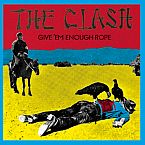
Album: Give 'Em Enough Rope (1979)
Charted: 25
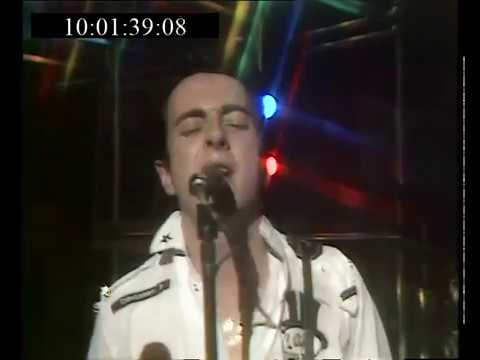
Play Video

Songfacts®:

  • "English Civil War" is actually a re-arrangement of a traditional American Civil War song, "When Johnny Comes Marching Home" (this title is mentioned in the lyrics), which was originally written by a Massachusetts Unionist, Patrick Sarsfield Gilmore, and which became popular with both sides in the war and eventually became associated with the Confederates. Hence why the song is credited as "trad. arr. Strummer/Jones" rather than just a Strummer/Jones composition.
  • When interviewed about this song singer Joe Strummer noted that he learnt "When Johnny Comes Marching Home" at school. "It was such a good tune. I suggested that we update it, see what it sounded like," he said.
  • The lyrics, passionately delivered by Joe Strummer, discuss the band's fears about the rise of the National Front and radical, fascist far-right-wing politics in the UK, and fears that this will cause tensions and riots on the streets. In a discussion with Terry Lott of Record Mirror magazine after the song's live debut at the April 1978 Rock Against Racism festival in Victoria Park, Joe Strummer speculated that "War is just around the corner. Johnny hasn't got far to march. That's why he's coming by bus or underground (referencing part of the lyrics). It's a folk song, that's all."

    In the same interview the band were asked whether they were exaggerating the power of the National Front and racist groups, and guitarist Mick Jones replied: "In 1928, Adolf Hitler got 2.8% of the vote. In 1939 there was no one voting for anyone else."
  • Along with being based on a traditional American Civil War song, "English Civil War" references (as the title suggests) the English Civil War of the 1640s-50s, in which King Charles I was defeated by the Parliamentarians and Britain became a Republic for the first (and only) time in it's history. Oliver Cromwell's New Model Army (the Parliamentarians) are referenced in the line, "the new party army was marching right over our heads."
  • This song was recorded much in the same way as the other tracks on Give 'Em Enough Rope, using a series of interlocking guitar parts assembled and overlaid. Unusually Mick Jones has two rather extravagant solos, unusual for a Punk Rock song in which solos and over-the-top instrumentation were heavily shunned.

    The single release in January 1979 featured a still from the classic animated film adaptation of Animal Farm from 1955, and was reviewed by Danny Baker for NME, who concluded that it was a "wise enough, if a miscued and rock 'n' rolly, warning of all things uniformed and sinister."
  • This was a popular live song, and a fixture of The Clash's live set between 1978-1980, before being included only occasionally thereafter - notably at their arena tour in 1982 supporting The Who.

    During the 1979 Take the Fifth US tour, the Clash tried an interesting experiment and played the song in a slow, acoustic folk style much like the original folk song it was derived from. Some US fans were disappointed and booed the band "for not sounding like Ted Nugent," according to Strummer.

    One of the deleted scenes from the Clash docu-drama Rude Boy movie is a hugely energetic version of the song played at the Lyceum in January 1979 (the same show that the version of "I Fought The Law" from near the end of Rude Boy comes from), and was included as a bonus feature on the DVD re-release in 2001, as well as the Clash on Broadway compilation CD.
  • The folk-rock band The Levellers (ironically named after a faction of Cromwell's New Model Army) covered the song for their 1993 EP The Julie.

Comments: 2

  • AnonymousI'd suggest the New Party Army was not referencing the Cromwell led Civil War faction but Oswald Mosley's New Party' precursor to the Britis Union of Fascists.
  • Zabadak from London, EnglandAdam Faith had a hit in the UK in 1960 with the original lyrics
see more comments

Editor's Picks

Does Jimmy Page Worship The Devil? A Look at Satanism in Rock

Does Jimmy Page Worship The Devil? A Look at Satanism in RockSong Writing

We ring the Hell's Bells to see what songs and rockers are sincere in their Satanism, and how much of it is an act.

Bryan Adams

Bryan AdamsSongwriter Interviews

What's the deal with "Summer of '69"? Bryan explains what the song is really about, and shares more of his songwriting insights.

Rush: Album by Album - A Conversation With Martin Popoff

Rush: Album by Album - A Conversation With Martin PopoffSong Writing

A talk with Martin Popoff about his latest book on Rush and how he assessed the thousands of albums he reviewed.

Spooner Oldham

Spooner OldhamSongwriter Interviews

His keyboard work helped define the Muscle Shoals sound and make him an integral part of many Neil Young recordings. Spooner is also an accomplished songwriter, whose hits include "I'm Your Puppet" and "Cry Like A Baby."

Gary Brooker of Procol Harum

Gary Brooker of Procol HarumSongwriter Interviews

The lead singer and pianist for Procol Harum, Gary talks about finding the musical ideas to match the words.

Who's Johnny, And Why Does He Show Up In So Many Songs

Who's Johnny, And Why Does He Show Up In So Many SongsSong Writing

For songwriters, Johnny represents the American man. He has been angry, cool, magic, a rebel and, of course, marching home.