Maggie M'Gill

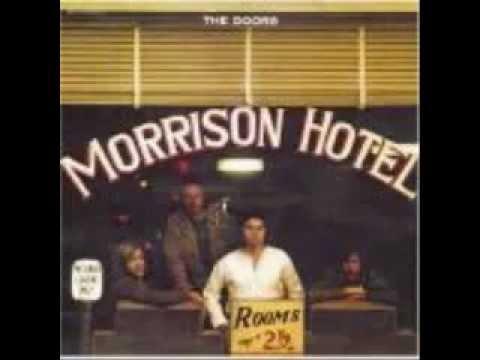
Album: Morrison Hotel (1970)
Play Video

Songfacts®:

  • Jim Morrison created the character Maggie M'Gill, a woman in the Old West who resorts to prostitution.
  • The Doors started working on this in 1967 after a concert at the University of Michigan at Ann Arbor.

Comments: 8

  • Chris Hay from CanadaNah... I was in the Pere Lachaise cemetery, the week of Jim's 60th birthday, when there was a reunion show happening in Paris. I only know this because a couple drunk middle-aged American guys need help "finding Jim!" We found his grave and there was an older lady, with leather pants and bleached hair crying. They chatted with her and found out her name was Maggie. They started singing Maggie M'Gill. She said, don't tell anyone, but yeah. That's me. We all went out to a cafe and listened to her stories of running away from boarding school at 16, sleeping with Janis Joplin, being Jim's lover... all of it. He used McGill in the song because he couldn't rhyme anything with her real last name...
  • Will from Waterloo,I've heard a different, more darker story. I've heard that "Maggie M'Gill" was the name of Jim's...daughter. I've heard that either Pamela or Patricia got pregnant and Jim forced either Pamela or Patricia to terminate the pregnancy.
  • David from Woburn, MaWell as so far no one really seems to want to comment on the song itself... this is my favorite Doors tune. The thumping drums and fat bass grooves perfectly compliment the evil sounding guitar and organ parts along with Jim's drunken slurs to create a bluesy gem infused with some quasi-Native American beats. Jim loved the old West and the shamanic rituals of the Amerindians; I can only imagine him doing a war dance to this song whenever they played it.

    Lyrically, this seems to be about Jim's life. He was constantly getting threats from just about every woman he slept with that he fathered children with them (illegitimate son of a rock and roll star.) And my favorite line of the song, "Well I'm an old blues man," encapsulates Jim's sentiment at the time: the dream of social revolution in America is over, let's just play bar music.
  • Pot from Ann Arbor Mi, Mi@ Joseph from Newport News Va.

    Maybe all the women in Newport news are whores but not so in Ann Arbor. Ann Arbor was named after the wife's of the founders.

    To better educate yourself: http://moaa.aadl.org/moaa/naming

    "It is better to keep your mouth closed and let people think you are a fool than to open it and remove all doubt." - -- Mark Twain
  • Joseph from Newport News, VaIt figures that they came up with a song about a whore in Ann Arbor...a city named after a whore.
  • D from Many, MaOne of their best later songs
  • Timm from Chicago, IlI'll tell you what's going on here.
    You see,Maggie's are Ladies of the Evening.
  • Martijn from Helmond, NetherlandsWell, Maggie from Germantwon, you ought to know!
see more comments

Editor's Picks

Songs Discussed in Movies

Songs Discussed in MoviesSong Writing

Bridesmaids, Reservoir Dogs, Willy Wonka - just a few of the flicks where characters discuss specific songs, sometimes as a prelude to murder.

Roger McGuinn of The Byrds

Roger McGuinn of The ByrdsSongwriter Interviews

Roger reveals the songwriting formula Clive Davis told him, and if "Eight Miles High" is really about drugs.

Sugarland

SugarlandSongwriter Interviews

Meet the "sassy basket" with the biggest voice in country music.

Jesus Christ Superstar: Ted Neeley Tells the Inside Story

Jesus Christ Superstar: Ted Neeley Tells the Inside StorySong Writing

The in-depth discussion about the making of Jesus Christ Superstar with Ted Neeley, who played Jesus in the 1973 film.

Barney Hoskyns Explores The Forgotten History Of Woodstock, New York

Barney Hoskyns Explores The Forgotten History Of Woodstock, New YorkSong Writing

Our chat with Barney Hoskyns, who covers the wild years of Woodstock - the town, not the festival - in his book Small Town Talk.

Edwin McCain

Edwin McCainSongwriter Interviews

"I'll Be" was what Edwin called his "Hail Mary" song. He says it proves "intention of the songwriter is 180 degrees from potential interpretation by an audience."