Stand Down Margaret

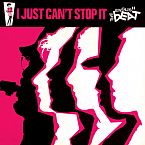
Album: I Just Can't Stop It (1980)
Charted: 22
Play Video

Songfacts®:

  • "Margaret" is Margaret Thatcher, who was British Prime Minister from 1979-1990. Dave Wakeling of The English Beat told Songfacts about taking aim at her in this song. "The late '70s in England were troubled times: high unemployment, secession, the fear of nuclear war breaking out, the kind of fantasy end-of-the-century, end-of-the-world kind of feeling," he said. "And Margaret Thatcher came on, kind of like the last great hope of the British Empire. She'd actually been born above a grocery store in Nottingham, a working class city. But had developed airs and graces and a posh accent and kind of saw herself as being of the upper classes, which she wasn't. So it was sort of a false accent, and a false attitude that went with it.

    Then she fell head over heels with her teenage heartthrob, Ronald Reagan, and went about trying to dismantle any sense of social unity that England had: breaking the unions, letting people go out on strike and starve. And in a very few short years she managed to turn people in England from neighbors to competitors.

    A lot of people bought shares in the gas company and the train company and the water company, bought shares in the companies that our dads had already paid for. And in doing so turned everybody into competitors - instead of neighbors now we were competing as investors, jealously guarding our shares. Our people stopped talking to each other at bus stops. People started to become more suspicious of each other. And the sense of camaraderie was broken in a way that I haven't ever seen fully replaced, really.

    It may have been that Britain needed dragging into the 21st Century, but it may also be that making the mistake of believing that just because communism was obviously collapsing, that didn't mean that all of the tenets of world capitalism were absolutely accurate. That there was perhaps stuff in our system that weren't that great, either. And I think they're starting to see that it's okay for someone to make a billion dollars, but if they do, somebody else has to go without dinner that night, because that money comes from somewhere.

    And so the rich get richer and the poor get poorer, and poor old Margaret was acting as though she had airs and graces to the manor born. So it was stand down in the political sense – resign. But it was also stand down as in get off your soap box. Get off your high horse. Stop trying to talk down to people. You don't really know that much more than them, anyway. And stop putting on this hoity toity accent, because you know you're really a shop girl from Nottingham."
  • The Guardian newspaper March 18, 2008 told a story about the Conservative MP Ed Vaizey's adoration of The English Beat. The MP appeared on a BBC4 documentary about his former leader, The Lady's not for Spurning, in which he claimed to have "adored" The English Beat, despite being an "ardent Thatcherite." He assumed that everyone in Britain admired Mrs. Thatcher in much the same awestruck terms as he did, so when it came to the song's target, he naively didn't realize it was referring to the Tory Prime Minister. He added: "I couldn't work out what they had against Princess Margaret."
  • Co-vocalist Ranking Roger recalled to Uncut in 2016: "There was high unemployment, the women at Greenham Common were protesting against Trident, the miners were striking. But we feared the start of World War III. That went through my head the whole time."
  • The English Beat made a political statement on the children's TV show Cheggers Plays Pop while playing this song. Dave Wakeling recalled to Mojo magazine:

    "At the rehearsal Keith Chegwin said, 'a couple of the fellas are wondering if this is about Margaret Thatcher' and I said, 'Of course not. 'Stand Down Margaret' is the name of an old dance from Jamaica isn't it?' And he said 'yes man.'

    When we're live on air we take our jackets off and we've got T-shirts of Margaret Thatcher as a robot with an atomic explosion behind her. We didn't get asked back but it was worth it."

Comments

Be the first to comment...

Editor's Picks

Randy Newman

Randy NewmanSongwriting Legends

Newman makes it look easy these days, but in this 1974 interview, he reveals the paranoia and pressures that made him yearn for his old 9-5 job.

Ralph Casale  - Session Pro

Ralph Casale - Session ProSongwriter Interviews

A top New York studio musician, Ralph played guitar on many '60s hits, including "Lightnin' Strikes," "A Lover's Concerto" and "I Am A Rock."

Gary Louris of The Jayhawks

Gary Louris of The JayhawksSongwriter Interviews

The Jayhawks' song "Big Star" has special meaning to Gary, who explains how longevity and inspiration have trumped adulation.

Tim McIlrath of Rise Against

Tim McIlrath of Rise AgainstSongwriter Interviews

Rise Against frontman Tim McIlrath explains the meanings behind some of their biggest songs and names the sci-fi books that have influenced him.

Is That Song Public Domain?

Is That Song Public Domain?Fact or Fiction

Are classic songs like "Over The Rainbow" and "Take Me Out to the Ballgame" in the public domain?

George Harrison

George HarrisonFact or Fiction

Did Eric Clapton really steal George's wife? What's the George Harrison-Monty Python connection? Set the record straight with our Fact or Fiction quiz.