One Million Billionth Of A Millisecond On A Sunday Morning

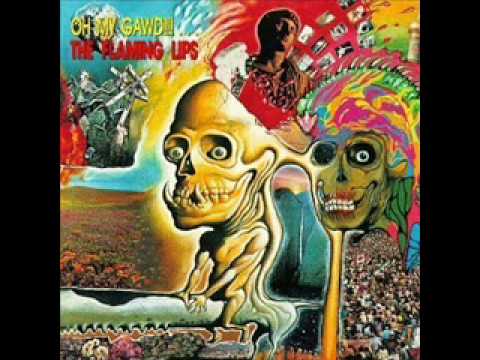
Album: Oh My Gawd!!! (1987)
Play Video

Songfacts®:

  • Flamings Lips frontman Wayne Coyne and bassist Michael Ivins told The Bob magazine the story behind this experimental, Pink Floyd-like tune. Said Wayne: "On tape you can't tell how long it is, but you get the record and it's long! Nine and a half minutes. And we like that. We listen to songs and it doesn't matter if they're ten minutes if it's a good song. We had this concept - it's like you sit there, when you did acid and stuff, and you can look at something and get so carried away in it that time just goes on."

    Michael added: "Because then you 'wake up' and no time's gone by at all and you think, I've been sitting here for two days or something!"

    Wayne continued: "And that's why that length of it is put in there. It's a really long song but we're talking about a miniscule part of time and taking it for all it's worth."
  • Richard English, the band's drummer, said this is the quintessential Flaming Lips song because "it's all about this huge universe in this tiny pinhead." (source: Staring At Sound: The True Story of Oklahoma's Fabulous Flaming Lips by Jim DeRogatis.)
  • In the compilation A Collection Of Songs Representing An Enthusiasm For Recording... By Amateurs: The Flaming Lips 1984-1990, Wayne explained that he and Michael were conducting some unorthodox sleep-deprivation experiments on themselves while writing the tune, "comparing the hallucinations to our (very limited) acid experiences."
  • Speaking of the album's '70s-rock-meets-'80s-acid-punk vibe, Wayne told Consequence of Sound in a 2017 interview: "While the sound feels rooted in rock, you must remember I grew up in the late '70s for the most part. I mean, I was born in 1961, so I was meant to be a weirdo in a '70s rock group. Luckily, punk rock came along, and it was the loudest style out there and allowed us to be a group and make this record. We aren't real musicians. We were nothing without punk rock giving us the kind of freedom to do anything without being so embarrassed about it. And then before you know it, we are making strange, arty records, pushing through what should have been a really awkward situation because we didn't really know how to play and record music. We were just figuring it out as we went along, and I think we were just very lucky. During this time, we were starting to do more things that were studio-orientated and not so much about the way we were supposed to be playing in front of people."

Comments

Be the first to comment...

Editor's Picks

Gary Brooker of Procol Harum

Gary Brooker of Procol HarumSongwriter Interviews

The lead singer and pianist for Procol Harum, Gary talks about finding the musical ideas to match the words.

Andy McClusky of OMD

Andy McClusky of OMDSongwriter Interviews

Known in America for the hit "If You Leave," OMD is a huge influence on modern electronic music.

Waiting For The Break of Day: Three Classic Songs About All-Nighters

Waiting For The Break of Day: Three Classic Songs About All-NightersSong Writing

These Three famous songs actually describe how they were written - late into the evening.
Donald Fagen

Donald FagenSongwriter Interviews

Fagen talks about how the Steely Dan songwriting strategy has changed over the years, and explains why you don't hear many covers of their songs.

Graham Nash

Graham NashSongwriter Interviews

Graham Nash tells the stories behind some of his famous songs and photos, and is asked about "yacht rock" for the first time.

Michael Sweet of Stryper

Michael Sweet of StryperSongwriter Interviews

Find out how God and glam metal go together from the Stryper frontman.