Tonight I Think I'm Gonna Go Downtown

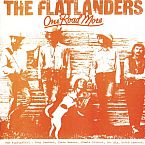
Album: One Road More (1972)
Play Video

Songfacts®:

  • Jimmie Dale Gilmore, who was a member of The Flatlanders, wrote this song with John Reed, who was in an Austin group called Frieda and the Firedogs, best known for playing with Willie Nelson when he came to town. With no drums, it's a poignant song that has come to define Gilmore's career. "It was inspired by this feeling I had one night having to do with, Well, I just want to go downtown," he told us. "Everybody knows that feeling. I think that's why that song resonates with people, because it kind of conjures an emotion that you can't quite put your finger on."
  • Gilmore and his co-writer John Reed started writing the song in 1969 when they were itinerant musicians making a lot of trips around Texas, mostly between Lubbock and Austin. Gilmore remembers writing the song in Austin, but having grown up in Lubbock, that was his reference for downtown. Alcohol was prohibited in Lubbock, so the only place you could get it was the bootleg clubs, which Gilmore often performed at with Joe Ely. Jimmie Dale says that the specifics of the downtown aren't so important, however. "It's about the feeling," he explained.
  • The Flatlanders were formed in 1972 by Jimmie Dale Gilmore, Joe Ely and Butch Hancock. They were signed to Sun Records, who made just a token effort to release their first album which contained this song: they issued a few hundred copies on 8-track cassettes. The group broke up the following year, and the album was not given a proper release until Charly Records picked it up in 1980 and issued it in Europe as One Road More. Rounder Records put out the album as More A Legend Than A Band in 1990, making it the first proper Flatlanders LP in the States. In 2012, 40 years after the album was recorded, New West Records put it out as an expanded version called The Odessa Tapes.
  • Befitting the transient feel of this song, it traveled troubadour-style, with many musicians performing it based on other versions they heard. With no proper release, the song built a bit of a legend in the '70s. Its first popular recording was a solo release by Flatlanders member Joe Ely, who included it on his 1978 album Honky Tonk Masquerade. Mudhoney recorded it on their 1994 collaboration with Gilmore, Buckskin Stallion Blues. Other artists to record it include Don McCalister, Jr. and Nanci Griffith. Gilmore released it on his 1991 solo album After Awhile.

Comments

Be the first to comment...

Editor's Picks

Art Alexakis of Everclear

Art Alexakis of EverclearSongwriter Interviews

The lead singer of Everclear, Art is also their primary songwriter.

La La Brooks of The Crystals

La La Brooks of The CrystalsSong Writing

The lead singer on "Da Doo Ron Ron" and "Then He Kissed Me," La La explains how and why Phil Spector replaced The Crystals with Darlene Love on "He's A Rebel."

Trans Soul Rebels: Songs About Transgenderism

Trans Soul Rebels: Songs About TransgenderismSong Writing

A history of songs dealing with transgender issues, featuring Pink Floyd, David Bowie, Morrissey and Green Day.

Lajon Witherspoon of Sevendust

Lajon Witherspoon of SevendustSongwriter Interviews

The Sevendust frontman talks about the group's songwriting process, and how trips to the Murder Bar helped forge their latest album.

Jon Anderson of Yes

Jon Anderson of YesSongwriter Interviews

From the lake in "Roundabout" to Sister Bluebird in "Starship Trooper," Jon Anderson talks about how nature and spirituality play into his lyrics for Yes.

Angelo Moore of Fishbone

Angelo Moore of FishboneSongwriter Interviews

Fishbone has always enjoyed much more acclaim than popularity - Angelo might know why.