I'm Alive

Album: 30th Anniversary Collection 1963-1993 (1965)
Charted: 1 103
Play Video

Songfacts®:

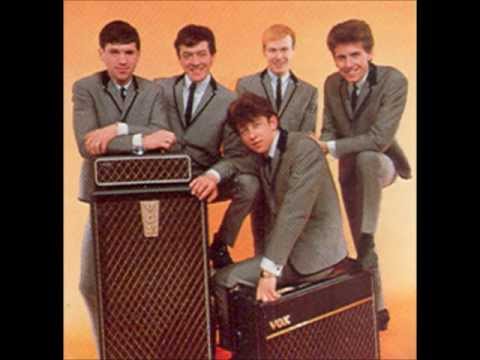
  • This was written by the American songwriter Clint Ballard Jr., who also penned "You're No Good," "Game Of Love" and "Good Timin'." Ballard originally wrote the song for Gene Pitney, who rejected it as did Wayne Fontana, before it was passed on to Manchester band The Toggery Five. The Toggery Five's version, having been recorded at Abbey Road studios, was never released because The Hollies got wind of it and decided to record it themselves. Their version went to #1 in their native UK and reached #103 in America, where the group was little-known at the time.
  • Frank Renshaw, the lead guitarist of The Toggery Five, recollects: "Wayne Fontana gave us this song 'I'm Alive' as he said it wasn't his style. We liked it a lot, booked time at Abbey Road Studios, and recorded it with Ron Richards as producer. Then the Hollies heard it and stole it from us! It turned out to be their first #1 hit in the UK. I'm sure it would have made a turning point for The Toggery Five because it was such a good song, and I think our version was much better. It must still be in the EMI vaults somewhere. I remember the day we recorded it, The Beatles were in the next studio recording or mixing the song 'Any Time At All,' which has remained one of my favorite Beatles songs along with the little known 'Yes It Is.'"

    Alan Doyle the rhythm guitarist recollects: "The Hollies heard our version and quickly recorded it themselves, then got a release date two weeks before ours, and stopped our version from being released. Our manager thought that as The Hollies had already had some chart success and wanted the song, they should have it! He along with Ron Richards pulled the plug on us. After all the work we had laid down on the song, it was a dirty trick to give it to The Hollies. It was a sore point at the time as they got to #1 with the song." (from Paul Young's website)
  • The lead singer of The Toggery Five was Paul Young, who in the '80s and '90s had success as the vocalist of Sad Cafe and Mike & The Mechanics. He died from a heart attack in July 2000. He should not be confused with the Paul Young who had solo success in the 1980s with "Every Time You Go Away."
  • This song was later used in two different British advertising campaigns; first in 1996 for Boots Winter medicine and again in 2001 for Holland & Barrett stores.

Comments: 2

  • Teresa from Mechelen, BelgiumThe Hollies, a very good band. I like their songs very much, always a pleasure to hear them again.
  • Guy from Wellington, New ZealandLove this song -- my Hollies favourite. Love the way the singer's all five senses are engaged by the subject of his affection. I can understand why the Hollies wanted to get their version out before the other group (naughty boys!). The song has an irresistible , infectious energy.
see more comments

Editor's Picks

Does Jimmy Page Worship The Devil? A Look at Satanism in Rock

Does Jimmy Page Worship The Devil? A Look at Satanism in RockSong Writing

We ring the Hell's Bells to see what songs and rockers are sincere in their Satanism, and how much of it is an act.

Bryan Adams

Bryan AdamsSongwriter Interviews

What's the deal with "Summer of '69"? Bryan explains what the song is really about, and shares more of his songwriting insights.

Rush: Album by Album - A Conversation With Martin Popoff

Rush: Album by Album - A Conversation With Martin PopoffSong Writing

A talk with Martin Popoff about his latest book on Rush and how he assessed the thousands of albums he reviewed.

Spooner Oldham

Spooner OldhamSongwriter Interviews

His keyboard work helped define the Muscle Shoals sound and make him an integral part of many Neil Young recordings. Spooner is also an accomplished songwriter, whose hits include "I'm Your Puppet" and "Cry Like A Baby."

Gary Brooker of Procol Harum

Gary Brooker of Procol HarumSongwriter Interviews

The lead singer and pianist for Procol Harum, Gary talks about finding the musical ideas to match the words.

Who's Johnny, And Why Does He Show Up In So Many Songs

Who's Johnny, And Why Does He Show Up In So Many SongsSong Writing

For songwriters, Johnny represents the American man. He has been angry, cool, magic, a rebel and, of course, marching home.