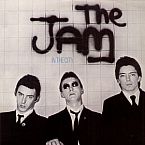
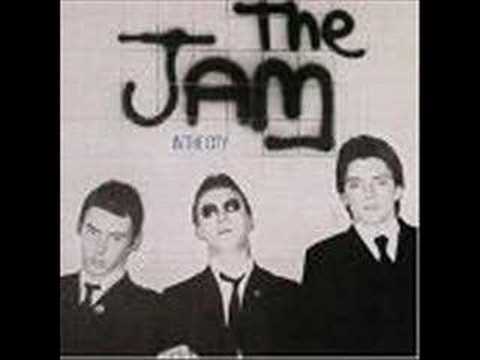
In The City

Album: In The City (1977)
Charted: 36
Play Video

Songfacts®:

  • While only a minor hit on the charts, this mod/punk number is well remembered for serving as England's first introduction to singer/guitarist and Jam songwriter Paul Weller. The song's #40 chart position when the song was first released marked the beginning of his band's streak of 18 consecutive Top 40 singles. After their breakup in 1982, Weller would continue to notch up chart entries well into the 21st century firstly with Style Council, then under his own name.
  • Weller was only 18 when he penned this celebration of youth in the big city. He recalled writing this song to Q magazine April 2011: "It was the sound of young Woking, if not London, a song about trying to break out of suburbia. As far as we were concerned, the city was where it was all happening; the clubs, the gigs, the music, the music. I was probably 18, so it was a young man's song, a suburbanite dreaming of the delights of London and the excitement of the city. It was an exciting time to be alive. London was coming out of its post-hippy days and there was a new generation taking over. The song captured that wide-eyed innocence of coming out of a very small community and entering a wider world, seeing all the bands, meeting people, going to the clubs, and the freedom that it held."
  • The song's descending opening bassline re-appeared a few months later on the Sex Pistols' single "Holidays in The Sun." Weller subsequently had a scrap with Pistols bassist Sid Vicious in the Speakeasy Club over the pilfering of the riff.
  • The single has the particular distinction of reaching the UK Top 50 on four different occasions. The song originally peaked at #40, then when "Going Underground" became the group's first #1 single three years later, Polydor decided to re-issue all nine of the group's prior singles and "City" was the only one to make the Top 40 again, peaking at #40 for a second time. After the group's breakup at the end of 1982, the record company re-issued every single of the band's career in early 1983 and this time "City" peaked at #47. Finally, in May 2002, Polydor decided to commemorate the 25th anniversary of The Jam by re-releasing their debut single in its original packaging, in its original 7" vinyl record format, and at its original price of 75 pence. The limited pressing sold out immediately, this time peaking at #36, higher than it ever did in its original release and two subsequent reissues.
  • Paul Weller recalled the penning of the song to Mojo in 2015: "We had a different sort of birth to a lot of the bands, our contemporaries of that time. Because we'd been playing for five years – pubs and working men's clubs and anywhere that would have us really. I'd been plating since I was 14, sort of semi-pro if you like. So I never got the thing about not turning your guitar."

    "I wrote this after I'd seen the Pistols and The Clash and I was obviously into my Who phrase. I just wanted to capture some of that excitement."

    "It was a big tune for us. We'd open our set with it, we'd probably play it at the end and if we could get an encore, we'd play it again. The reaction it got from the audience, we knew it was a big tune."

    "I'm not sure about some of the lyrics in … I was 17, 18 man. But it was a good youth anthem, I thought."

Comments: 1

  • Jeff from London, United KingdomThis was the song that got me into 'punk' in a big way, I really identified with Paul Weller coming from a similar background. I remember him once saying he'd lived in a house 'with an outside bog' - no 'rockstar' I'd ever liked had ever said things like that before. The Jam never had much success in The USA but as Weller once said'neither did The Small Faces or egg'n'chips.
see more comments

Editor's Picks

Donnie Iris (Ah! Leah!, The Rapper)

Donnie Iris (Ah! Leah!, The Rapper)Songwriter Interviews

Before "Rap" was a form of music, it was something guys did to pick up girls in nightclubs. Donnie talks about "The Rapper" and reveals the identity of Leah.

David Bowie Leads the Society for Prevention of Cruelty to Long-Haired Men

David Bowie Leads the Society for Prevention of Cruelty to Long-Haired MenSong Writing

Bowie's "activist" days of 1964 led to Ziggy Stardust.

Bob Daisley

Bob DaisleySongwriter Interviews

Bob was the bass player and lyricist for the first two Ozzy Osbourne albums. Here's how he wrote songs like "Crazy Train" and "Mr. Crowley" with Ozzy and Randy Rhoads.

La La Brooks of The Crystals

La La Brooks of The CrystalsSong Writing

The lead singer on "Da Doo Ron Ron" and "Then He Kissed Me," La La explains how and why Phil Spector replaced The Crystals with Darlene Love on "He's A Rebel."

Randy Houser

Randy HouserSongwriter Interviews

The "How Country Feels" singer talks Skynyrd and songwriting.

Laura Nyro

Laura NyroSongwriting Legends

Laura Nyro talks about her complex, emotionally rich songwriting and how she supports women's culture through her art.