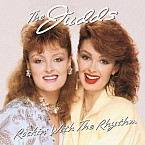
Grandpa (Tell Me 'Bout The Good Old Days)

Album: Rockin' With The Rhythm (1985)
Play Video

Songfacts®:

  • In their sixth #1 Country hit, The Judds are weary in a modern world that's abandoned the traditional values of simpler times. Lead singer Wynonna asks her grandpa to tell her about "the good old days" when couples kept their vows, fathers stayed with their families, and people still prayed.
  • In reality, the good old days weren't so good for the Judd clan, which is why the singers connected so strongly with the song's message. Naomi struggled as a single mother after her marriage broke up, just a few years after her own parents' divorce. As for her grandfathers, they had a particularly rough streak on the maternal side. She told Closer Weekly in 2017, "My great-grandfather was a mass murderer, and after his son became my grandfather, my grandmother murdered him."
  • This was written by Jamie O'Hara, a Nashville songwriter who was known for being half of the country duo The O'Kanes. He never actually knew any of his grandparents; they all died before he was born. He explained in The Billboard Book Of #1 Country Hits how the song came together. "I'd been working very regularly around that time," he said. "I was in a songwriting groove, and woke up one morning, and that's the song that came out. 'Grandpa' was a gift that songwriters get every once in a while, if you're putting in the work."
  • This was a particularly poignant song for The Judds as Naomi had just lost her father (Wynonna's grandfather) to liver disease in 1984. Their producer, Brent Maher, remembered when he first brought the tune to the duo. "To hear 'Grandpa' and not like it, you've got to have a stone for a heart," he said. "It just hit me so hard, and I met with the girls a couple days later, and I played it for them. Wynonna got these big ol' blurry tears in her eyes, and we knew pretty much well off that was gonna be a strong song for them."
  • In a 2017 interview with Kentucky Country Music, Naomi recalled when she first heard the song, saying, "The minute I heard it, I thought, This song just gets me. Gets me in the heart. Gets me in the gut. Gets me in the head. I thought it was so much my song because it says, 'did families really bow their heads to pray, did daddies really never go away.' And I'm standing there singing the song with Wynonna and she never knew her dad. And my daddy was gone before we wrote this song, so the audience didn't know that there's this ghost, this third person standing there with us when we're talking about our grandpas and all that.

    And the fact that they call it progress, but I really don't know, it was sort of another topical song for me besides being so old-fashioned going back to and admiring family values. I'm not for progress. Our world is way too technological for me. I don't do Facebook. I do face to face."
  • Naomi also thinks the song resonates so strongly with fans because it taps into their values and core memories. She said: "I knew it was going to be a monster hit. I just knew it. I felt it, every which way – the past, the present, and the future. And to this day, people come to us and say, 'We just buried my grandpa and we played 'Grandpa (Tell Me 'Bout the Good Ole Days)' at his funeral.' And we played it at my husband's dad's funeral. He was a pastor. They lived in a small town in North Carolina, tobacco farmers. And that was a moment that I was completely drawn back into the past. That's what happens with our songs. They're so personal to us and lo and behold other people get it too."
  • This won the Grammy Award for Best Country Performance by a Duo or Group with Vocal in 1987. O'Hara also took the prize for Best Country Song.
  • Danielle Bradbery covered this on season 4 of The Voice.

Comments: 1

  • Jennifur Sun from HomeIt is like this was written out of my heart. always makes me teary eyed
see more comments

Editor's Picks

Gentle Giant

Gentle GiantSongwriter Interviews

An interview with Ray and Derek Shulman of the progressive rock band Gentle Giant to discuss counterpoint, polyrhythms, and... Bon Jovi.
Chris Isaak

Chris IsaakSongwriter Interviews

Chris tells the story of "Wicked Game," talks milkshakes and moonpies at Sun Records, and explains why women always get their way.

Director Paul Rachman on "Hunger Strike," "Man in the Box," Kiss

Director Paul Rachman on "Hunger Strike," "Man in the Box," KissSong Writing

After cutting his teeth on hardcore punk videos, Paul defined the grunge look with his work on "Hunger Strike" and "Man in the Box."

Crystal Waters

Crystal WatersSongwriter Interviews

Waters tells the "Gypsy Woman" story, shares some of her songwriting insights, and explains how Dennis Rodman ended up on one of her songs.
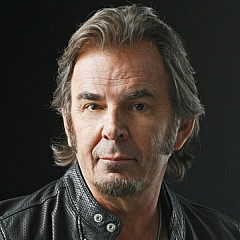
Jonathan Cain of Journey

Jonathan Cain of JourneySongwriter Interviews

Cain talks about the divine inspirations for "Don't Stop Believin'" and "Faithfully."
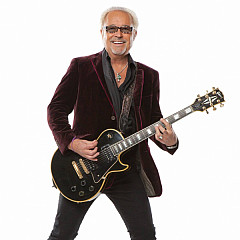
Mick Jones of Foreigner

Mick Jones of ForeignerSongwriter Interviews

Foreigner's songwriter/guitarist tells the stories behind the songs "Juke Box Hero," "I Want To Know What Love Is," and many more.