Dead End Street

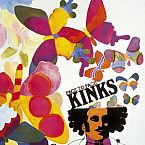
Album: Face To Face (1966)
Charted: 5
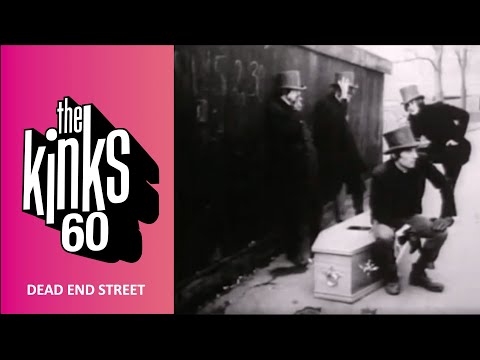
Play Video

Songfacts®:

  • This song is about the hopelessness of the British lower class, especially when unemployed. The title "Dead End Street," which means a one way street, implies the difficulty for many of getting away from the desperate situation they find themselves in.

    Ray Davies explained to Q magazine: "My whole feeling about the '60s was that it's not as great as everyone thinks it is. Carnaby Street, everybody looking happy, that was all a camouflage. That's what Dead End Street was about.

    I wrote it around the time I had to buy a house and I was terrified. I never wanted to own anything because my dad had never owned property. He'd inherited from his dad that he had to rent all his life. So I still have inbuilt shame of owning anything. It's guilt."
  • Dave Davies claimed this was one of his two favorite songs written by his brother, Ray. The other one he mentioned was "Shangri-La."
  • The band pulled a fast one on producer Shel Talmy, who wanted the song to have more of a pop beat. Ray Davies told interviewer Daniel Rachel (The Art of Noise: Conversations with Great Songwriters): "He finished the track and said, 'That's great,' and went home. Then we pretended to leave but came back to the studio and re-recorded the song. We played it to him the next day and he said, 'See what I mean, there's nothing wrong with it.' He thought we were playing him his version."
  • This originally had a French horn arrangement played by a musician named Albert Hall, but it was replaced with a trombone to achieve the somber sound that Ray Davies wanted. "I wanted 'Dead End Street' to be a bit dour and a bit earthy and a bit working-class, and the trombone fitted beautifully," he explained.

    As for Albert Hall, his name stuck with Ray and inspired a lyric in the Face to Face track "Session Man": "He never will forget at all the day he played at the Albert Hall."

Comments: 6

  • Cee Gee Dee from Dallas, Texas, Usai was a Kinks fanatic for most of my teen years into early adulthood. I saw a documentary on them recently which almost revitalized that part of my life. Suffice it to say there is a real Kinks Kult out there and Ray Davies is the Main Man of that Krowd. The Kinks could not tour in America during that era, not because of Congress or LBJ's disdain for them, but because they got in trouble with a powerful musicians union here in the USA. That lasted almost to 1970. I do remember hearing this tune on the radio in 1966. I love the way Dead End is shouted and the early jazz-style solo at the end of the song. Plus, yes, Ray was not always in sync with his native Swinging London lyrically or psychologically.

    Ray Davies never will forget his British working class roots. In 2021 is that something forward looking or backward looking? I cannot answer that question for today's younger folks on an international level. The part about his daddy and ownership of property in 1960s UK was worth the price of the article. Thanks.
  • Mk from Viennadead end street has nothing to do with one way street
  • Gerard from Toulouse, FranceTo me, there has always been a striking resemblance between, on the one hand, the rhythm and the instrumental part at the end, and on the other hand the music and the ballet scenes at the beginning of the film West Side Story - just like if Davies had thought or wanted to say that the poverty he'd seen around him in working-class England was far less glamourous or colourful than poverty on the screen - even the lyrics seem to be an antithesis of "when you're a jet...". What I mean is if you were a young and naive teenager and you got carried away by the film shots and the energy in the singers' voices and the dance scenes, not to forget the beauty of Natalie Wood and Rita Moreno, well then poverty WAS beautiful, wasn't it? Maybe Davis thought "wait a minute, I can show you a different picture." Does anyone know if The Kinks have ever made any comment on this song?
  • John from Anaheim, CaLou Rawls also had a song titled "Dead End Street" at this time (early 1967), and its title also referred to hopelessness. Unlike the Kinks, however, the Rawls song was an uplifting song of a black man rising above his poor beginnings.
  • A. Ward from Arnold, MdI also consider this song to be Davie's finest along w/"A Well Respected Man". Both tunes are so evocative of the era and England's social classes. I have always thought that The Kinks were the thinking man's band and you never knew what to expect next or what sound they would have. From the first "heavy metal garage" tunes to the first Punk song ("I'm Not Like Everybody Else")to the stunning Waterloo Sunset-Wow!
  • Reg from Kemptville, OnIf my memory serves me correctly, I believe this song was included on an album entitled "London a Go-Go". We aquired it in 1967 but there was a clause on the jacket stating that they could only list the song titles, not the artists. "We're sure you'll recognize them.." or something like that. I've never known who recorded Dead End Street until now.
see more comments

Editor's Picks

Stephen Christian of Anberlin

Stephen Christian of AnberlinSongwriter Interviews

The lead singer/lyricist for Anberlin breaks down "Impossible" and covers some tracks from their 2012 album Vital.

Emilio Castillo from Tower of Power

Emilio Castillo from Tower of PowerSongwriter Interviews

Emilio talks about what it's like to write and perform with the Tower of Power horns, and why every struggling band should have a friend like Huey Lewis.

Art Alexakis of Everclear

Art Alexakis of EverclearSongwriter Interviews

The lead singer of Everclear, Art is also their primary songwriter.

Graham Bonnet (Alcatrazz, Rainbow)

Graham Bonnet (Alcatrazz, Rainbow)Songwriter Interviews

Yngwie Malmsteen and Steve Vai were two of Graham's co-writers for some '80s rock classics.

They Might Be Giants

They Might Be GiantsSongwriter Interviews

Who writes a song about a name they found in a phone book? That's just one of the everyday things these guys find to sing about. Anything in their field of vision or general scope of knowledge is fair game. If you cross paths with them, so are you.

Who's Johnny, And Why Does He Show Up In So Many Songs

Who's Johnny, And Why Does He Show Up In So Many SongsSong Writing

For songwriters, Johnny represents the American man. He has been angry, cool, magic, a rebel and, of course, marching home.