Rosy Won't You Please Come Home

Album: Face To Face (1966)
Play Video

Songfacts®:

  • "Rosy Won't You Please Come Home" was inspired by the departure of Ray and Dave Davies' older sister Rosie, who emigrated to Australia with her husband, Arthur Anning, in 1964. Her move to Adelaide hit the family hard, particularly Ray. In those days, Australia wasn't somewhere you could pop over to for the weekend, and a sister moving to the other side of the world felt like she had gone to the moon.
  • Ray was devastated on the day Rosie left. After a gig, he went down to the beach and broke down. "I started screaming. A part of my family had left, possibly forever. I collapsed in a heap on the sandy beach and wept like a pathetic child," he recalled.
  • The song takes the form of a plea to a sister who has gone abroad and apparently "joined the upper classes." Ray complains she doesn't know them anymore and offers to "sacrifice all I have to have a happy home once more." The little domestic details make the track especially affecting. Her room is clean but empty; Christmas isn't quite the same without her, and he even promises to bake her a cake if she catches the first plane home. It's a plain, heartfelt snapshot of a family desperately missing one of its own.

    "It was a very sad time," Dave Davies told Uncut. "In those days you couldn't easily jump on a plane and go there. Moving to Australia was a really big thing. When we heard that Rosy was going to go, it really caught us by surprise. Ray was in shock, really. But we had to keep going, and it was tough, but I think the music was helped by the angst and the drive."

    The brothers eventually made the journey to Australia themselves. "Me and Ray got over to Australia a few years later, and we got to see Rosy and it was great. But I was glad to get home to be honest, I didn't like it there," Dave added.
  • Rosie had a particularly close relationship with Ray, who was considerably younger than his sister. "Rosie was in her 20s when I was born and I lived with her for a while," he told The Sun. "I missed her because she was like a surrogate mother to me."

    Her departure was far more impactful than just losing a sibling.
  • Ray returned to the subject three years later on The Kinks' 1969 concept album Arthur Or the Decline and Fall of the British Empire. The album's central figure, Arthur Morgan, is loosely based on Rosie's husband, Arthur Anning, a carpet-layer who emigrated in search of a better life. Ray told Uncut that the idea grew out of living with the couple and hearing their account of "how Britain had been betrayed after the war." They had been lured to Australia by the promise of cheap housing. "It was a profound loss for me," he said.

    The album tracks "Australia" and "Shangri-La" explore aspects of the emigrant experience and the hopes and disappointments surrounding it.
  • Marianne Faithfull recorded a cover around 1966 under the title "Rosie, Rosie," though her version stayed in the archives until 1988.
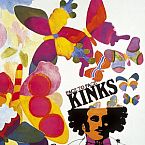
  • The Kinks included their original recording on the 1966 album Face to Face. Following the cheeky, voyeuristic comedy of opening track "Party Line," this song shifts the album into far more personal territory. It's a reminder that behind Ray Davies' knack for observing the foibles of other people was a man who could be thoroughly undone by the departure of one very important person.

Comments

Be the first to comment...

Editor's Picks

Five Rockers Who Rolled With The Devil

Five Rockers Who Rolled With The DevilSong Writing

Just how much did these monsters of rock dabble in the occult?

Dave Edmunds

Dave EdmundsSongwriter Interviews

A renowned guitarist and rock revivalist, Dave took "I Hear You Knocking" to the top of the UK charts and was the first to record Elvis Costello's "Girls Talk."

History Of Rock

History Of RockSong Writing

An interview with Dr. John Covach, music professor at the University of Rochester whose free online courses have become wildly popular.

David Bowie Lyrics Quiz

David Bowie Lyrics QuizMusic Quiz

How well do you know your David Bowie lyrics? Take this quiz to find out.
Ed Roland of Collective Soul

Ed Roland of Collective SoulSongwriter Interviews

The stories behind "Shine," "December," "The World I Know" and other Collective Soul hits.
Adam Duritz of Counting Crows

Adam Duritz of Counting CrowsSongwriter Interviews

"Mr. Jones" took on new meaning when the song about a misguided view of fame made Adam famous.