
Shangri-La

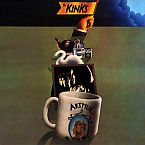
Album: Arthur (Or the Decline and Fall of the British Empire) (1969)
Play Video

Songfacts®:

  • During a concert screened by BBC2 in October 2007, Ray Davies said of this song that he wrote it for a TV show that was never produced, but if it had been it would have been the first rock opera. The studio version, released some 38 years earlier by his band The Kinks, runs to 5 minutes 20 seconds. The Shangri-La referred to is a house rather than the mythical land. >>>
    Suggestion credit:
    Alexander - London, England
  • The album Or The Decline And Fall Of The British Empire was a commercial flop, which contributed to many problems the band faced. In the UK, "Shangri-La" was released as a single in September 1969, a month before the album came out. When it tanked, it portended the album's failure.

    Dave Davies of The Kinks told Mojo in 2000: "There were two main factors to our problems. One, we were banned from working in the States for three years because our manager had f--ked up with the unions. And the other was my favorite Kinks album, Arthur. I thought we'd really found a path. It felt so right; it was like another 'You Really Got Me.' Ray was writing fantastic, sensitive words that were so relevant to what was going on – better than any politician. I was really surprised at the response we got to 'Shangri-La', I thought it was going to be a massive hit."
  • Shangri-La is the name for a fictional earthly paradise, which comes from the name of the mystical, harmonious valley described in the 1933 novel Lost Horizon by British author James Hilton. All who remain there enjoy long life.

    Other artists that have written songs inspired by Hilton's place of paradise include: The Electric Light Orchestra, The Four Coins, S.J. Tucker and The Rutles.
  • Ray Davies explained the story behind the song to Q magazine:

    "I'd been living in this semi in Muswell Hill and I was pressured by a couple of my sisters to get a bigger place. So I bought this big manorial house in Elstree, bordering Borehamwood. I felt so ill at ease there I sold it and moved back to my semi. But up there in Borehamwood I wrote a lot of The Village Green Preservation Society, and the beginnings of what became Arthur (Or The Decline And Fall Of The British Empire), which included Shangri-La.

    A few years before that I'd visited my sister who'd moved to Australia and the words were partly inspired by her new home. But, really, it's about anyone's quest for their Shangri-La, their pebble-dashed Nirvana. You see it a lot in places like Potters Bar. That idea that you can only go so far as Potters Bar."
  • Dave Davies claimed this was one of his two favorite songs written by his brother, Ray. The other one he mentioned was "Dead End Street."

Comments: 2

  • Kimberly from Landing, NjThe song seems to be reporting the sign of our on tour of times with values of respect.
  • Allison from A Little Ol' Town In, MiI like the gutar in the beginning. The beginning sounds kind of haunting. Cool
see more comments

Editor's Picks

Little Big Town

Little Big TownSongwriter Interviews

"When seeds that you sow grow by the wicked moon/Be sure your sins will find you out/Your past will hunt you down and turn to tell on you."

Millie Jackson

Millie JacksonSongwriter Interviews

Outrageously gifted and just plain outrageous, Millie is an R&B and Rap innovator.

Don Dokken

Don DokkenSongwriter Interviews

Dokken frontman Don Dokken explains what broke up the band at the height of their success in the late '80s, and talks about the botched surgery that paralyzed his right arm.

Martyn Ware of Heaven 17

Martyn Ware of Heaven 17Songwriter Interviews

Martyn talks about producing Tina Turner, some Heaven 17 hits, and his work with the British Electric Foundation.

Sending Out An SOS - Distress Signals In Songs

Sending Out An SOS - Distress Signals In SongsSong Writing

Songs where something goes horribly wrong (literally or metaphorically), and help is needed right away.

John Lee Hooker

John Lee HookerSongwriter Interviews

Into the vaults for Bruce Pollock's 1984 conversation with the esteemed bluesman. Hooker talks about transforming a Tony Bennett classic and why you don't have to be sad and lonely to write the blues.