When The Revolution Comes

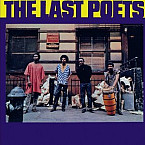
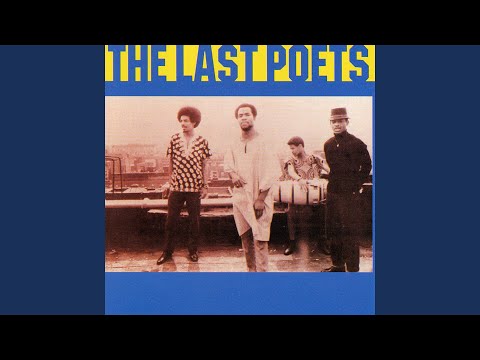
Album: The Last Poets (1970)
Play Video

Songfacts®:

  • The late 1960s and early 1970s were marked by significant social and political upheaval in the United States. The assassination of Martin Luther King Jr., the rise of Black Power politics, and the ongoing Vietnam War created an atmosphere of tension and unrest. Into this simmering mix of chaos and hope strode The Last Poets, a group as radical as the times demanded, with a name borrowed from a poem by the South African writer Keorapetse Kgositsile.

    The core group of poets - Jalal Mansur Nuriddin, Abiodun Oyewole, Umar Bin Hassan - and their percussionist, Raymond "Nilaja" Hurrey, were revolutionary in both aim and sound. They weren't just poets or musicians; they were the musical arm of Black nationalism, formed on May 19, 1968 (Malcolm X's birthday) in Harlem's Marcus Garvey Park. Their very existence was a kind of middle finger to the establishment, wrapped in a beat, set to verse.

    "When The Revolution Comes," a song from their self-titled debut album, encapsulates the revolutionary spirit and political consciousness of the era.
  • The song addressed what lead vocalist Abiodun Oyewole saw as passivity and complacency among certain sections of the Black community. Oyewole told Uncut magazine:

    "On the streets of Harlem, folks would say things like, 'Man, he needs to get that stuff out of his hair when the revolution comes.' Or 'He can't be dressing like that when the Revolution comes.' Everything was being prefaced on the revolution coming; that was part of the conversation. So, I just took that bit of information and wrote a poem called when the revolution comes. It was like the people gave me the framework and I filled in the spaces. It's probably took me an hour or two."
  • When the revolution comes
    Some of us will probably catch it on TV with chicken hanging from our mouths
    You'll know it's revolution because there won't be no commercials


    The lyric echoes Gil Scott-Heron's famous "The Revolution Will Not Be Televised," which was dropped the same year. But Oyewole was onto something slightly different; he was saying the revolution would be televised in a way, at least for those watching from the comfort of their armchairs, chicken grease and all. Gil, in contrast, argued it was all going down live, no broadcast needed.
  • Oyewole's iconic line about "party and bulls--t" was later co-opted by The Notorious B.I.G. for his 1993 debut single, "Party and Bulls--t." Biggie's song has been interpolated by several artists, including Nas ("Get Light") and Rita Ora ("How We Do (Party)").

    Biggie's "Party and Bulls--t" and the later songs aren't a condemnation of complacency at all; they are, in Oyewole's view, a celebration of what he was railing against.

    "Unfortunately," Oyewole said, "I've had quite a few suits out, against Biggie Smalls, Jay-Z, and his artist Rita Ora. They've all used that particular line, and many people attribute it to Biggie. But I meant it as a protest, not a party anthem."
  • Raymond "Nilaja" Hurrey, the percussionist on "When The Revolution Comes," was another character altogether. He carried his drum around in a duffel bag, always ready but never too eager to play. "If he opened that duffel bag and started playing within the first 40 seconds," Umar Bin Hassan recalled, "you knew that poem was a keeper."
  • The group recorded their eponymous debut album in 1970 at Impact Sound Studio with their managers, East Wind Associates, overseeing the production. Released in June 1970, The Last Poets peaked at #29 on the Billboard 200 albums chart.
  • "When the Revolution Comes" and The Last Poets' other work set a tone for an entire genre that hadn't even been born yet. Their records influenced not only poets and activists but also a generation of hip-hop artists, from A Tribe Called Quest to Common, who picked up the mantle and ran with it. And thus, the revolution they envisioned - and maybe even the one they didn't - continued on.

Comments

Be the first to comment...

Editor's Picks

Graham Nash

Graham NashSongwriter Interviews

Graham Nash tells the stories behind some of his famous songs and photos, and is asked about "yacht rock" for the first time.

Ralph Casale  - Session Pro

Ralph Casale - Session ProSongwriter Interviews

A top New York studio musician, Ralph played guitar on many '60s hits, including "Lightnin' Strikes," "A Lover's Concerto" and "I Am A Rock."

Rob Halford of Judas Priest

Rob Halford of Judas PriestSongwriter Interviews

Rob Halford dives into some of his Judas Priest lyrics, talking about his most personal songs and the message behind "You've Got Another Thing Comin'."

Corey Hart

Corey HartSongwriter Interviews

The Canadian superstar talks about his sudden rise to fame, and tells the stories behind his hits "Sunglasses At Night," "Boy In The Box" and "Never Surrender."

Incongruent Opening Acts

Incongruent Opening ActsSong Writing

Here's what happens when an opening act is really out of place with the headliner, like when Beastie Boys opened for Madonna.

Edwin McCain

Edwin McCainSongwriter Interviews

"I'll Be" was what Edwin called his "Hail Mary" song. He says it proves "intention of the songwriter is 180 degrees from potential interpretation by an audience."