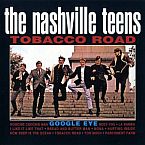
Tobacco Road

Album: Tobacco Road (1964)
Charted: 6 14
Play Video

Songfacts®:

  • John D. Loudermilk wrote this song and originally recorded it in 1960. He was born and raised in the old tobacco warehouse city of Durham, North Carolina, and this is a somewhat autobiographical song about the city. Loudermilk was a prolific composer of many styles, and his songs ("Then You Can Tell Me Goodbye," "Big Daddy," "Paper Tiger," "Break My Mind," "Indian Reservation") have been covered by many different artists. >>>
    Suggestion credit:
    Mark - Mayberry, NC
  • Loudermilk (from American Songwriter Magazine January/February 1988): "I got the idea for writing that song from a road in our town that was called Tobacco Road because it was where they rolled the hogsheads full of Tobacco down to the river to be loaded onto barges. Along that road were a lot of real tough, seedy-type people, and your folks would have just died if they thought you ever went down there."
  • The Nashville Teens were most certainly not from Nashville: they were part of the British Invasion and gave themselves an American name so it would be less obvious that they were from England. It worked, at least for this song, as they had a hit with it four years after Loudermilk originally recorded it.

    One member of The Nashville Teens, Michael Dunford, became a mainstay with the classical rock band Renaissance as a guitarist and primary songwriter. Dunford died from a cerebral hemorrhage in 2012 at age 68.
  • This was one of the first songs produced by Mickie Most for another artist. Most was born and raised in England, but went to South Africa in 1959, where he formed a band called Mickie Most and his Playboys. Rock music hadn't yet come to the country, so Most introduced songs like "The Twist" and "Johnny B. Goode" to the country with his cover versions. (Hey! Isn't that the plot of Back To The Future?)

    When Most returned to England, he turned to production work and began doing sessions with The Animals. Soon after, he produced this track; by the end of the '60s he was the top producer in the UK, with hits by Lulu, Herman's Hermits and Donovan to his credit.
  • When Johnny Winter's career took off in the late '60s, he had his younger brother, Edgar Winter, play keyboards and saxophone in his band. Johnny wanted to showcase Edgar, so he had him sing "Tobacco Road," which they included in Johnny's set at Woodstock in 1969. Edgar included the song on his first solo album in 1970 and released it as a single.

    Other artists to record the song include Bobbie Gentry, David Lee Roth and Lou Rawls.
  • This was used in the season 3 opener of the TV show Mad Men. In the show, the character Don Draper takes the identity of another man, similar to how the Nashville Teens, a British group, posed as Americans.

Comments: 9

  • Jennifur Sun from RamonaKevin, often wondered who that was thanks
  • Barry from Sauquoit, NyOn September 6th 1964, "Tobacco Road" by the Nashville Teens entered Billboard's Hot Top 100 chart at position #90; and on November 1st, 1964 it peaked at #14 {for 1 week} and spent 11 weeks on the Top 100...
    They had one other Top 100 record, "Find My Way Back Home", it stayed on the chart for 2 weeks, peaking at #98...
    In 1970 the band Jamul covered the song; their version reached #93 on the Top 100.
  • Joeyjoel from Long Beach Ca, CaThe last line of the lyrics to this song is: "I despise you cause you're 'filthy.' Check out Johnny Winters version of this song. Really different, really hot. Or Eric Burdons, or that ole 'Mr Smooth,' Lou Rawls.
  • John from San Francisco, CaUsed to great affect in the closing scene of Mad Men (Season 4 - Episode 1) as Mr. Draper puts on the spin to a reporter from The Wall St. Journal.
  • Jon from Great Yarmouth, United KingdomThe Nashville Teens were a British band and pretty good too. They were Jerry Lee Lewis's backing band on his excellent album "Live At The Star Club", probably Jerry Lee's best album.
  • Peg from Chicago, IlAll the lyrics I've looked up seem to leave out the last lines they sing - "But it's home, the only life I've ever known, I despise ya cause ya hurt me, but I love ya, cause you're home"
  • Kevin from Syracuse, UtThe amazing guitar work--exemplified by the snarling and instantly memorable string-bending guitar riff that opens the song--was played by none other than Jimmy Page, then a highly respected and sought-after session guitarist.
  • Dominick from New York, NyIt looks like I.K. Tolbert is right. Loudermilk wrote the song in 1960 and it charted for the Nashville Teens in 1964, but he was not a part of the group. Also as mentioned, the Nashville Teens were a British band.
  • I.k. Tolbert from Detroit, MiJohn Loudermilk was not a member of the Nashville Teens. Despite the name the Nashville Teens were a British band part the British invasion following the Beatles in 1964.
see more comments

Editor's Picks

Little Big Town

Little Big TownSongwriter Interviews

"When seeds that you sow grow by the wicked moon/Be sure your sins will find you out/Your past will hunt you down and turn to tell on you."

Millie Jackson

Millie JacksonSongwriter Interviews

Outrageously gifted and just plain outrageous, Millie is an R&B and Rap innovator.

Don Dokken

Don DokkenSongwriter Interviews

Dokken frontman Don Dokken explains what broke up the band at the height of their success in the late '80s, and talks about the botched surgery that paralyzed his right arm.

Martyn Ware of Heaven 17

Martyn Ware of Heaven 17Songwriter Interviews

Martyn talks about producing Tina Turner, some Heaven 17 hits, and his work with the British Electric Foundation.

Sending Out An SOS - Distress Signals In Songs

Sending Out An SOS - Distress Signals In SongsSong Writing

Songs where something goes horribly wrong (literally or metaphorically), and help is needed right away.

John Lee Hooker

John Lee HookerSongwriter Interviews

Into the vaults for Bruce Pollock's 1984 conversation with the esteemed bluesman. Hooker talks about transforming a Tony Bennett classic and why you don't have to be sad and lonely to write the blues.