Can't Hardly Wait

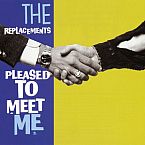
Album: Pleased To Meet Me (1987)
Play Video

Songfacts®:

  • "Can't Hardly Wait" mutated from an obvious suicide song to a more opaque and less controversial one.

    Replacements frontman Paul Westerberg wrote it after completing recording sessions for the band's third studio album, Let It Be (1984). That version, recorded for their fourth album, Tim (1985), but left off the tracklist, is unambiguously about a guy driving to a water tower to kill himself. It mentions someone else abandoning him ("I'll be sad in heaven, you won't follow me there"), but is otherwise a clearcut meditation on his own chaotic life and his desire to end it.

    By the time the song was finally released on their next album, Pleased To Meet Me (1987), Westerberg obfuscated the suicide aspect to the point that it was impossible to detect. In the new version, the lyrics are directed outward to some unnamed person to whom Westerberg is writing a letter. The thing that Westerberg "can't hardly wait" for is to get home and go to sleep. Knowing the song's origin, we can frame "sleep" as death, but even then the rest of the lyrics don't make much sense.

    In the original demo, which eventually leaked, the thing he can't hardly wait for is distressingly clear:

    I'll be sad in heaven
    If I don't find a hole in the gate
    Climb on to the top of this scummy water tower screamin'

    I can't hardly wait I can't wait... 'til it's over
  • Two lines came over verbatim from the first to the final version:

    Jesus rides beside me
    He never buys any smokes


    The lines are amusing but otherwise insignificant in the final recording. They take on more weight in the original as we understand that Westerberg is driving to kill himself. In the transformation of the verse we see the whole story of the song's transition. It went from:

    Jesus rides beside me
    And never buys any smokes
    Hurry up, hurry up, I've got enough of this stuff
    Ashtray floors, dirty clothes, filthy jokes


    to

    Jesus rides beside me
    He never buys any smokes
    Hurry up, hurry up, ain't you had enough of this stuff?
    Ashtray floors, dirty clothes and filthy jokes


    In the first version, we hear the tired despair in "I've got enough of this stuff." In the final, our focus is directed from the character's car to some anonymous third person, and we're not sure why.
  • Westerberg wrote the song after the band completed recording Let It Be, their third studio album. They recorded acoustic and electric versions for Tim, their fourth studio album, but left them out because they were unhappy with the quality.

    They were tired of the song by the time Pleased To Meet Me rolled around. Talent scout (formally called an "Artists and Repertoire" agent) Michael Hill convinced them to do it again. Hill first met the band early in their career when he was a writer for the now-defunct New York Rocker magazine and remained a friend of the group. Hill was from working-class roots like The Replacements, which cemented their connection. He played various important roles in their career.

    Hill pushed them to reconsider the song while they were in Memphis, Tennessee. They made a couple failed attempts before a last-ditch effort after a night of hard partying. Westerberg tinkered with the lyrics in a Holiday Inn while hungover, which may account for the addition of the "drapes" to the song ("Lights that flash in the evening, through a crack in the drapes"). Drapes don't appear in the first version, where lights flash simply "in the evening," and the only "hole" mentioned is in a gate.
  • Big Star frontman Alex Chilton plays guitar on the Pleased To Meet Me version of the song. He was supposed to play on the song about him - "Alex Chilton" - but ended up playing on this one instead.
  • The original demo version features Replacements co-founder and guitarist Bob Stinson. The demos for Pleased To Meet Me were his final contributions to the band, as he was kicked out because of substance abuse. He died at 35 (February 18, 1995) after years of drug and alcohol abuse.
  • The band released the song as the third and final single from Pleased To Meet Me, with the second being the aforementioned "Alex Chilton." A cover of a 1936 song titled "Cool Water" (written by Bob Nolan) appears on the single's B-side.
  • Andrew Love of the Memphis Horns played tenor saxophone on this song. The Horns were a highly regarded horn section from 1941 to 2012 and contributed to classic songs "Let's Stay Together," "Sitting On The Dock Of The Bay," and "Suspicious Minds."

    Ben Cauley, lone survivor of the 1967 plane wreck that cut Otis Redding's life short at only 26 years old, played trumpet.

    Westerberg felt the horns ran contrary to The Replacements' sound and bailed on the scene, likely to "ensure plausible denial" (according to Bob Mehr in Trouble Boys: The True Story Of The Replacements). Westerberg grudgingly consented to the decision but didn't want to own it. With the band gone, producer Jim Dickinson also brought in Memphis State University faculty member and respected violinist Max Huls for strings.
  • Like most Replacements songs, this one never came close to charting. It did earn lots of critical acclaim and is considered one of the band's best.
  • The song first showed up on The S--t Hits The Fans, a live recording from a November 11, 1984 appearance at The Bowery in Oklahoma City, Oklahoma. The venue held up to 1,200 people, but only about 30 patrons attended the show. The Bowery's managing DJ, Roscoe Shoemaker, asked to record the show, and The Replacements consented with a metaphorical shrug.

    The band's roadie pulled the cassette before the show was over. The Replacements released 10,000 copies on cassette with liner notes reading, "Anyhoo... what you've got here is most of a live show. Our roadie pulled it out of some enterprising young gent's tape recorder toward the end of the night.
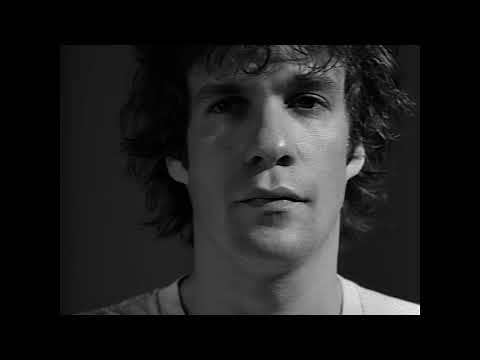
  • The deluxe edition of Pleased To Meet Me includes Interscope Records cofounder Jimmy Iovine's remix of the song and another rough-mix version. To promote the deluxe edition, Rhino made a "Can't Hardly Wait" music video using extra footage from the 1987 video for "The Ledge," which MTV banned due to its being about suicide.
  • The teen romantic comedy Can't Hardly Wait (1998), starring Jennifer Love Hewitt, takes its name from this tune. The song also appears on the movie's official soundtrack.

Comments: 7

  • Keith from MarylandPaul Westerberg has said that the lyrics were never about commiting suicide. "That's about us on the road, sitting around bored in hotel rooms waiting for something to happen."
  • Brian from Boston, MaGreat song Great band
  • Aash from New York, Nyactually Replacements music sold millions and millions of albums, but unfortunately for them the records had the name "Goo Goo Dolls" on them..
  • Zach from San Francisco, CaJohn, your comments are accurate, I think. However, at the risk of sounding like a huge dork, the intro to the Pleased to Meet Me version of the song is definitely a guitar and not a bass.
  • Mister Whirly from Minneapolis, MnOne of the best versions of this song is an acoustic version, literally recorded in an air shaft at the old Twin Tone studios. The original lyrics are much better, and the Bob version with the electric guitars and no horns is about a million times better, and more Replacements-esque.
  • Hoser from Winnipeg, CanadaRight up there with "Unsatisfied" and "Left Of The Dial" on my 'Mats greatest hits; never heard the Tim version, though.
  • Dave from Le Mars, IaThe Tim version is incredible. More the Mats' style, kind sloppy but very heart felt. This band was truly great, its a shame, or maybe not, depending on your prospective that they were not popular than they were. They help pave the way for Weezer and Nirvana.
see more comments

Editor's Picks

Muhammad Ali: His Musical Legacy and the Songs he Inspired

Muhammad Ali: His Musical Legacy and the Songs he InspiredSong Writing

Before he was the champ, Ali released an album called I Am The Greatest!, but his musical influence is best heard in the songs he inspired.

Michael Sweet of Stryper

Michael Sweet of StryperSongwriter Interviews

Find out how God and glam metal go together from the Stryper frontman.

Devo

DevoSongwriter Interviews

Devo founders Mark Mothersbaugh and Jerry Casale take us into their world of subversive performance art. They may be right about the De-Evoloution thing.

Dennis DeYoung

Dennis DeYoungSongwriter Interviews

Dennis DeYoung explains why "Mr. Roboto" is the defining Styx song, and what the "gathering of angels" represents in "Come Sail Away."

Tom Bailey of Thompson Twins

Tom Bailey of Thompson TwinsSongwriter Interviews

Tom stopped performing Thompson Twins songs in 1987, in part because of their personal nature: "Hold Me Now" came after an argument with his bandmate/girlfriend Alannah Currie.

Evolution Of The Prince Symbol

Evolution Of The Prince SymbolSong Writing

The evolution of the symbol that was Prince's name from 1993-2000.