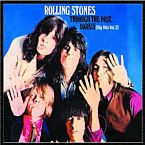
In this song, Mick Jagger sings about having a go with two different honky tonk women. The first is a "gin-soaked, bar-room queen in Memphis" - likely a prostitue. The second is a "divorcée in New York City." Jagger would sometimes introduce it as being "a song for all the whores in the audience."
Like many Rolling Stones songs, it has highly suggestive lyrics, but they are just subtle enough to keep it from getting banned by radio stations. British rock bands often wrote lyrics that were ambiguously offensive, falling just in line with BBC guidelines for airplay. A good example in this song is, "She blew my nose and then she blew my mind," which implies both cocaine and sex, but didn't give the BBC any specific reason to ban it.
The Stones started recording this as a country song based on Hank Williams' "Honky Tonk Blues." They made it into a rocker for release as a single and released the country version, "Country Honk," a few months later on Let It Bleed.
Keith Richards explained in a promotional interview: "'Honky Tonk Women' started in Brazil. Mick and I, Marianne Faithfull and Anita Pallenberg who was pregnant with my son at the time. Which didn't stop us going off to the Mato Grasso and living on this ranch. It's all cowboys. It's all horses and spurs. And Mick and I were sitting on the porch of this ranch house and I started to play, basically fooling around with an old Hank Williams idea. 'Cause we really thought we were like real cowboys. Honky tonk women. And we were sitting in the middle of nowhere with all these horses, in a place where if you flush the john all these black frogs would fly out. It was great. The chicks loved it. Anyway, it started out a real country honk put on, a hokey thing. And then couple of months later we were writing songs and recording. And somehow by some metamorphosis it suddenly went into this little swampy, black thing, a Blues thing. Really, I can't give you a credible reason of how it turned around from that to that. Except there's not really a lot of difference between white country music and black country music. It's just a matter of nuance and style. I think it has to do with the fact that we were playing a lot around with open tunings at the time. So we were trying songs out just to see if they could be played in open tuning. And that one just sunk in."
>>>
Suggestion credit:
Bertrand - Paris, France
Lead guitarist
Brian Jones was a founding member of the group and was considered their leader in their early years. Unfortunately, drug abuse made him pretty much worthless by 1969, and when The Stones finished recording "Honky Tonk Women" on June 8, 1969, they drove to his house and fired him. The single was released July 3, 1969, the same day Jones was found dead in his swimming pool.
Mick Taylor had taken over for Brian Jones on lead guitar, and this was his first appearance on a Stones recording. Taylor claims he came up with the famous guitar riff, even though Richards plays it.
The distinctive cowbell used to open the song was played by producer Jimmy Miller. He set the tempo for the song by venturing into the studio and hitting the two small cowbells his had set up on a prong.
Young drummers often practice playing this song because it requires them to play different patterns at the same time with the hands and feet working independently.
Reparata & The Delrons, an early '60s girl group, sang the backup vocals.
There is no bass on the verses.
The single was given away to all the fans who helped clean up after The Stones free concert in Hyde Park on July 5, 1969. This was the first concert Mick Taylor played with the band. A life-size cutout of Brian Jones, who died three days earlier, was kept on stage and the show was dedicated to him.
The Stones played this at most of their live shows, usually with great theatrics. The Steel Wheels tour in 1989 featured giant inflatable women during the performance.
This was banned in China. When the group made arrangements to play there for the first time in 2003, they had to agree not to play this, "
Brown Sugar," "Let's Spent The Night Together," and "Beast Of Burden." They ended up not playing because of a respiratory disease that was going around China.
Keith Richards says this song can be "a bastard to play." He told Rolling Stone: "When it's right, it's really right. There's something about the starkness of the beginning you really have to have down, and the tempo has to be just right."
Chrissie Hynde, the lead singer of The Pretenders, joined The Rolling Stones on stage in Leipzig on June 20, 2003 and sang this as a duet with Jagger.
Rick Nelson released a cover of this song on his 1971 album
Rudy The Fifth. His version, which is in more a country style akin to "Country Honk," is the song that got him booed off the stage when he played a "Rock & Roll Revival" show that year at Madison Square Garden. Nelson had never played one of these nostalgia shows, and he thought he could play something new in his set. The crowd, there to hear the hits, didn't like it and let him know. The experience led Nelson to write "
Garden Party," which became a hit song the following year and got his career back on track. In that song, he included this line:
When I sang a song about a Honky Tonk
It was time to leave"Honky Tonk Women" was used as the title for a session of the amime series
Cowboy Bebop. Along with other classic rock songs, this was used to introduce the "Femme Fatale" character.
>>>
Suggestion credit:
Nathan - Dillsburg, PA