The Rolling Stones recorded "Sister Morphine" in 1968, but didn't release it until 1971, when it appeared on their album Sticky Fingers. Marianne Faithfull, who was Mick Jagger's girlfriend at the time, was the first to release the song; she recorded it during The Stones' Let It Bleed sessions. Her version was issued in 1969 and went nowhere - Decca Records pulled it after two weeks.
The song is about a man who gets in a car accident and dies in the hospital while asking for morphine. It originated with a tune that Jagger kept strumming when he was in London with Faithfull. Though it was lovely, she got sick of the wordless song, so she told him she'd write some lyrics. "I wrote this story about a man who'd had an accident," Faithfull told Mojo. "He's dying, and in terrible pain and all he wants is for the nurse to bring him another shot. It's definitely a kind of junkie song except that neither Mick nor I knew much about junkies back then."
Faithfull added she knew a couple of people who used narcotics: Beat poet Gregory Corso and her first husband, art dealer John Dunbar. "I think, partly, if I had to put a real person in it, 'Sister Morphine' might have been Anita (Pallenberg), because she had just played nurse Bullock in the film Candy."
Marianne Faithfull wrote the lyrics, but The Stones did not give her an official songwriting credit until they released it on their 1998 live album No Security. The Stones were very protective about songwriting credits - they made sure most of their songs were credited to Jagger/Richards.
When the song turned up on Sticky Fingers without a writing credit for Faithfull, she was livid. "I fought and fought until I got the credit back," she told Mojo magazine, "and I did get it back but it took at least 20 years."
Marianne Faithfull, who died in 2025 at 78, was not a heavy drug user when she wrote the lyrics, but became an addict in 1971, at the same time The Stones' version was released. She called the song her "Frankenstein," consuming her and leading her into an abyss of drugs. In later years, she was able to break the habit and resume a successful career as both a singer and actress.
Some of the lyrics were inspired by the time Anita Pallenberg, the girlfriend of Stones guitarist Keith Richards, who was hospitalized and given morphine.
Ry Cooder played the bottleneck guitar on this track. He was filling in for the drug-addled Brian Jones, who died before this song was released, but after it was written. This was the only song on
Sticky Fingers that Mick Taylor, who replaced Jones, didn't play on.
>>
Suggestion credit:
Bertrand - Paris, France
This was left off the Spanish release of Sticky Fingers because of the explicit content. It was replaced with "Let It Rock."
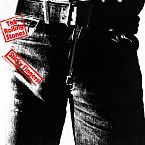
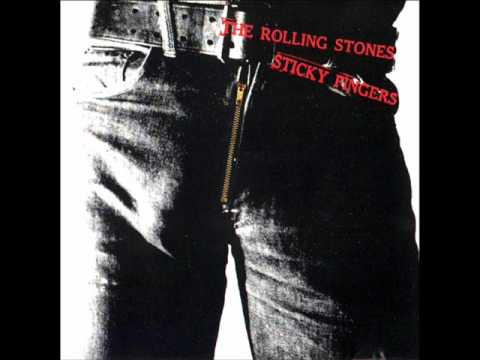
The Sticky Fingers album had an actual zipper on the cover. On many copies, "Sister Morphine" was damaged because the zipper pressed into it. To solve the problem, the zipper was opened before the album shipped so it just dented the label.
This was influenced by the Velvet Underground, who were writing dark songs about drugs, especially heroin.
Marianne Faithfull recalled writing the song to
The Guardian newspaper in January 2013: "I just liked the name, and loved Lou Reed's work, '
Sister Ray and '
Heroin.' I liked the idea poetically. I thought it was like Baudelaire, but the song doesn't glamorise anything. It was a really interesting vision."
Not long after writing the song, the lyrics came painfully true to Marianne Faithfull. She recalled to The Guardian: "The story is about a man in a car accident in hospital, who's very damaged and wants to die. It isn't exactly what happened to me, but my feelings about it are probably the same. I was hospitalized in Sydney after an attempted suicide after Brian Jones died. It was a terrible time."
We found this quote from John Denver in The New York Post, 1973: "I want my music to take people away from songs like 'Sister Morphine.' I want people to feel the goodness in their own lives."