Burke and Hare

Album: Burke & Hare (1972)
Play Video

Songfacts®:

  • Running to 2 minutes, 43 seconds, "Burke And Hare" or "Burke & Hare" is a novelty song with lyrics by Norman Newell and music composed and conducted by Roger Webb. Newell (1919-2004) was a record producer who also co-wrote many songs.

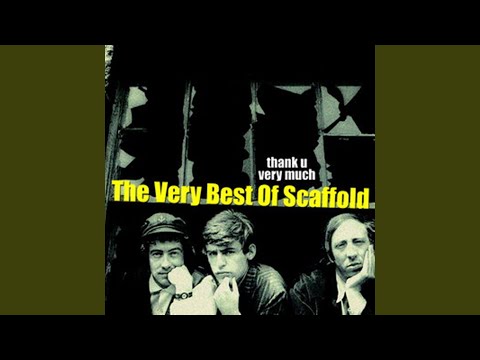
    "Burke And Hare" was recorded by The Scaffold, and was used at the beginning of the 1972 Kenneth Shipman production Burke & Hare which was also known as Horrors Of Burke And Hare. This commercial film is a surprisingly accurate portrayal of the lives of two of history's most notorious villains.

    William Burke and William Hare were Irishmen who had immigrated to Edinburgh where Hare's wife ran a lodging house; in their short but deadly career, they murdered 16 people and sold their bodies to the anatomist Dr Robert Knox. The training of doctors and medical research necessitates a supply of cadavers, gruesome though this may sound, and in the early 19th Century there were formidable obstacles to their legal procurement. This led to bodysnatching, the stealing of recently deceased people from their graves. The men who did this were known variously as bodysnatchers or resurrectionists.

    Burke and Hare did not rob graves; according to Hare's account - which there is no reason to doubt - the first body they sold was of an army pensioner who had died from natural causes. He owed the Hares money at the time, so this was probably a fair trade. They took his body to Dr Knox, who gave them £7. 10 shillings, a considerable sum in 1827. It remains to be seen what exactly transpired between the eminently respectable anatomist and these two rogues, but he made it clear to them that he would pay well for bodies in good condition. This led to the pair murdering people who were not likely to be missed, including a number of prostitutes. Although Burke swore that Knox knew nothing of this, it is inconceivable that he could not have suspected.

    Even before the advent of modern policing, serial murders committed in a geographically small area were bound to come to light. When they were finally arrested, the Crown felt that in spite of the enormity of the men's crimes the evidence against them was not overwhelming, so the Lord Advocate, Sir William Rae, did a deal with the Devil and offered Hare immunity from prosecution if he would testify against his partner-in-crime, a deal he could surely not refuse. Burke was convicted on January 28, 1829, and hanged the following March; his body was publicly dissected at the Edinburgh Medical College, while his skeleton, death mask and tanned skin were retained for the institution's museum as grisly trophies.

    Hare was released in February 1829, but public outrage made him flee the city. Where he went remains a mystery, although according to one account he was blinded and ended up begging on the streets of London. The Edinburgh public had no doubt of the complicity of Dr Knox, as evinced by the rhyme:

    Doon the close and up the stair
    Butt and ben wi Burke and Hare
    Burke's the butcher, Hare's the thief
    And Knox the boy that buys the beef!


    At one point his house was stormed by an angry mob. In 1831, he resigned, and departed for London in 1842 where eventually he secured a post as a pathologist. He died in 1862. >>>
    Suggestion credit:
    Alexander Baron - London, England

Comments

Be the first to comment...

Editor's Picks

Eric Burdon

Eric BurdonSongwriter Interviews

The renown rock singer talks about "The House of the Rising Sun" and "Don't Let Me Be Misunderstood."
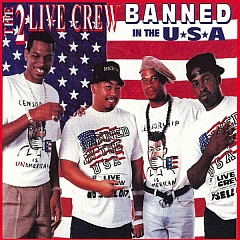
Arrested For Your Art - The Story Of 2 Live Crew's "Obscene" Album

Arrested For Your Art - The Story Of 2 Live Crew's "Obscene" AlbumSong Writing

In the summer of 1990, you could get arrested for selling a 2 Live Crew album or performing their songs in Southern Florida. And that's exactly what happened.
Director Mark Pellington ("Jeremy," "Best Of You")

Director Mark Pellington ("Jeremy," "Best Of You")Song Writing

Director Mark Pellington on Pearl Jam's "Jeremy," and music videos he made for U2, Jon Bon Jovi and Imagine Dragons.
Timothy B. Schmit

Timothy B. SchmitSongwriter Interviews

The longtime Eagle talks about soaring back to his solo career, and what he learned about songwriting in the group.
Chris Robinson of The Black Crowes

Chris Robinson of The Black CrowesSongwriter Interviews

"Great songwriters don't necessarily have hit songs," says Chris. He's written a bunch, but his fans are more interested in the intricate jams.
TV Theme Songs

TV Theme SongsFact or Fiction

Was a Beatles song a TV theme? And who came up with those Fresh Prince and Sopranos songs?