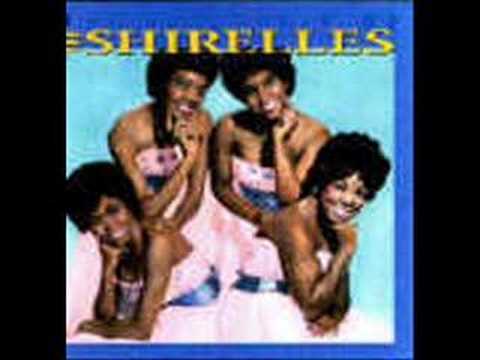
"Will You Love Me Tomorrow" was written by the husband-and-wife songwriting team of Gerry Goffin and Carole King. It's a benignly sexual song with the singer wondering what will happen the day after an encounter with her man. It met with some resistance from radio stations, but not enough to stop it from becoming a huge hit, selling over a million copies.
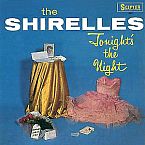
This was the first hit written by Goffin and King, who became one of the top writing teams in music history. They were signed to Don Kirshner's Aldon music, which along with the Brill building, was the center of the songwriting universe in the early '60s. Kirshner assigned them to write a song for the Shirelles as a follow-up to "Tonight's The Night," which reached #39 in October 1960, the biggest hit for the group to that point.
King came up with the music, and Goffin, excited about writing for The Shirelles, quickly came up with the lyrics. Kirshner loved the song, and recognizing that he had something new and different, decided to use it to get in the door at Columbia Records, so he offered it to Columbia for Johnny Mathis, but their label head Mitch Miller politely declined, which Kirshner later said was "the best thing he ever did for me."
Back at Aldon Music, Tony Orlando wanted to record the song, but Kirshner, taking a cue from what he learned when he offered it to Mathis, explained that it was a girl's lyric, and that no teenage boy would say these words. So finally, the song went to The Shirelles, where it was intended all along. It went to #1 in January 1961.
Tony Orlando ended up recording an answer song called "Not Just Tomorrow But Always" using the name Bertell Dache.
Don't let anyone tell you that this was the first US #1 hit by an all-female group - The McGuire Sisters hit the top spot three times in the '50s. "Will You Love Me Tomorrow" was, however, the first #1 by a black female group, and the first #1 on the Billboard Hot 100 chart, which debuted in 1958. From 1955-1958, Billboard had a chart called the Top 100 with different criteria.
Shirelles lead singer Shirley Alston initially disliked the song, dismissing it as "too Country and Western" for the four-girl group from Passaic, New Jersey. Their producer Luther Dixon convinced her they could do it in their style, and asked King and Goffin if they could add strings and turned it into an uptempo song, which they did.
Carole King played timpani on the Shirelles recording.
Carole King included this on her 1971 album Tapestry. Lou Adler, who produced the album and owned King's record company, explained: "The only thing we reached back for, which was calculated in a way, which of the old Goffin and King songs that was hit should we put on this album? And, that's how we came up with 'Will You Still Love Me Tomorrow.' I thought that song fit what the other songs were saying in Tapestry. A very personal lyric."
A 1968 version by the Four Seasons hit #24 and was that group's last Top 40 hit of the '60s - they didn't have another for seven years. Linda Ronstadt covered it in 1970 on her second album,
Silk Purse. Released as the lead single, it hit #111. The other charting covers of "Will You Love Me Tomorrow" are:
Roberta Flack - #76 in 1972
Melanie - #82 in 1973
Dana Valery - #95 in 1976
Dave Mason - #39 in 1978
Others to record the song include Cher, Laura Nyro, Roberta Flack, Millie Jackson, Bryan Ferry and Neil Diamond.
The B-side of the single was "Boys," which was later covered by the Beatles with a rare Ringo Starr vocal.
First pressings of the single (Scepter 1211) show the title as simply "Tomorrow."
Amy Winehouse recorded a cover for the Bridget Jones: The Age of Reason soundtrack in 2004, slowing down the tempo and using a jazz arrangement. Her version debuted at #62 on the UK singles chart in the week after her death.
Goffin and King were proud of their breakthrough hit and had their New Jersey home's doorbell "pretentiously and expensively" modified to play it. "The ring is out of rhythm, with all the notes incorrectly timed as quarter notes: do do mi mi re re re do," King recalled in her memoir, A Natural Woman.
This was used in the 1987 movie Dirty Dancing. It wasn't included on the original soundtrack album, but was added to 20th anniversary edition.
Taylor Swift sang this to open the 2021 Rock and Roll Hall of Fame induction ceremony before inducting Carole King.