The Sisters of Mercy

The Sisters of Mercy Artistfacts

  • 1977-
    Andrew EldritchVocals, keyboards, guitar, drums1977-
    Gary MarxGuitar, vocals1977-1985
    Craig AdamsBass1981-1985
    Ben GunnGuitar1981-1983
    Wayne HusseyGuitar, vocals1983-1985
    Patricia MorrisonBass1987-1989
    Andreas BruhnGuitar1989-1993
    Tony JamesBass1989-1991
    Tim BrichenoGuitar1990-1992
    Adam PearsonGuitar, bass, vocals1993; 1996-2006
    Chris SheehanGuitar, vocals1996-1997; 2000-2005
    Mike VarjakGuitar1997-2000
    Chris CatalystGuitar, vocals2005-
    Ben ChristoGuitar, vocals2006-
  • Although frontman Andrew Eldritch bristles at the term goth, The Sisters of Mercy gained notoriety in the UK as a goth rock band in the late-'70s/early '80s. Their commercial breakthrough would come with their second album, Floodland, in 1987.
  • The band shares its name with an order of Catholic nuns, but Eldritch and Marx took it from Leonard Cohen's 1967 song "Sisters of Mercy," which they heard in the Robert Altman film McCabe & Mrs. Miller, starring Warren Beatty and Julie Christie. Eldritch (Sounds, 1987): "I took it from the Leonard Cohen song which is all about prostitutes and I thought the balance between nuns and prostitutes was very appropriate for a rock band, still do."
  • Their debut album, First and Last and Always, was crafted during a series of intense recording sessions that pushed the group to its breaking point. Marx, Hussey, and Adams - who left the band shortly after - were increasingly frustrated with Eldritch and his perfectionist tendencies. Marx claimed: "We wasted weeks at a time in the studio, waiting for him to come up with a handful of lyrics. It was very painful and very expensive."
  • Hussey and Adams formed the goth rock band The Mission in 1986. They originally called themselves The Sisterhood, but were blasted by Eldritch for choosing a name too similar to Sisters of Mercy. Before they could record under the moniker, Eldritch beat them to the punch with his own side project called The Sisterhood.
  • Marx also formed a goth rock/post punk band. Ghost Dance, featuring vocalist Anne-Marie Hurst, was active from 1985-1989.
  • The only drummer you'll find in the lineup is drum machine Doktor Avalanche. Eldritch (Sounds, 1987): "There's something about the American public taken as a whole that requires some sort of animal at the back thwacking things. I can't understand it. I've always thought that The Doktor was a much more ruthless and monstrous idea."
  • Eldritch was born Andrew William Harvey Taylor on May 15, 1989 in Ely, Cambridgeshire, England. "Eldritch" is an archaic word defined by Eldritch Press as "weird, eerie, supernatural, ghastly; an eldritch scream is unnerving and makes chills go up and down your spine."
  • Apart from Eldritch and Doktor Avalanche, each album boasts a different lineup.

Comments

Be the first to comment...

Editor's Picks

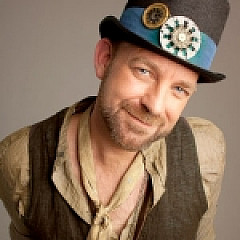
Kristian Bush of Sugarland

Kristian Bush of SugarlandSongwriter Interviews

Kristian talks songwriting technique, like how the chorus should redefine the story, and how to write a song backwards.

Sarah Brightman

Sarah BrightmanSongwriter Interviews

One of the most popular classical vocalists in the land is lining up a trip to space, which is the inspiration for many of her songs.

Brenda Russell

Brenda RussellSongwriter Interviews

Brenda talks about the inspiration that drove her to write hit songs like "Get Here" and "Piano in the Dark," and why a lack of formal music training can be a songwriter's best asset.

Vanessa Carlton

Vanessa CarltonSongwriter Interviews

The "A Thousand Miles" singer on what she thinks of her song being used in White Chicks and how she captured a song from a dream.

Director Mark Pellington ("Jeremy," "Best Of You")

Director Mark Pellington ("Jeremy," "Best Of You")Song Writing

Director Mark Pellington on Pearl Jam's "Jeremy," and music videos he made for U2, Jon Bon Jovi and Imagine Dragons.
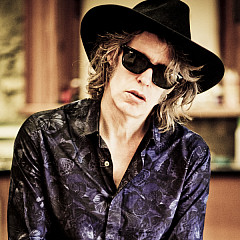
Mike Scott of The Waterboys

Mike Scott of The WaterboysSongwriter Interviews

The stories behind "Whole Of The Moon" and "Red Army Blues," and why rock music has "outlived its era of innovation."