Cemetry Gates

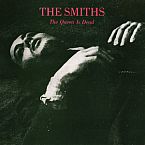
Album: The Queen Is Dead (1986)
Play Video

Songfacts®:

  • Written by Smiths guitarist Johnny Marr and lead singer Morrissey, this track finds the band contemplating mortality as the narrator walks through a cemetery and is saddened by all the people with his loves, hates, and passions who have died. "It seems so unfair, I want to cry," Morrissey sings. It's a familiar story for Morrissey, who often used to wander the Southern Cemetery in Manchester, England, in his youth.
  • The misspelling of cemetery in the title "Cemetry Gates," was an unintentional error by Morrissey, who admits he always had trouble with the word.
  • Marr recalled writing the song in Guitar Magazine, 1997: "When we signed with Rough Trade we were being hailed as The Great New Songwriters, and I was on the train coming back thinking, 'Right, if you're so great - first thing in the morning, sit down and write A Great Song.'"
  • Morrissey admits to an obsession with death and a fascination with tragic figures, like James Dean, who died in a car crash at age 24, and Oscar Wilde, who was imprisoned for his homosexuality and later died destitute at age 46. He told Spin magazine in 1988: "I have a dramatic, unswayable, unavoidable obsession with death. If there was a magical, beautiful pill that would retire you from this world, I think I would take it."
  • The hook references literary greats Oscar Wilde, John Keats, and W.B. Yeats.

    Morrissey counts Oscar Wilde among his major influences. A Victorian era author, poet, playright, and all-around rabble-rouser, Wilde was known for works like the novel The Picture of Dorian Gray and comedic play The Importance of Being Earnest.

    Keats was an English Romantic poet who had his own fascination with death. He lost both of his parents by the time he was 14. Later his brother died of tuberculosis, the same disease that killed their mother and would later kill Keats at age 25. Keats wrote about his fear of death in the poem "When I Have Fears," in which he laments all the opportunities death will steal from him.

    As for the Irish poet Yeats, he pondered mortality in his "Death" poem, which points out that humans are the only species that dreads death or is even aware of their own mortality: "Man has created death."

    Out of all three, Morrissey sides with that "weird lover" Wilde, who wrote a less melancholic view of death in The Canterville Ghost: "Yes, death. Death must be so beautiful. To lie in the soft brown earth, with the grasses waving above one's head, and listen to silence. To have no yesterday, and no to-morrow. To forget time, to forget life, to be at peace. You can help me. You can open for me the portals of death's house, for love is always with you, and love is stronger than death is."
  • In the third verse, Morrissey calls out his friend for plagiarizing a modified line from Shakespeare's Richard III, "'Ere thrice the sun done salutation to the dawn." He scolds: "If you must write prose or poems, the words you use should be your own."

    Perhaps in an ironic twist, Morrissey's own lyrics were lifted from the 1942 comedy The Man Who Came to Dinner. He sings:

    All those people, all those lives
    Where are they now?
    With loves, and hates
    And passions just like mine
    They were born
    And then they lived
    And then they died
    It seems so unfair
    I want to cry


    In the movie, Ann Sheridan plays a shallow, temperamental actress who envisions a dramatic
    scene for herself when a sarcophagus is delivered to the house (it's all a trick to get her inside so the rest of the cast can ship her out of town).

    She says: "You know, the first time I went to Pompeii I cried all night. All those people, all those lives. Where are they now? Here is a woman like myself, a woman who once lived and loved, full of the same passions, fears, jealousies, hates. What remains of it now? Just this, nothing more. [gets inside sarcophagus] A span of 4,000 years, a mere atom in the attentive time. And here am I, another woman living out her life. I want to cry."

    Incidentally, one of Morrissey's pseudonyms, Sheridan Whiteside, was inspired by one of the main characters in the film, played by Monty Woolley.
  • In 2006, Morrissey visited Keats's tombstone at the Protestant Cemetery in Rome, Italy, for a photospread in Mojo magazine.

Comments: 1

  • Ricardo from Mexico CityOne of their best songs from one of the best albums, etc, etc, etc....The lyrics are one of thieir best and this text by songfacts Is excelent. Thank you guys
see more comments

Editor's Picks

Tommy James

Tommy JamesSongwriter Interviews

"Mony Mony," "Crimson and Clover," "Draggin' The Line"... the hits kept coming for Tommy James, and in a plot line fit for a movie, his record company was controlled by the mafia.

Steely Dan

Steely DanFact or Fiction

Did they really trade their guitarist to The Doobie Brothers? Are they named after something naughty? And what's up with the band name?

David Gray

David GraySongwriter Interviews

David Gray explains the significance of the word "Babylon," and talks about how songs are a form of active imagination, with lyrics that reveal what's inside us.

JJ Burnel of The Stranglers

JJ Burnel of The StranglersSongwriter Interviews

JJ talks about The Stranglers' signature sound - keyboard and bass - which isn't your typical strain of punk rock.

Tim McIlrath of Rise Against

Tim McIlrath of Rise AgainstSongwriter Interviews

Rise Against frontman Tim McIlrath explains the meanings behind some of their biggest songs and names the sci-fi books that have influenced him.

George Clinton

George ClintonSongwriter Interviews

When you free your mind, your ass may follow, but you have to make sure someone else doesn't program it while it's wide open.