Sometimes

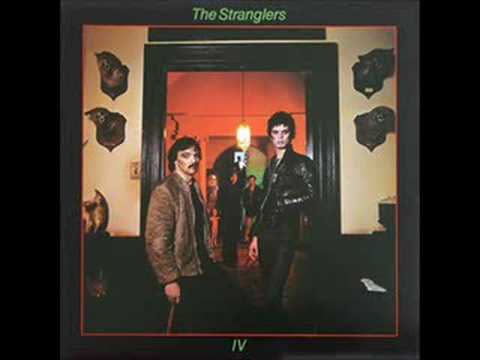
Album: Rattus Norvegicus (1977)
Play Video

Songfacts®:

  • This aggressive track finds lead singer Hugh Cornwell itching for a fight with his girl. It was inspired by a real-life incident when Cornwell hit his girlfriend after he discovered her cheating. He recalled in the 2011 book The Stranglers: Song By Song: "After a year or so together I suspected she was seeing someone else and went round to her house at about ten o'clock one morning, but she wasn't there and hadn't been back all night. When she turned up I could smell sex on her and slapped her. I didn't beat her up because I don't think violence is a solution to anything, but I did get angry and slapped her. I was using violence as a release of emotion and the lyrics to 'Sometimes' came out of that."

    He added: "I'd never done it before and I've never done it since. It's a very odd situation, not only just to find out that someone's been cheating on you, but to actually catch them coming back with the smell on them. It's a horrific situation to be in and I'll never forget it."
  • While the song was inspired by a violent act between lovers, it was also influenced by the volatility of society at large. Says Cornwell: "A lot of the lyrics in this song are reflecting the state of play when we were starting out. There was a lot of aggression at our gigs, with people throwing things at us, and altercations with members of the audience. There was a very aggressive reaction to our music and the more aggression there was towards us the more aggressive we became. But you get to a situation in writing lyrics where one idea feeds another and it's not clear which is creating which. It's the chicken and egg situation.

    Some of the morbid lyrics towards the end were inspired by Francis Bacon, who had this fascination for books of accident victims and corpses. I was drawing upon phrases that seemed to fit with what I was trying to say. A lot of the lyrics have been interpreted in a mundane way. Much as I love fans that buy records, people do put very strange interpretations on things that are just turns of phrase. I love playing with words and unusual phrases that are in the public domain. I think that because your later music was mellower, people could see the lyrics subtleties, whereas 'Sometimes' is very in your face."
  • Cornwell described how the song came together: "I said, 'I've got this idea for a song called 'Sometimes' and it could be about someone hitting somebody else and John [Ellis, guitarist] said, 'Great!' He had another bit of music and I worked out the chorus and the middle eight. We then went to Dave [Greenfield, keyboardist] and Jet [Black, drummer] and said, 'We've got this song, it's called 'Sometimes' and it's in E. I sang it and played over John's bass line, and Dave then worked out which chords fitted. There might have been two or three possibilities, but only one that worked. In situations like these we'd say, 'That's a good bit, Dave,' so he would have his theme worked out. I'd pick up a guitar and start finding some strange things to do and Jet would have the beat. We'd work on the music in rehearsals and it would develop from there."
  • Cornwell on why the band chose the punk-influenced track as the opener to their debut album: "Maybe that was another reason for putting it as first song on the album, drawing people in so they thought they had bought a punk record, and then giving them something a bit more intelligent afterwards. It's a perfect opener for the album in that sense." >>>
    Suggestion credit:
    DeeTheWriter - Saint Petersburg, Russia Federation, for all of the above

Comments: 2

  • Williumcobblers from EnglandJohn was always credited as Jean Jacques in the media.
  • Snaga from Dundee, Scotland  'I've got this idea for a song called 'Sometimes' and it could be about someone hitting somebody else and John [Ellis, guitarist] said, 'Great!'

    Nope. Ellis wasn't a member of the Stranglers until after Cornwell left. The John in question here is Jean-Jacques Burnel. He, to an extent, hid his Frenchness from the racist British public. He was known as John
see more comments

Editor's Picks

Philip Cody

Philip CodySongwriter Interviews

A talented lyricist, Philip helped revive Neil Sedaka's career with the words to "Laughter In The Rain" and "Bad Blood."

Michael Franti

Michael FrantiSongwriter Interviews

Franti tells the story behind his hit "Say Hey (I Love You)" and explains why yoga is an integral part of his lifestyle and his Soulshine tour.

Graham Parker

Graham ParkerSongwriter Interviews

When Judd Apatow needed under-appreciated rockers for his Knocked Up sequel, he immediately thought of Parker, who just happened to be getting his band The Rumour back together.

Dennis DeYoung

Dennis DeYoungSongwriter Interviews

Dennis DeYoung explains why "Mr. Roboto" is the defining Styx song, and what the "gathering of angels" represents in "Come Sail Away."

Chris Frantz of Talking Heads

Chris Frantz of Talking HeadsSongwriter Interviews

Talking Heads drummer Chris Frantz on where the term "new wave" originated, the story of "Naive Melody," and why they never recorded another cover song after "Take Me To The River."

Dar Williams

Dar WilliamsSongwriter Interviews

A popular contemporary folk singer, Williams still remembers the sticky note that changed her life in college.