What Do You Want From Life

Album: The Tubes (1975)
Play Video

Songfacts®:

  • In this song, Tubes lead singer Fee Waybill asks a question we should all ponder from time to time: What do you want from life?

    Televisions had saturated American households by 1975, broadcasting lots of mindless entertainment paid for by commercials that whipped up desire for more and better things. The Tubes made it their mission to mock the culture this created while warning people of the dangers of watching too much Starsky & Hutch. At the end of the song, Waybill turns into a game show announcer, barking out products at a rapid pace to simulate the flood of advertising messages that create needless wanting.
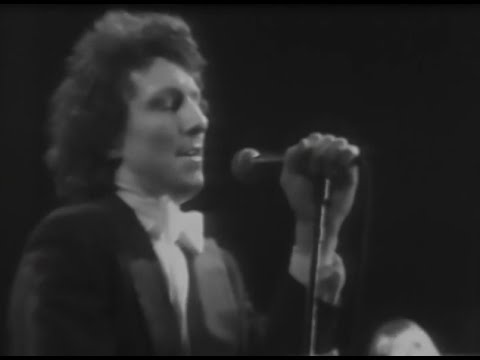
  • This is one of the most popular tracks on the first Tubes album, which was released by A&M Records. The band didn't sell a lot of albums, but drew huge crowds to their live shows, which were not traditional concerts. They used video monitors and a troupe of dancers to bring a visual element to the songs, with themes like guerrilla warrior and Hawaiian luau. "What Do You Want From Life" was the opener to their 1975 concerts, with an extended intro that played for a while before Fee Waybill emerged in a white tuxedo. During the instrumental breaks and at the end, he would throw random items into the crowd.

    The band sold out a New Year's Eve show at the Winterland Ballroom in San Francisco that year, but their act didn't translate to album sales. A&M dropped them in 1981 - bad timing because MTV went on the air that year. Capitol picked them up, and the group released two hit albums, The Completion Backward Principle (1981) and Outside Inside (1983), goosed by the MTV hits "Talk To Ya Later" and "She's A Beauty."
  • Al Kooper, known for his work with Bob Dylan and Lynyrd Skynyrd, produced the album. In his memoir Backstage Passes and Backstabbing Bastards, he explained that "What Do You Want From Life" is a parody of the TV game show The Price Is Right!. Wrote Kooper: "We spent the better part of an afternoon writing the script of possible prizes you could win, climaxing with 'a baby's arm holding an apple,' which some of you may recall as Lady Chatterley's description of her lover's 'package.' This survived censorship because not many DJs had read D. H. Lawrence at the time!"
  • This was written by Tubes guitarist Bill Spooner and his songwriting associate, Michael Evans.
  • This is the first song we know of to mention "cable TV" in the lyric ("To get cable TV and watch it every night"). Cable had been around for a while to distribute broadcast signals to homes that were out of antenna range, but it was still years away from dedicated cable networks like MTV and ESPN.
  • The line, "To kidnap an heiress or threaten her with a knife" is a reference to Patty Hearst, heir to the Hearst magazine empire, who was kidnapped in 1974.

Comments

Be the first to comment...

Editor's Picks

Classic Metal

Classic MetalFact or Fiction

Ozzy, Guns N' Roses, Judas Priest and even Michael Bolton show up in this Classic Metal quiz.

Hardy

HardySongwriter Interviews

The country hitmaker talks about his debut album, A Rock, and how a nursery rhyme inspired his hit single "One Beer."

Black Sabbath

Black SabbathFact or Fiction

Dwarfs on stage with an oversize Stonehenge set? Dabbling in Satanism? Find out which Spinal Tap-moments were true for Black Sabbath.

Kevin Godley

Kevin GodleySongwriter Interviews

Kevin Godley talks about directing classic videos for The Police, U2 and Duran Duran, and discusses song and videos he made with 10cc and Godley & Creme.

Dean Friedman - "Ariel"

Dean Friedman - "Ariel"They're Playing My Song

Dean's saga began with "Ariel," a song about falling in love with a Jewish girl from New Jersey.

History Of Rock

History Of RockSong Writing

An interview with Dr. John Covach, music professor at the University of Rochester whose free online courses have become wildly popular.