I'm Waiting For The Man

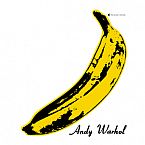
Album: The Velvet Underground & Nico (1967)
Play Video

Songfacts®:

  • This is another in the Velvet Underground's canon of songs about drugs. Not only does it fit nicely with "Heroin," it was also on the same album, and was also written by Lou Reed at about the same time as "Heroin," during Reed's attendance at Syracuse University in the early 1960s. It describes a trip to a Harlem brownstone near the intersection of Lexington Avenue and 125th Street to buy drugs from a dealer, "the man" of the title. Once again, it neither condones nor condemns the experience, but merely describes it.
  • The song is about scoring $26 worth of heroin in Harlem. According to Rolling Stone magazine, Reed said: "Everything about that song holds true, except the price." >>>
    Suggestion credit:
    Bertrand - Paris, France
  • As described in The Velvet Underground: An Illustrated History of a Walk on the Wild Side, songs like "I'm Waiting For The Man," "Heroin," and "Venus In Furs" were what kept The Velvet Underground out of a record contract with Atlantic Records. Atlantic executive Ahmet Ertegun wouldn't take them unless they dropped these songs, and the Velvets, typically putting ideas ahead of money, just couldn't live with that. So their first album ended up with MGM Records instead. Even after their signing with Atlantic for their fourth album, Loaded, Ahmet specifically told them to tone down controversial material.
  • Lou Reed, John Cale, Nico, and Maureen Tucker have all recorded solo versions of the song.
  • This song was a big influence on David Bowie, who explained to Performing Songwriter magazine in 2003: "I actually played 'Waiting for the Man' in Britain with my band before the album was even released in America. Talk about oneupsmanship. A friend of mine came over to the states to do some work with Andy Warhol at The Factory, and as he was leaving, Andy said, 'Oh, I just made this album with some people. Maybe you can take it back to England and see if you can get any interest over there.' And it was still the vinyl test pressing. It hadn't got a company or anything at the time. I still have it. There's a white label on it, and it says 'Warhol.' He signed it. My friend gave it to me and he said, 'This is crap. You like weird stuff, so maybe you'll enjoy it.' I played it and it was like 'Ah, this is the future of music!' I was in awe. It was serious and dangerous and I loved it. And I literally went into a band rehearsal the next day, put the album down and said, 'We're going to learn this song. It is unlike anything I've ever heard.' We learned 'Waiting for the Man' right then and there, and we were playing it on stage within a week. I told Lou that, and he loved it. I must have been the first person in the world to cover a Velvet Underground song."

    David Bowie covered the song in 1972, and included it on his album BBC Sessions. Lou Reed sang it in a duet with Bowie during Bowie's 50th birthday concert, known as "Live at 50." Bowie's version is on the soundtrack of the movie Almost Famous. >>>
    Suggestion credit:
    Br17is - pisa, Italy
  • Besides David Bowie, amongst the many acts to cover "I'm Waiting For The Man," the most notable are Cheap Trick, Bauhaus, and the U.K. Subs. It shares credit with the Ramones' "53rd & 3rd" for being a famous song related to drugs (the Ramones one is about turning a trick for drug money) pinned to a specific New York intersection.
  • Moe Tucker talked about this song in an interview with Prism Films. During recording, she said, her drum stand was so shaky that it was interfering with the sound. To fix this, Tucker set the drum down on the floor. That's how she's playing it in the studio version.

    Sterling Morrison's wife Martha held the drum in place as Tucker played. "So she's on the record, too, in a way," Tucker said.

Comments: 20

  • Blindintx from HoustonJust wanted to ask 3 in what universe has heroin ever cost 13 dollars a gram ? Maybe a quarter, but not a g
  • J from VermontThe street price of heroin in the late 60's was $13 a gram, hence the $26... he was buying two.
  • Hugh from Phoenix, AzOne of the earliest punk songs, in my opinion. I don't think the influence of this song on many future artists can be overstated.
  • Derek from Pittsburgh, PaMake sure to check out the live versions of the song, which can be found on Bataclan 72 (1), The Bootleg Series (2), the Springfield Concert (1), 1969: Live (1), and La Cave 1968 (1). The best one is definitely on 1969: Live though (followed closely by the one on Disc 1 of the Bootleg Series).
  • Kimberly from Pomona, CaCraig pointed out about the drum beat mimicking the anxiousness of a junkie waiting for a fix - well as an ex-junkie I always marveled at the genius of this song to put that feeling to music so accurately.
  • J from Nyc, NyOh, and this song kicks ass! orangebreaker, just to clarify, no one in the 1960's or 70's (or ever) would be going to 125&Lex to "shake" a habit, only to feed one.
  • J from Nyc, NyQuick Manhattan Geography lesson: Harlem is part of Manhattan, yes, Uptown, but still Manhattan; the general border is also 96th St (varies a little on a few avenues).
  • David from St. Louis, NeLexington and 125th Street is in Harlem, not Manhattan. Anything above 110th Street is considered Harlem, AKA "Uptown"
  • Cameron from Irvine, CaWhen I first heard this song, the number 26 kept coming up everywhere I went for about a month.
  • Jacob from Waterford, Cton the album, Live at Max's Kansas City, Lou Reed introduces the song with the statement, "its a song about love between man and subway." not really sure considering its blatantly about heroin. he also said in an interview that the whole song was true, except for the small price of the heroin ($26). haha
  • Stefanie from Rock Hill, ScI agree. The guitar on this is great.
  • Erik from Bloomfield Hills, MiActually, orangebreaker, the "up to Lexington, one two five" lyric refers to a street corner in Manhattan, Lexington & 125th street.
  • Steve from Fenton, MoA great performance of a great song. Lou Reed hit his peak early on with this song...
  • Cameron from Irvine, CaThe guitar on this song rules.
  • Orangebeaker from Edinburgh, Scotland"up to lexington, one two five, feel sick and dirty - more dead than alive" Lexington was ostensibly a place where heroin addicts could go to shake a habit.
  • Stefanie from Rock Hill, ScThat's funy that David Bowie covered it. Well... maybe it's not that odd. Isn't it funny though, that it was covered in 1972, and "Walk On The Wild Side" was released the same year, on an album that was produced by David Bowie? I wonder if those two particular events have any connection.
  • Frank from Mars, MeAllegedly was the inspiration for the Jonathan Richman's 'I'm Straight'
  • Stefanie Magura from Rock Hill, Sci know it was about a drug dealer. Listen to the song and you'll know why it's about one.
  • Craig from Madison, WiMoe Tucker's insistent and persistent drum beat may seem redundant and minimalistic mimics the anxious slapping of thighs a junkie does while waiting for a fix (or anyone does when they are very impatient or have to go to the bathroom). Next time you hear the song, play along on your thighs. It makes you feel nervous. For added effect clench your eyes shut and rock back and forth while humming the song under your breath.
  • Kris from Toronto, CanadaBowie's version was first on the soundtrack to his own movie "Ziggy Stardust the Motion Picture"
see more comments

Editor's Picks

Little Big Town

Little Big TownSongwriter Interviews

"When seeds that you sow grow by the wicked moon/Be sure your sins will find you out/Your past will hunt you down and turn to tell on you."

Millie Jackson

Millie JacksonSongwriter Interviews

Outrageously gifted and just plain outrageous, Millie is an R&B and Rap innovator.

Don Dokken

Don DokkenSongwriter Interviews

Dokken frontman Don Dokken explains what broke up the band at the height of their success in the late '80s, and talks about the botched surgery that paralyzed his right arm.

Martyn Ware of Heaven 17

Martyn Ware of Heaven 17Songwriter Interviews

Martyn talks about producing Tina Turner, some Heaven 17 hits, and his work with the British Electric Foundation.

Sending Out An SOS - Distress Signals In Songs

Sending Out An SOS - Distress Signals In SongsSong Writing

Songs where something goes horribly wrong (literally or metaphorically), and help is needed right away.

John Lee Hooker

John Lee HookerSongwriter Interviews

Into the vaults for Bruce Pollock's 1984 conversation with the esteemed bluesman. Hooker talks about transforming a Tony Bennett classic and why you don't have to be sad and lonely to write the blues.